Saturday, October 24, 2026
* All product/brand names, logos, and trademarks are property of their respective owners.
Industrial facilities face numerous challenges when it comes to maintaining efficiency, safety, and equipment longevity. Heavy machinery generates heat, vibration, and noise, all of which can lead to operational inefficiencies, structural fatigue, and increased maintenance costs if not properly managed. For example, uninsulated pipelines and machinery surfaces can lose up to 15–20% of energy due to heat dissipation, while uncontrolled vibration can accelerate wear and tear on equipment, reducing its lifespan.
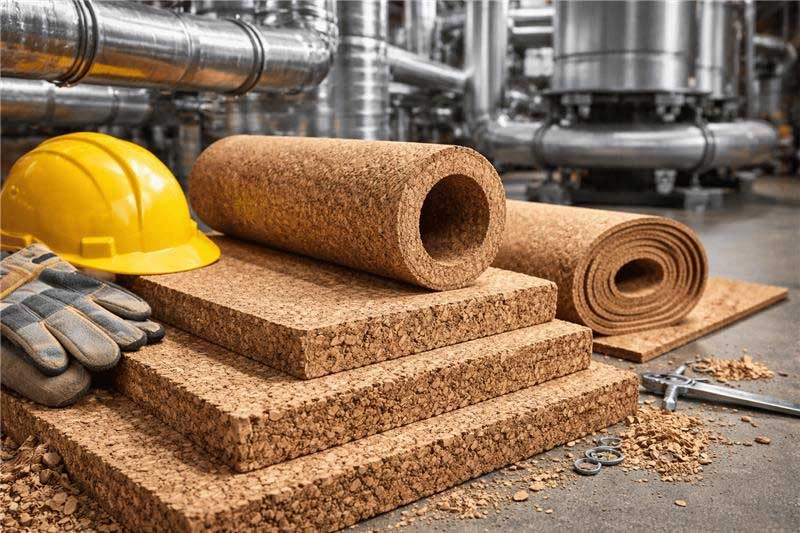
Selecting the right material for insulation and vibration control is therefore crucial. Among natural and synthetic materials, cork flooring stands out for its unique combination of properties. Its lightweight, elastic, and cellular structure makes it effective at thermal insulation, vibration dampening, and acoustic absorption. Additionally, cork is renewable, sustainable, and easy to install in various industrial environments, from manufacturing plants to retrofitted facilities. These qualities make cork an increasingly popular choice for engineers and facility managers aiming to optimize performance while reducing costs.
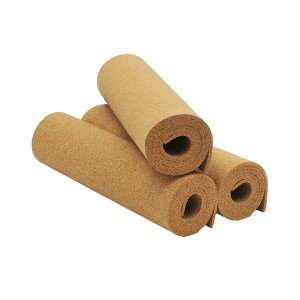
Cork is harvested from the bark of cork oak trees, a renewable process that does not harm the tree. Its internal structure consists of millions of microscopic air-filled cells, creating a lightweight, compressible, and resilient material. These properties allow cork to absorb vibration, reduce noise, and insulate thermally, all while maintaining its form under repeated stress.
From an industrial perspective, cork bark is manufactured into sheets, rolls, granules, and composite materials to meet specific performance requirements. Different densities and thicknesses make it suitable for applications ranging from light machinery padding to heavy industrial vibration isolation. Compared to synthetic materials such as rubber or foam, cork offers comparable elasticity with superior durability, thermal stability, and environmental benefits.
Some key mechanical properties of cork relevant to industrial use include:
Compression resistance: Helps maintain shape under heavy loads
Elasticity coefficient: Absorbs and disperses mechanical energy
Density variations: Allows engineers to select the ideal balance of weight, flexibility, and insulation
These characteristics make cork an ideal choice for a wide variety of industrial applications.
Cork’s cellular structure makes it a highly effective thermal insulator. The tiny air pockets slow heat transfer, helping maintain stable temperatures around machinery, pipelines, and industrial equipment. This is especially important in plants with boilers, ovens, or HVAC systems, where temperature control is critical to operational efficiency.
Thermal benefits of cork include:
Low thermal conductivity: Reduces energy loss in equipment and piping
Temperature stability: Performs consistently across fluctuating industrial conditions
Moisture resistance: Maintains insulation even in humid environments
For practical applications, cork insulation can be customized according to thickness and density to match the thermal requirements of specific equipment. Cork Rolls provides easy installation options for pipelines, tanks, walls, and machinery housings, offering both energy efficiency and thermal protection in one solution.
Vibration is a major concern in industrial facilities. Rotating machinery, compressors, presses, and conveyor systems produce harmonic, rotational, and shock vibrations that can damage equipment, foundations, and nearby structures. Left unmanaged, these vibrations contribute to equipment failure, increased maintenance costs, and a noisier work environment.
Cork’s elasticity allows it to compress and absorb mechanical energy, returning to its original shape without permanent deformation. This makes it ideal for vibration isolation applications. In many factories, adhesive cork sheets are placed under machinery bases to dampen vibrations while providing additional thermal insulation. Their self-adhesive design allows for quick and secure installation, minimizing downtime.
Cork’s vibration control benefits include:
Reduced mechanical stress on equipment and structures
Lower noise levels in industrial workspaces
Extended machinery lifespan by reducing wear
Its combination of vibration dampening, thermal insulation, and acoustic absorption makes cork an all-in-one solution for industrial engineers.
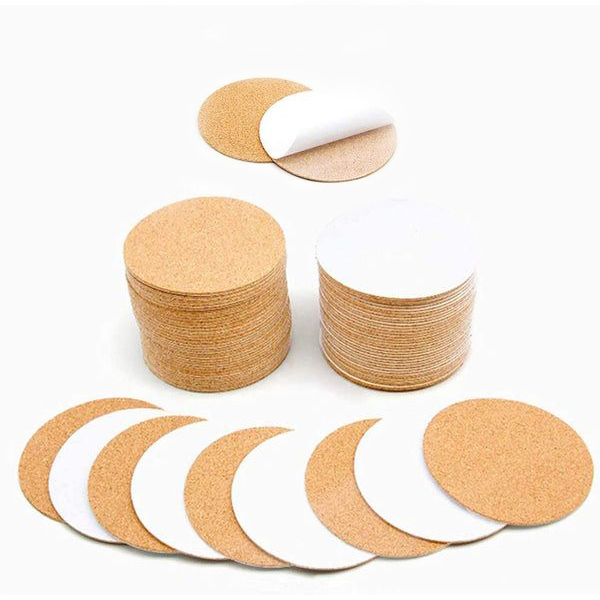
Cork is widely used under heavy machinery to absorb vibrations, prevent equipment movement, and stabilize foundations. Adhesive cork sheets allow for easy retrofitting in older facilities, reducing installation time while maintaining performance.
Cork insulation rolls are ideal for pipelines, tanks, and ducts exposed to high or fluctuating temperatures. By reducing heat loss, cork helps facilities save energy and maintain operational efficiency.
Factories often struggle with noise from running machinery. Acoustic underlay's porous structure absorbs sound waves, helping reduce decibel levels in production areas. It is commonly applied in wall panels, machine enclosures, and partitions to improve workplace comfort.
Cork’s lightweight and adaptable nature makes it ideal for retrofitting older industrial buildings. It can be applied without structural modifications, providing thermal, acoustic, and vibration benefits without major renovations.
Cork performs exceptionally well in challenging industrial environments. It is resistant to moisture, mold, and microbial growth, and it maintains its structural integrity under repeated compression. This durability reduces maintenance costs and ensures long-term performance.
From a sustainability perspective, cork is renewable, biodegradable, and harvested without harming the tree. Using cork helps industries meet environmental regulations and reduces the carbon footprint, aligning with modern sustainability goals. Additionally, cork products have a long lifecycle, making them a cost-effective choice over synthetic alternatives that may degrade or require frequent replacement.
Natural Cork is a combination of thermal insulation, vibration dampening, acoustic absorption, and durability, making it a highly versatile material for industrial applications. Its ability to perform reliably under heavy mechanical stress, fluctuating temperatures, and challenging environmental conditions explains why it continues to be widely used in factories, workshops, and industrial plants.
By providing energy efficiency, operational stability, and noise reduction, cork helps facilities reduce maintenance costs, extend equipment life, and create safer work environments. Whether installed as sheets under machinery, insulation rolls for pipelines, or acoustic panels, cork remains a natural, sustainable, and effective solution for modern industrial needs.

We specializes in high-quality cork sheets, rolls, and insulation solutions for industrial, commercial, and DIY applications. We focus on providing durable, sustainable, and easy-to-install cork products to meet diverse material and insulation needs.
Anyone who has ever finished laying a new floor knows that the job isn't quite done until the doorwa
8 September 2026
It rarely starts big. A tap that won't stop dripping. A kitchen you've put up with for too long. And
25 June 2026
Most home improvement projects are judged by big-ticket elements: new flooring, a retiled bathroom,
30 January 2026
Be the first to share your thoughts
No comments yet. Be the first to comment!
Share your thoughts and join the discussion below.
.webp&w=3840&q=75)

.webp&w=3840&q=75)