Sunday, September 20, 2026
.webp)
* All product/brand names, logos, and trademarks are property of their respective owners.
In home improvement, it’s often the smaller details that have the biggest impact. One such detail is the humble door threshold, which plays a crucial role in bridging flooring transitions while contributing to the overall finish of interior spaces. For those seeking the appearance of natural wood combined with long-term durability, aluminium wood-effect door thresholds offer a practical solution.
These thresholds provide reliable performance in areas prone to moisture and foot traffic, and their design ensures a seamless transition between different flooring types. In this article, we explore the benefits, selection guidelines, and practical applications of aluminium wood-effect thresholds in UK homes.
Door thresholds serve more than a functional purpose. They protect flooring edges, reduce trip hazards, and enhance the aesthetic flow of a room. Aluminium wood-effect thresholds are particularly effective because they combine the visual warmth of timber with the strength and stability of aluminium.
Aluminium thresholds can be finished to resemble natural wood grain, allowing them to align visually with timber-style interiors. Compared with solid wood, aluminium is generally less affected by moisture and temperature variation, which can reduce the likelihood of warping or swelling in everyday use within UK homes.
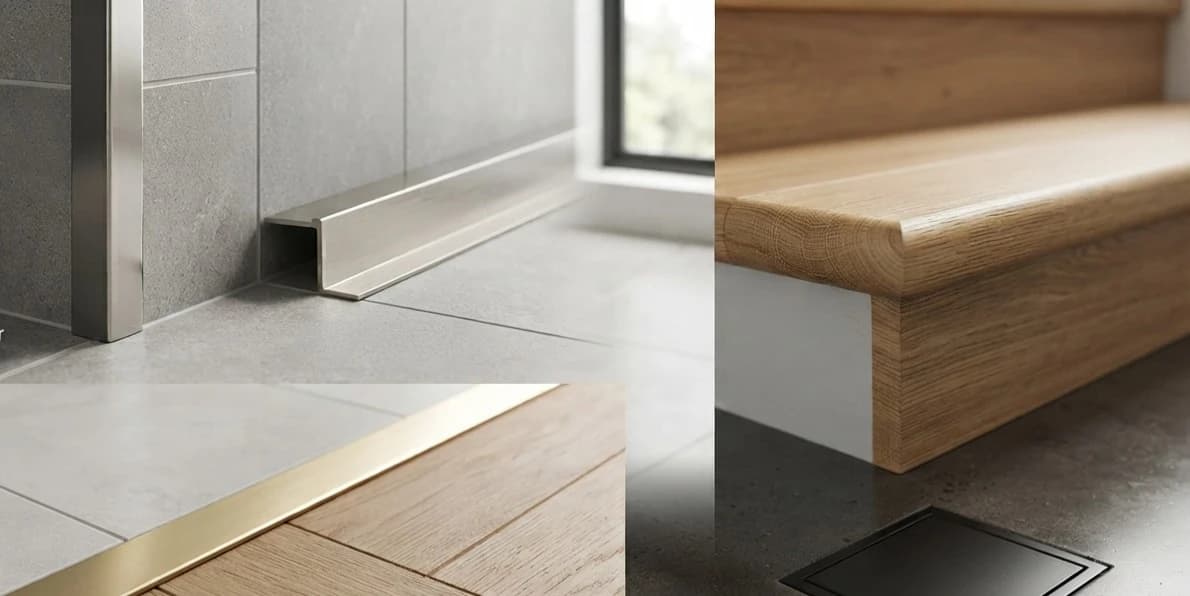
Available finishes often reflect common wood tones such as oak, walnut, and beech. These aluminium wood-effect panels are commonly used alongside flooring materials such as laminate, vinyl, and tile, helping to create consistent and practical transitions between surfaces.
One of the key advantages of aluminium thresholds is low maintenance. Unlike timber, they do not require sanding, sealing, or varnishing. A simple wipe with a damp cloth is sufficient to maintain appearance, which is particularly useful in high-traffic areas or rental properties.
They are also resistant to scuffing, corrosion, and staining, making them suitable for entrances, hallways, kitchens, and bathrooms. This combination of durability and low upkeep can reduce long-term replacement and repair costs, making aluminium thresholds a practical choice for a wide range of household applications.
Selecting the correct threshold profile ensures smooth transitions, reduces trip hazards, and maintains a clean, finished look. The choice of profile should account for differences in floor height, material combinations, and the location of the threshold.
Different flooring combinations require different threshold types. Typical pairings include:
| Floor Combination | Recommended Profile Type |
|---|---|
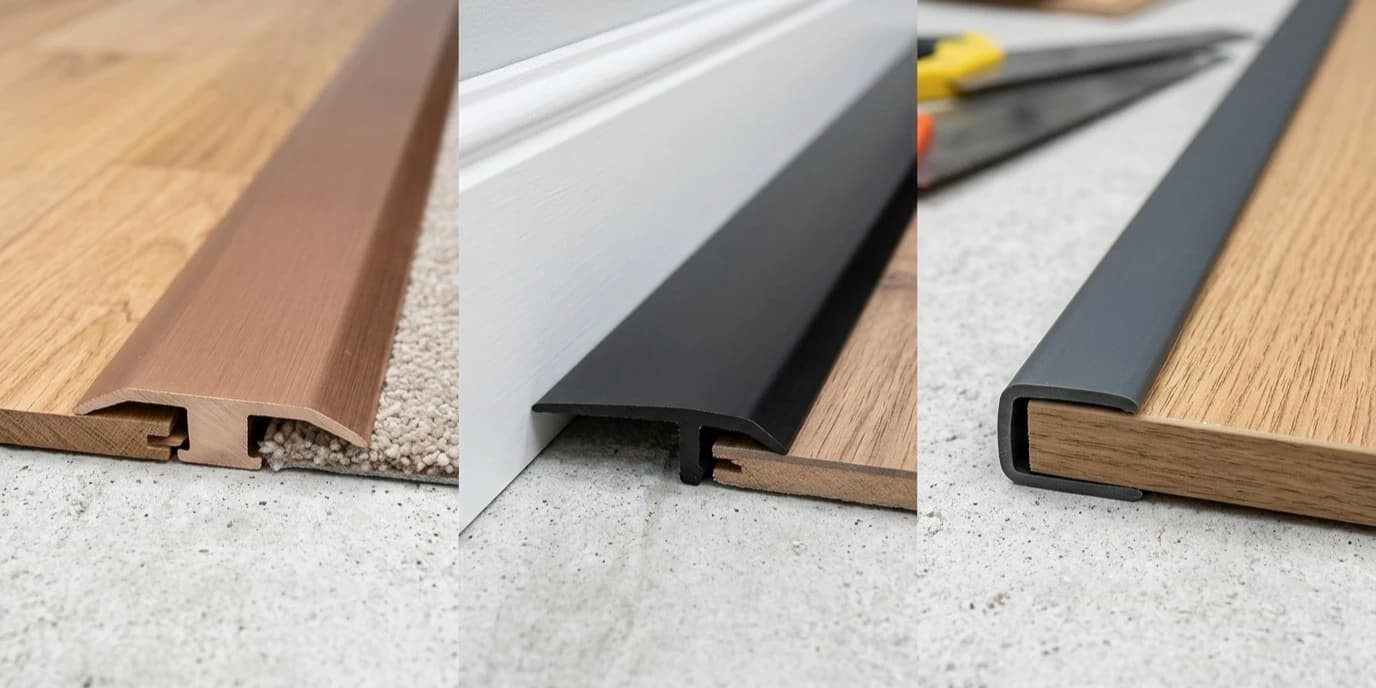
| Laminate to Carpet | Flat edge trims or self-adhesive thresholds |
| Tile to Vinyl | Narrow aluminium profiles |
| Laminate to Laminate | Flat, level threshold strips |
| Carpet to Vinyl | Edging profiles with adhesive backing |
Using profiles suited to the floor heights reduces the risk of trips while creating a neat, cohesive transition between rooms.
Flat profiles are ideal when both flooring surfaces are at the same height, offering a seamless, level finish. Edging or ramped profiles, on the other hand, accommodate height differences and protect flooring edges where one surface ends, such as at a doorway or along a wall.
Both options enhance safety, provide structural protection for floor edges, and maintain the visual flow of a room without drawing attention to the transition.
Aluminium wood-effect thresholds are designed for straightforward installation. Many profiles feature self-adhesive backing, which allows them to be installed quickly without the need for drills, screws, or additional fixings.
Thoroughly clean the installation area to remove dust, dirt, and moisture.
Measure and trim the threshold to the correct length using a fine-tooth saw or suitable scissors.
Carefully remove the adhesive backing.
Align the threshold with the flooring edges and press firmly, holding for several seconds to ensure full adhesion.
Self-adhesive options are particularly suitable for rental properties or DIY projects, as they reduce the risk of damaging flooring or doorframes. Some aluminium profiles may also be secured with screws, depending on the height difference and the type of threshold selected.
The appropriate profile depends on three main factors:
Flooring height difference – flat profiles suit equal heights, ramped profiles bridge differences.
Location – hallways or entrances may require more durable profiles, while bedrooms or living areas may prioritise appearance.
Aesthetic preference – matching wood tones or creating a subtle transition can influence the choice of profile.
Making the right choice enhances both functionality and appearance, improving the long-term performance of flooring transitions.
Aluminium wood effect thresholds combine the best properties of multiple materials. Below is a comparison with solid wood, PVC, and plain aluminium:
| Feature | Aluminium Wood Effect | Solid Wood | PVC | Plain Aluminium |
|---|---|---|---|---|
| Moisture Resistance | Excellent | Low | Moderate | Excellent |
| Scratch Resistance | High | Low | Low | Medium |
| Aesthetic Versatility | Wood look | Natural | Basic | Industrial |
| Maintenance Required | Minimal | Regular | Minimal | Minimal |
| Long-Term Durability | High | Low | Moderate | High |
This combination of durability, low maintenance, and aesthetic flexibility makes aluminium thresholds well-suited to rooms that experience varying levels of use, from busy hallways to kitchens and bathrooms. Aluminium wood-effect thresholds are available in a range of profiles, finishes, and sizes to suit different flooring transitions and room requirements.
Aluminium thresholds adapt well to different rooms, offering both practicality and visual consistency throughout a home.
Hallways are high-traffic areas, making durability essential. Aluminium thresholds maintain smooth transitions between laminate, carpet, and other flooring types, while protecting edges from repeated use.
In kitchens, moisture and spills are common. Aluminium thresholds provide a moisture-resistant surface that can be easily wiped clean, reducing the risk of water damage to flooring edges.
Longer thresholds help maintain visual continuity in wider doorways or open-plan layouts. Matching wood-effect finishes between rooms can create a cohesive aesthetic that complements furniture and flooring tones.
Bedrooms typically have lower foot traffic, but thresholds still help reduce noise transfer and create neat transitions between carpet, laminate, or vinyl. Flat aluminium profiles are often suitable here, offering subtle functional support without standing out.
Aluminium wood-effect door thresholds are commonly used in UK homes where durability and visual consistency are both important. They help manage typical flooring transition challenges such as moisture exposure, regular foot traffic, and minor height differences, while offering a finish that aligns with timber-style interiors. When selecting thresholds, factors such as floor height variation, room usage, and overall visual balance are usually considered. Choosing an appropriate profile can support safer movement between spaces, limit long-term wear, and contribute to a more cohesive interior finish.
Whether applied to a single doorway or as part of wider renovation work, aluminium wood-effect thresholds illustrate how small construction details can influence both function and appearance. For those researching flooring transitions and interior finishing elements, additional reference material on door threshold types and applications is available at doorthresholds.uk.

Door Thresholds UK is a specialist supplier of high-quality door thresholds and flooring transition solutions for residential and commercial properties. The company focuses on providing durable, precise, and easy-to-install products designed to improve finishing, safety, and aesthetics.
Anyone who has ever finished laying a new floor knows that the job isn't quite done until the doorwa
8 September 2026
It rarely starts big. A tap that won't stop dripping. A kitchen you've put up with for too long. And
25 June 2026
Most home improvement projects are judged by big-ticket elements: new flooring, a retiled bathroom,
30 January 2026
Be the first to share your thoughts
No comments yet. Be the first to comment!
Share your thoughts and join the discussion below.
.webp&w=3840&q=75)

.webp&w=3840&q=75)
.webp&w=3840&q=75)