Plastic sheets have become a core material across UK manufacturing, supporting industries such as food production, water treatment, precision engineering, and heavy fabrication. While metals remain essential in structural applications, engineering plastics are often selected for their lighter weight, corrosion resistance, low friction properties, and ease of machining.
However, performance varies significantly depending on material type, thickness, and operating conditions. A sliding conveyor guide operates under very different stresses compared to a CNC-machined gear or a chemical tank liner. Understanding these differences enables manufacturers to reduce downtime, extend service life, and maintain consistent production standards. Below is a practical overview of commonly used plastic sheet materials and how they perform in real industrial environments.
The Rise of Ultra-Wear-Resistant Materials in Heavy Manufacturing
High-impact environments — including bulk handling systems, aggregates processing, and automated packaging lines — expose components to constant abrasion and friction. Materials used in these systems must tolerate repeated sliding contact without premature wear.
Why UHMWPE Is Dominating High-Impact Applications
Ultra-High Molecular Weight Polyethylene (UHMWPE) is widely recognised for its exceptional abrasion resistance and extremely low coefficient of friction. It is frequently specified for conveyor guides, chute liners and impact panels where sliding efficiency and durability are critical.
Thinner grades are commonly used for guide rails and replaceable wear strips, while thicker sections are selected for impact zones where shock absorption and structural strength are required. Its self-lubricating surface helps reduce friction between moving parts, which can contribute to smoother operation and reduced mechanical strain over time.
UHMWPE’s resistance to moisture and most chemicals also makes it suitable for damp or washdown-heavy industrial environments.
RG1000 in High-Speed, Low-Friction Systems
RG1000 offers high wear resistance and improved sliding performance, reducing operational stress in automated systems. When implemented as Plastic Sheets, the material provides an effective solution for friction management and long-term abrasion resistance across both light and heavy industrial applications.
Colour-Coded & Hygienic Materials in Food & Processing Manufacturing
Hygiene and contamination control are central concerns within UK food and beverage facilities. Materials used in these environments must tolerate frequent cleaning, resist moisture absorption, and support structured zoning systems.
PE500 for Safer, Colour-Coded Production Lines
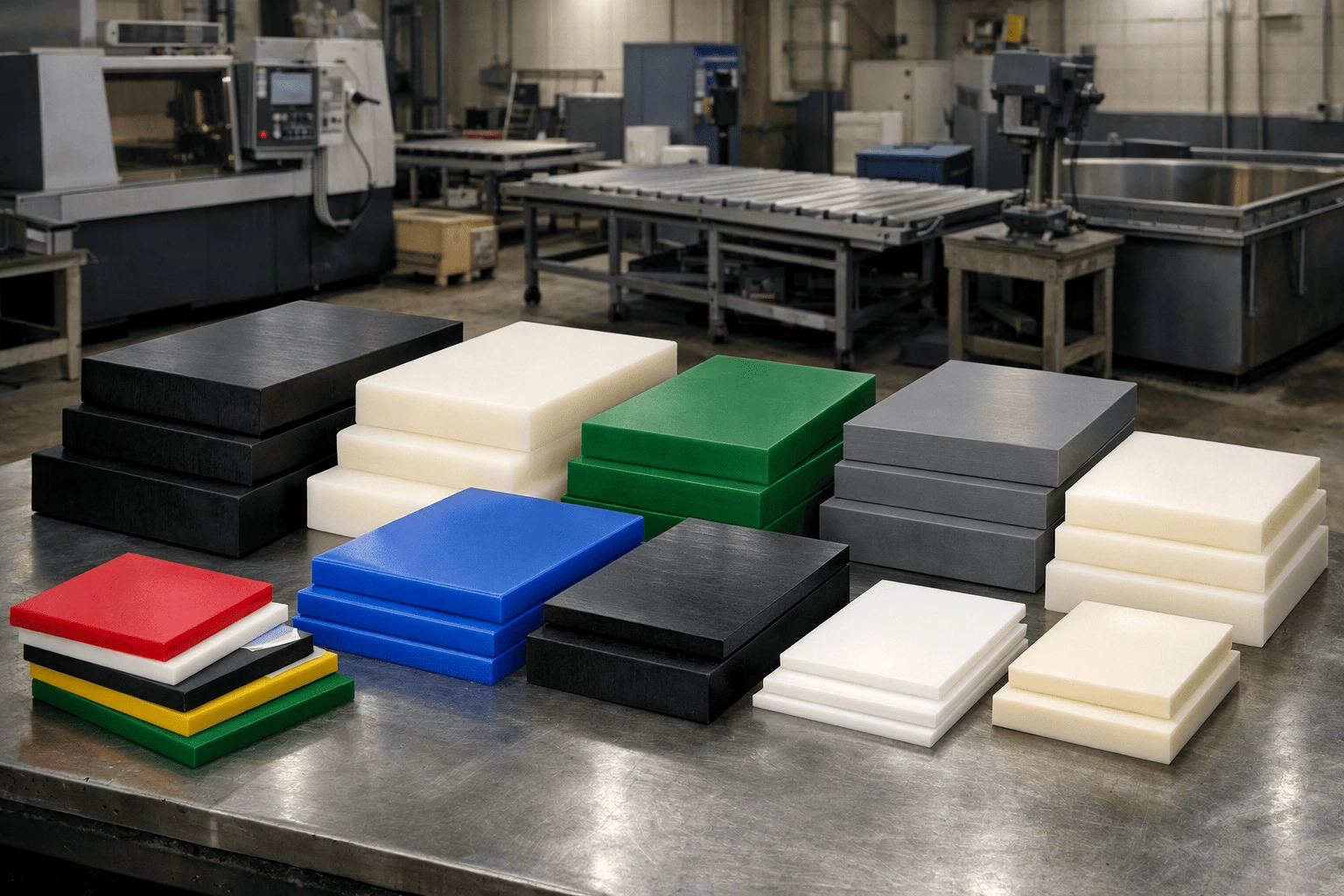
PE500 is widely used in food-safe environments due to its durability and machinability. Colour-coded variations assist manufacturers in maintaining separation between production stages, reducing cross-contamination risks.
The material is commonly machined into star wheels, guide rails and wear strips that require both impact resistance and hygienic performance. Its balance of strength and flexibility makes it practical for components that must endure repetitive mechanical movement without cracking or splintering. Because PE500 is relatively easy to machine, it integrates efficiently into custom fabrication workflows, which is particularly valuable in facilities that frequently modify production layouts.
HDPE for Fabricated Tanks & Washdown Environments
High-Density Polyethylene (HDPE) remains a versatile choice for tank fabrication, splash guards and machine enclosures. Its resistance to moisture and a wide range of chemicals makes it well suited to washdown-heavy environments.
Thinner sheets are often used for linings and covers, while thicker grades provide structural support in larger fabricated systems. HDPE also offers good impact resistance and weldability, which support custom-built containment systems and process tanks. For manufacturers balancing durability with cost-effectiveness, HDPE provides a reliable middle ground between lightweight plastics and heavier engineering polymers.
Precision Engineering & Machinability in Modern Manufacturing
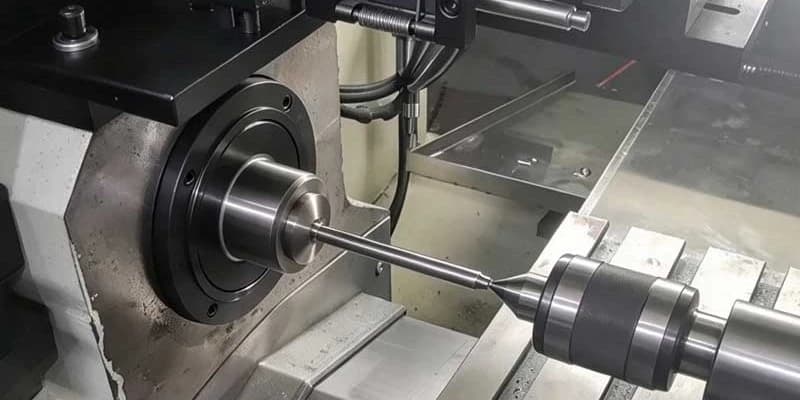
As CNC machining and automated assembly systems become more common, dimensional stability and predictable cutting behaviour are increasingly important. Materials must maintain tolerances under mechanical stress while remaining easy to machine.
Acetal for Dimensional Stability and Low Friction
Acetal is valued for its stiffness, low moisture absorption, and consistent machinability. It is frequently used for gears, rollers, bushes and structural mechanical components where precision matters. Its ability to hold tight tolerances under load makes it particularly suitable for automated production systems. Compared to more flexible plastics, acetal offers improved rigidity, which helps maintain alignment in moving assemblies. The material’s low-friction surface also reduces wear between interacting components, supporting longer maintenance intervals in machinery with repetitive motion.
Nylon for Load-Bearing and Wear-Resistant Components
Nylon remains a common choice for load-bearing parts subject to repeated friction. It combines strength with shock absorption, making it suitable for rollers, bearing surfaces and structural supports. Nylon 6 is frequently selected for general-purpose engineering components, while Nylon 6.6 offers enhanced stiffness and heat resistance in more demanding applications. Although nylon can absorb some moisture over time, it performs well in dry mechanical systems where resilience and toughness are required. For manufacturers seeking a balance between impact resistance and structural strength, nylon continues to offer dependable performance.
Chemical Resistance & Extreme Environments
Certain sectors — including water treatment, pharmaceuticals, and chemical processing — require materials that can tolerate aggressive substances and temperature fluctuations.
PTFE for Chemical and High-Temperature Stability
Polytetrafluoroethylene (PTFE) is widely known for its chemical inertness and extremely low-friction surface. It is commonly used for gaskets, seals, and insulating components in corrosive environments.
Thin sheets are often applied in sealing or barrier applications, while thicker grades are used where structural integrity must be maintained alongside chemical resistance. PTFE’s ability to withstand high temperatures without degrading makes it valuable in processing systems exposed to heat and reactive compounds.
Polypropylene & PVC for Fabrication and Structural Applications
Polypropylene is frequently fabricated into tanks, ducting systems, and chemical storage units due to its weldability and corrosion resistance. It provides a practical solution for custom-fabricated systems in controlled industrial settings. PVC, on the other hand, is widely used in structural panels, control enclosures, and machine guards. Its rigidity and moisture resistance make it suitable for partitioning and protective installations within production facilities. Both materials support long service life when correctly specified for their operating environment.
Choosing the Right Plastic Sheet for Your Manufacturing Project
Selecting the correct plastic sheet involves more than simply choosing a thickness. Engineers must consider load-bearing requirements, friction levels, temperature exposure, chemical contact, and machining demands. Low-friction materials such as UHMWPE and RG1000 can reduce wear in sliding systems. Acetal and nylon provide dimensional stability for precision machining. PTFE, polypropylene and PVC deliver dependable performance in chemically demanding or high-temperature environments.
A structured evaluation of operational conditions ensures that materials are aligned with performance needs. When plastic sheets are properly matched to application requirements, manufacturers can reduce maintenance interruptions, improve energy efficiency, and extend equipment lifespan.
Conclusion
Plastic sheets play a vital role in modern UK manufacturing because they address specific operational challenges — from abrasion and impact resistance to hygiene compliance and chemical stability. Each material offers distinct functional strengths, and performance outcomes depend on selecting the right grade for the working environment.
Rather than viewing plastic sheets as interchangeable, manufacturers benefit from understanding how friction, load, moisture exposure, and machining processes influence long-term durability. Careful material selection supports operational reliability and consistent production standards.
For technical specifications and further material guidance, additional information is available at primeplasts.uk.




.webp&w=3840&q=75)