Thursday, October 15, 2026
* All product/brand names, logos, and trademarks are property of their respective owners.
In industrial environments, oil exposure is a persistent and unavoidable challenge. Manufacturing plants, processing facilities, workshops, and maintenance areas all rely on oils, lubricants, and fuels to keep machinery running efficiently. However, these same substances can accelerate material degradation if protective components are not carefully selected. When linings, seals, or cushioning materials fail, the consequences often include increased maintenance costs, unplanned downtime, and reduced equipment lifespan.
Material selection is therefore a critical consideration for engineers, maintenance managers, and procurement teams. The right material must not only resist oil and chemical exposure but also withstand mechanical stress, vibration, and temperature variation over extended periods. Among the materials commonly specified for these demanding conditions, neoprene rubber sheets have established a strong reputation for reliability and versatility. Neoprene is valued for its balanced performance characteristics. It combines oil resistance with mechanical durability, making it suitable for a wide range of industrial equipment applications. Unlike general-purpose rubbers, neoprene maintains its integrity under repeated stress and prolonged exposure to oils, helping industrial operations remain efficient and predictable.
This article explores the technical properties that make neoprene rubber sheets effective in oil-resistant applications, how they are commonly used across industrial equipment, and what factors should be considered when selecting the right neoprene solution. The aim is to provide practical insight that supports informed material decisions in industrial environments.
Neoprene rubber is a synthetic elastomer engineered to perform consistently in challenging industrial conditions. Its formulation provides a combination of chemical resistance, mechanical strength, and environmental stability that is difficult to achieve with many alternative materials.
One of neoprene’s defining characteristics is its resistance to oils, greases, and fuels commonly used in industrial equipment. When exposed to petroleum-based substances, neoprene rubber sheets resist swelling, softening, and breakdown more effectively than many standard rubber materials. This resistance helps preserve sealing performance and structural integrity, even in applications where oil contact is frequent or continuous.
For industrial equipment, this means reduced risk of leaks, contamination, and premature material failure. Over time, consistent oil resistance translates into fewer material replacements and more predictable maintenance cycles.
Industrial environments often involve fluctuating temperatures, particularly around machinery and processing equipment. Neoprene rubber sheets maintain flexibility at lower temperatures while retaining strength and stability at higher operating temperatures. This balanced temperature performance allows neoprene to function reliably in applications involving both heat generation and ambient exposure.
Mechanically, neoprene offers good tensile strength and tear resistance. It can withstand repeated compression, bending, and movement without cracking, making it suitable for dynamic applications where components are constantly under load.
In addition to chemical resistance, neoprene performs well under physical stress. Its resistance to abrasion helps protect underlying surfaces from wear, while its ability to absorb vibration reduces mechanical shock and noise. These properties are particularly valuable in industrial settings where equipment operates continuously and material fatigue can become a long-term concern.
The widespread use of neoprene rubber sheets across industrial sectors reflects their adaptability to diverse equipment requirements. From heavy machinery to precision components, neoprene provides functional benefits that support operational reliability.
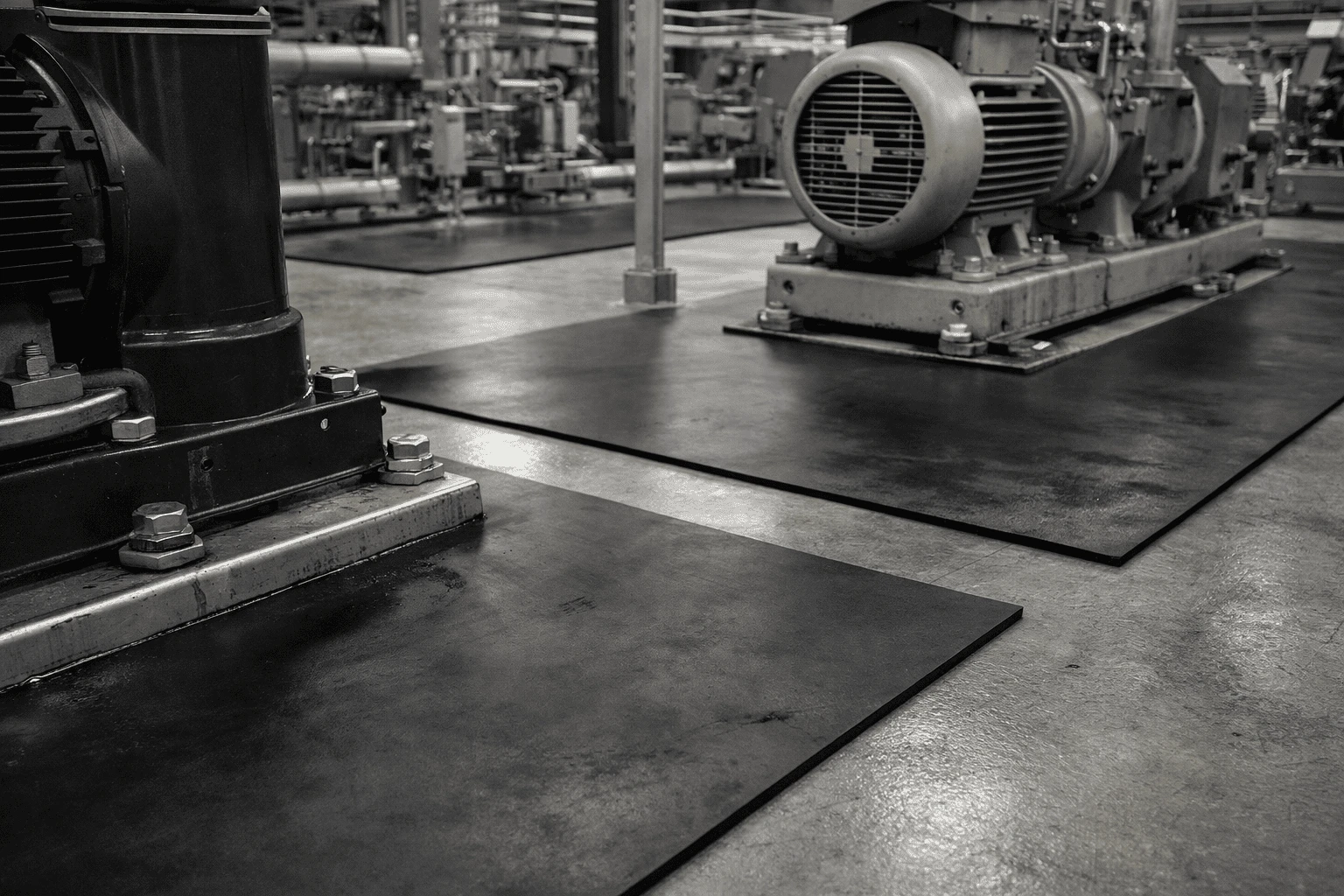
Neoprene rubber sheets are frequently used as protective linings within machinery housings and guards. By creating a barrier between metal surfaces and oil-contaminated environments, neoprene helps reduce corrosion and surface wear. Its flexibility allows it to conform to complex shapes, making it practical for both new installations and retrofit applications.
Equipment such as pumps and compressors is subject to constant movement, vibration, and oil exposure. Neoprene’s combination of oil resistance and vibration-damping properties makes it suitable for use as isolation pads, linings, and protective layers in these systems. By reducing vibration transfer, neoprene can also contribute to quieter operation and reduced stress on adjacent components.
Neoprene rubber sheets are commonly converted into gaskets and seals for industrial equipment. Their ability to maintain compression over time helps ensure effective sealing, even in oil-rich environments. In addition, neoprene’s vibration-absorbing characteristics make it useful for isolating sensitive components and reducing mechanical wear.
Choosing the appropriate neoprene rubber sheet requires an understanding of both the operating environment and the functional demands of the application. A considered approach helps ensure long-term performance and reliability.
The extent and type of oil exposure should be assessed first. Applications involving continuous oil contact generally require solid neoprene rubber sheets that offer maximum resistance and durability. Where exposure is intermittent or limited, neoprene still provides effective protection while allowing greater flexibility in installation.
Solid neoprene rubber sheets are typically selected for heavy-duty applications where abrasion resistance and structural strength are priorities. Expanded sponge neoprene, with its cellular structure, is better suited to sealing, cushioning, and vibration dampening. Its compressibility allows it to adapt to uneven surfaces and absorb movement effectively.
Thickness affects how well a neoprene rubber sheet handles wear, compression, and vibration over time. Wider sheets mean fewer joints in larger installations, which can help avoid weak spots. Depending on the surface and installation method, the sheet adapts to the conditions, providing reliable performance across different environments. By combining durability, chemical resistance, and flexibility, neoprene rubber sheets consistently support industrial equipment, keeping machinery protected and operating smoothly.
Sourcing materials locally offers practical benefits for industrial operations, particularly when reliability and continuity of supply are critical.
UK-based supply helps minimise lead times, which is especially important during maintenance or repair work. Faster access to materials supports efficient scheduling and reduces the risk of extended downtime.
Consistency in material specifications is essential for industrial use. Reliable sourcing helps ensure that replacement materials perform in line with expectations, supporting repeat purchasing and long-term maintenance planning.
Industrial equipment requires ongoing upkeep. A dependable supply chain makes it easier to manage inventory and plan maintenance cycles, reducing operational risk and supporting compliance requirements.
Neoprene rubber sheets play an important role in supporting oil-resistant industrial applications. Their combination of chemical resistance, mechanical durability, and vibration control makes them suitable for a wide range of equipment and operating environments. By understanding the technical properties of neoprene and the differences between solid and sponge formats, industrial professionals can make informed decisions that enhance equipment performance and longevity.
Careful consideration of oil exposure levels, mechanical demands, and installation requirements helps ensure that the selected material performs reliably over time. Selecting materials from a dependable source further supports consistency and operational efficiency. For more information on neoprene rubber sheets and other industrial matting solutions, resources are available at therubbermats.uk

UK writer Evan covers home improvement, construction, and lifestyle trends, sharing practical insights for readers.
"Which trim do I actually need?" It's a fair question, and one that trips up a lot of first-time buy
7 September 2026
Finishing touches make or break a renovation. You can fit a beautiful new floor or repaint a room pe
4 September 2026
Flat bar trims are one of those quiet building products that rarely get noticed until they're missin
3 September 2026
Be the first to share your thoughts
No comments yet. Be the first to comment!
Share your thoughts and join the discussion below.