
Thursday, July 23, 2026
* All product/brand names, logos, and trademarks are property of their respective owners.
Workplace safety in the UK’s industrial and commercial sectors continues to be a major operational priority. Slips, trips, and falls remain among the most frequently reported workplace injuries, particularly in environments such as warehouses, engineering workshops, manufacturing plants, and distribution centres. While machinery, training, and PPE often receive attention, flooring is sometimes overlooked — despite being one of the most influential factors in daily safety and comfort.
Concrete floors may be durable, but they can quickly become hazardous when exposed to water, oil, dust, or heavy foot traffic. Over time, surfaces can polish smooth, increasing the risk of slips. At the same time, employees standing for extended shifts on hard flooring often experience fatigue, joint discomfort, and reduced concentration. Rubber matting addresses both concerns, offering a practical way to improve grip, absorb impact, and support worker wellbeing. Below, we explore why rubber matting is not simply an accessory but an essential component of a safer and more efficient industrial workplace.
Accidents in industrial settings rarely occur without consequence. Beyond the immediate injury, businesses may face downtime, investigations, compensation claims, and reputational impact. Proactively improving floor safety is one of the most effective ways to minimise these risks.
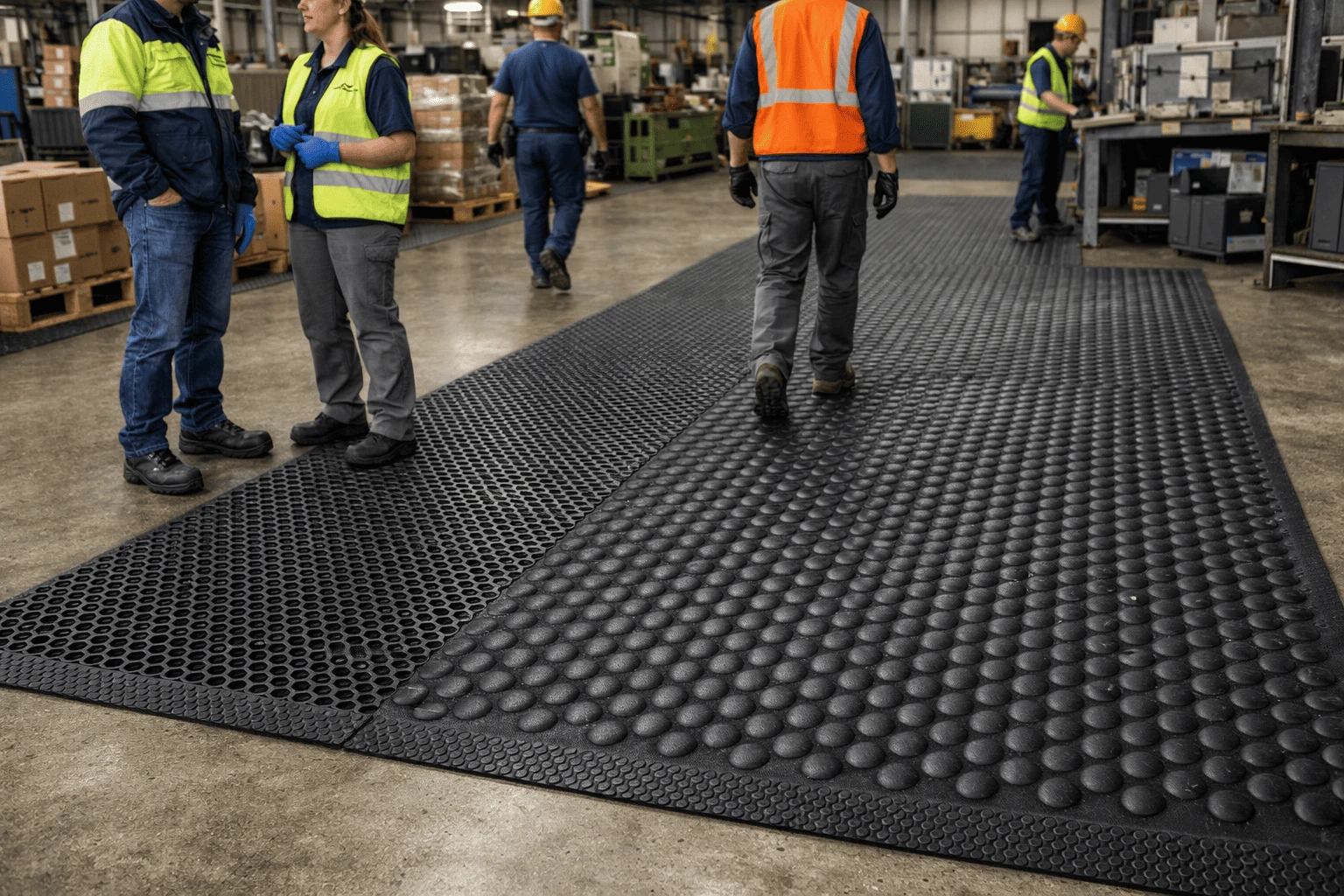
In busy industrial facilities, warehouse aisles, packing zones, and machine areas are subject to constant movement from employees and heavy equipment. This combination of traffic, debris, and occasional spills can create hazardous conditions on conventional flooring. Incorporating materials that improve traction and absorb stress is crucial. Rubber Mattings serve as an effective solution, providing consistent underfoot grip and cushioning for staff while reducing floor wear. They are suitable for indoor high-traffic areas as well as transitional and outdoor zones, where durability and stability are critical. Facilities that integrate Rubber Mattings into their flooring systems benefit from a neutral, practical approach to workplace safety that addresses both employee well-being and operational demands without relying on complex or maintenance-intensive interventions.
Entrances and loading bays are frequent accident hotspots. Water, mud, and oil residues are easily tracked indoors, creating unexpected hazards. Rubber mats with structured surfaces help trap debris before it spreads, while ramped edges reduce trip hazards and maintain accessibility for trolleys or carts.
Reinforcing these transitional zones reduces the likelihood of incidents occurring at the very points where conditions change most rapidly.
Industrial roles often involve prolonged standing at workstations, assembly lines, or inspection points. Over time, this can contribute to muscle strain, lower back discomfort, and reduced circulation. Fatigue not only affects well-being but can also impact productivity and focus.
Anti-fatigue matting provides controlled cushioning, encouraging subtle foot movement, improving blood flow, and reducing strain. These mats are typically used in static work zones, where staff stand for extended periods. Modular designs allow scalable coverage for larger areas, ensuring comfort across production floors while maintaining stability and safety. By integrating anti-fatigue solutions, workplaces can support employee health while preserving operational efficiency.
Engineering workshops demand flooring that withstands mechanical stress, oil exposure, and vibration. Rubber pads can stabilise equipment, protect surfaces, and absorb impact. In abrasive or heavy-use environments, high-density rubber components reduce wear on concrete floors and help extend the service life of machinery. These measures contribute to both worker safety and operational resilience, allowing engineering teams to focus on their tasks without undue concern about floor-related hazards.
Certain industrial environments require enhanced protection beyond slip resistance and cushioning.
Electrical insulation underfoot adds a crucial layer of safety in plant rooms and control panel areas. Mats designed for electrical applications protect against low- and high-voltage risks, helping reduce accidents and aligning workplace practices with recognised safety standards.
Facilities handling electronic components or sensitive equipment often require static control. Anti-static matting helps reduce electrostatic discharge that could otherwise damage critical systems. Modular and interlocking solutions allow flexible zoning, enabling workplaces to protect personnel and infrastructure while maintaining accessibility.
Rubber matting serves as a protective barrier between machinery and structural flooring. Dropped tools, repetitive vibration, and heavy loads can gradually damage concrete surfaces.
In workshops, high-density rubber mats absorb impact, dampen vibrations, and provide stable footing. Modular designs allow mats to be placed strategically along pathways and production lines, improving both safety and workflow. These solutions can also contribute to noise reduction in busy industrial areas, creating a more comfortable working environment for staff.
Outdoor areas present additional challenges, particularly during wet UK weather. Durable rubber mats adapted for yard walkways and outdoor zones ensure consistent traction and drainage, helping reduce slip risks. Modular connectors can maintain layout stability and prevent mat displacement, extending safety measures beyond the building interior and across the entire operational site.
Rubber matting plays a far more strategic role in industrial workplaces than many organisations initially recognise. From reducing slips and fatigue to insulating electrical areas and protecting floors from wear, it contributes to a safer, more resilient working environment. For UK businesses, thoughtful flooring decisions can help minimise downtime, improve employee comfort, and support compliance with workplace safety standards. Assessing risk levels, understanding environmental demands, and selecting appropriate materials are key steps in creating an effective safety strategy. Those looking to strengthen safety and efficiency in their industrial spaces may explore a range of flooring options through commercialstrips.co.uk, providing guidance on selecting the right mats for different operational needs.

Writer and content strategist with a love for guest posting and digital growth. I help businesses share their stories on top UK blogs and reach their ideal audience.
When people think about safety in bags, outdoor gear, and apparel, they usually focus on visible ele
18 February 2026
In industrial and commercial environments, magnets are often treated as simple, low-risk components.
5 February 2026
In today’s fast-paced UK workplaces—ranging from industrial facilities and warehouses to
31 January 2026
Be the first to share your thoughts
No comments yet. Be the first to comment!
Share your thoughts and join the discussion below.