Saturday, October 24, 2026
* All product/brand names, logos, and trademarks are property of their respective owners.
In modern industrial environments, material selection plays a crucial role in equipment reliability, operational efficiency, and long-term cost management. Plastic rods have increasingly replaced traditional metals in UK industry, thanks to advantages such as reduced weight, corrosion resistance, lower friction, and improved machinability. From manufacturing machinery to conveyor systems and processing equipment, plastic rods are now integral to many industrial applications.
However, not all plastics behave the same way under industrial conditions. Each material responds differently to load, wear, temperature, chemicals, and environmental exposure. Selecting the wrong plastic rod can lead to premature wear, dimensional instability, or unexpected downtime—challenges that can be costly in both time and resources.
This guide is designed for engineers, maintenance teams, and technical buyers seeking a clearer understanding of how to select the right plastic rod for specific industrial applications. Rather than focusing solely on specifications, it explores practical performance considerations and explains where different materials excel in real-world scenarios.
The first consideration when selecting a plastic rod is the mechanical stress it will encounter. Applications with static loads require different material properties compared to those with continuous movement, vibration, or impact. For instance, bushes, gears, and rollers demand plastics with strong wear resistance and load-bearing capabilities, while lightly loaded spacers or guides may prioritize dimensional accuracy. Friction also matters. In sliding or rotating components, low-friction materials help minimize heat build-up and wear on mating parts, extending service life and improving overall system efficiency.
Industrial equipment often faces elevated temperatures, chemicals, oils, or moisture. Some plastics soften under heat, while others withstand chemically aggressive conditions. Understanding the operating environment is essential to avoid degradation over time. Moisture absorption is another key factor. For outdoor installations, washdown areas, or food processing environments, materials with low water absorption maintain dimensional stability and consistent performance.
Certain applications require materials with specific properties, such as electrical insulation, food-safe characteristics, or chemical inertness. Selecting the correct plastic rod also depends on availability in suitable diameters and tolerances to ensure replacements or future projects can be supported without disruption.
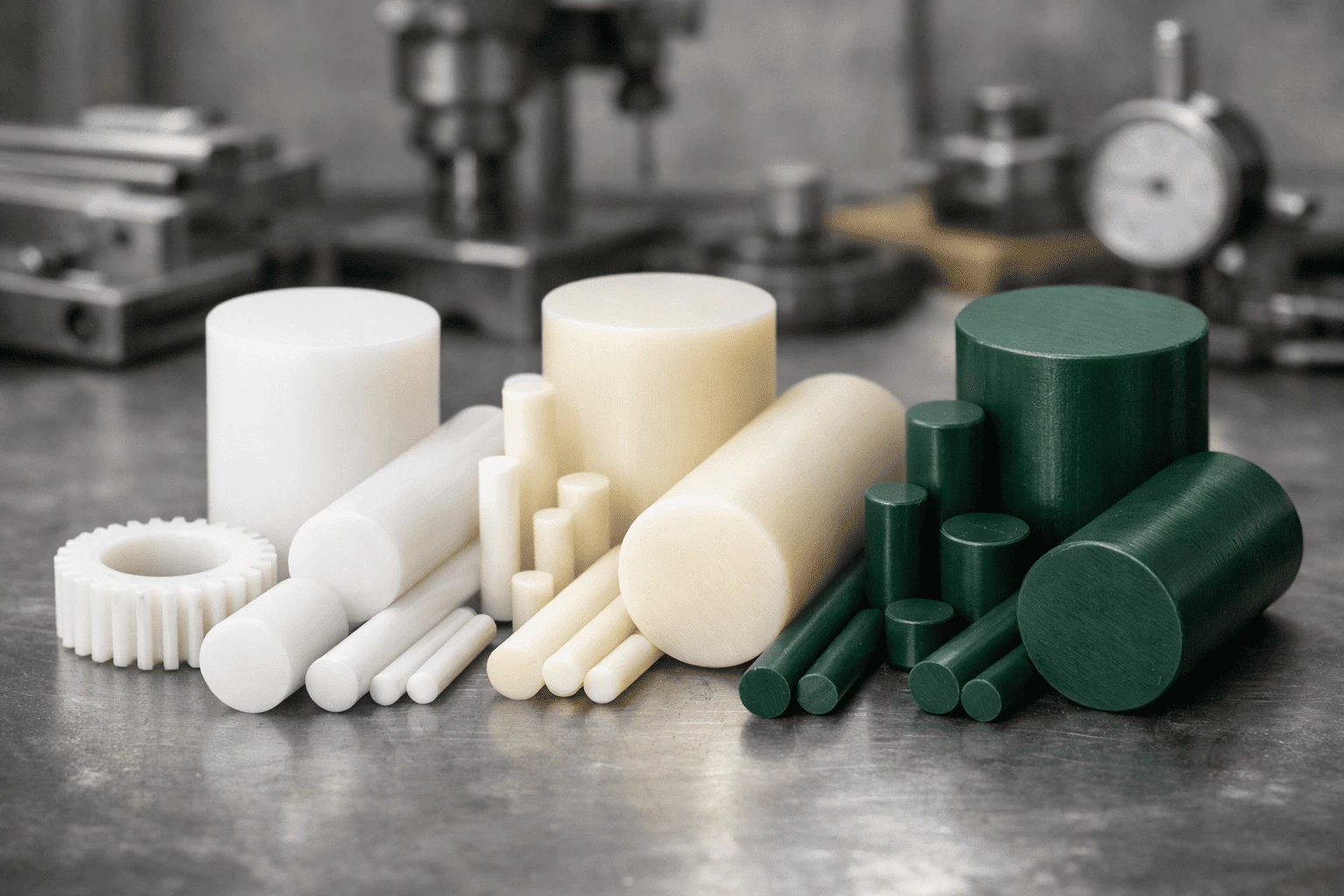
Acetal rods are widely used in industrial equipment where accuracy and repeatability are essential. Known for excellent machinability and dimensional stability, acetal performs reliably in moving components that require consistent tolerances.
Smaller diameters, such as 5mm acetal rods, are often used for precision pins and spacers, while larger diameters, around 28mm, are suitable for machined gears, bushes, and wear components.
Acetal’s low friction and resistance to oils make it suitable for automation and packaging machinery components
Nylon rods are valued for their strength, toughness, and resistance to abrasion. They are frequently applied to load-bearing components such as pulleys, rollers, and structural parts where durability is critical.
Larger nylon 6.6 rods, including diameters around 110mm, are often machined into heavy-duty components, while smaller nylon 6 rods support lighter but still wear-intensive applications. Oilon rods, which are self-lubricating nylon variants, are particularly useful in areas with limited maintenance access, as they reduce friction without external lubrication.
UHMWPE rods are well known for exceptional wear resistance and very low friction, making them ideal for sliding applications such as conveyor guides and wear strips. Smaller diameters around 25mm are common for guide components, while larger diameters are suitable for impact-resistant liners and machinery parts.
HDPE rods, while not as wear-resistant as UHMWPE, offer excellent moisture resistance and impact toughness. They are often selected for outdoor or washdown environments where durability and cost-efficiency are important.
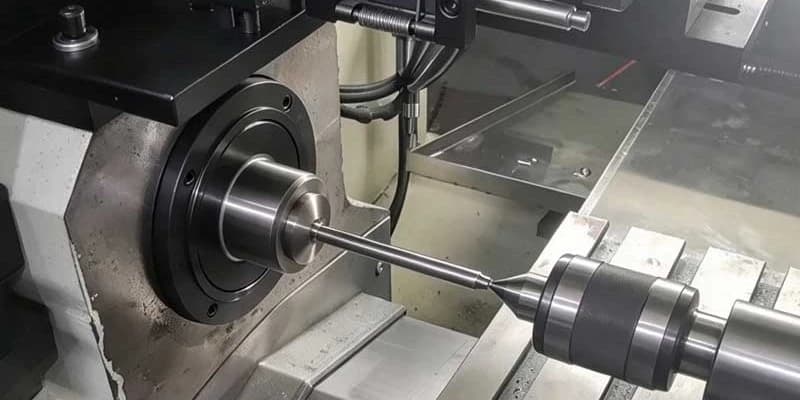
Plastic Rods are commonly used in industrial settings as a durable material solution, designed to withstand repeated movement, wear, and challenging operating conditions.
Polypropylene rods are commonly used in chemically aggressive environments due to their strong resistance to acids and alkalis. They are lightweight and easy to fabricate, making them suitable for tanks, supports, and processing equipment.
PVC rods offer rigidity alongside chemical resistance. Smaller diameters are ideal for fabricated fittings, while larger rods support structural frameworks and insulation components.
Polyurethane rods combine elasticity with abrasion resistance, making them ideal for applications involving repeated impact or vibration, such as rollers, buffers, and damping components.
Rods with a 90A Shore hardness balance flexibility and strength, helping protect machinery from shock while maintaining durability in high-wear zones.
PTFE rods are suitable for high-temperature or highly corrosive applications. Their wide temperature tolerance, chemical inertness, and very low friction make them ideal for seals, insulators, and specialist industrial components.
Smaller PTFE rods serve as precision parts, while larger diameters are used in components exposed to heat or aggressive chemicals.
PET rods are commonly selected where dimensional stability and hygiene are priorities. With low moisture absorption and good mechanical strength, PET performs well in food processing, packaging, and precision engineering environments.
Smaller PET rods suit machined spacers and guides, while larger diameters provide stable structural components that maintain accuracy over time.
PEEK rods are used in applications demanding strength, thermal stability, and chemical resistance. Often considered a lightweight alternative to metal, PEEK performs reliably under high loads and temperatures.
PEEK’s long service life and fatigue resistance make it suitable for aerospace, automotive, and high-performance industrial machinery applications.
Tufnol rods combine mechanical strength with excellent electrical insulation. They are widely used in electrical, marine, and heavy engineering applications where safety and durability are essential.
Available in various diameters, Tufnol supports both small insulating components and larger load-bearing parts requiring stable electrical properties.
Selecting the right plastic rod for industrial applications requires a clear understanding of operating conditions, mechanical demands, and environmental exposure. Each material offers distinct advantages, from precision-focused acetal rods to heavy-duty nylon, low-friction UHMWPE, chemically resistant polypropylene, and high-performance PEEK. By focusing on application-specific requirements rather than material names alone, engineers and technical buyers can enhance component longevity, reduce maintenance, and improve overall equipment performance. A structured approach ensures plastic rods are applied where they provide the most value, supporting reliable and efficient industrial systems. For further technical reference and material specifications, detailed information is available at primeplasts.uk.

An experienced writer covering digital transformation, automation, branding, and emerging industry trends. Passionate about turning complex ideas into clear, actionable content that helps businesses and professionals stay ahead.
"Which trim do I actually need?" It's a fair question, and one that trips up a lot of first-time buy
7 September 2026
Finishing touches make or break a renovation. You can fit a beautiful new floor or repaint a room pe
4 September 2026
Flat bar trims are one of those quiet building products that rarely get noticed until they're missin
3 September 2026
Be the first to share your thoughts
No comments yet. Be the first to comment!
Share your thoughts and join the discussion below.

.webp&w=3840&q=75)