Thursday, October 15, 2026
* All product/brand names, logos, and trademarks are property of their respective owners.
In industrial environments, packaging is often treated as a practical necessity rather than a strategic component. Yet, for businesses handling industrial equipment, packaging decisions can significantly influence operational efficiency, workplace safety, and the condition in which products arrive at their destination. Thoughtful packaging choices reduce handling problems, minimise damage, and help equipment reach buyers in a manner that reflects professional standards.
Industrial equipment typically moves through multiple stages—storage, internal handling, palletisation, transport, and final delivery. Each stage presents potential risks, from impact damage and moisture exposure to load instability and inefficient handling. Careful packaging strategies help mitigate these risks while supporting smoother workflows across warehouses and logistics networks.
This article explores how well-chosen packaging supplies can enhance efficiency, safety, and presentation in industrial settings, focusing on practical considerations rather than promoting specific products.
Efficiency in industrial packaging begins with predictable, stable loads. When equipment is packaged securely from the outset, teams spend less time correcting issues, repacking damaged goods, or dealing with avoidable delays.
Industrial equipment rarely conforms to uniform shapes or weights. Irregular components, protruding edges, and uneven mass distribution can all compromise load stability if not managed correctly. Pallet wrapping plays a critical role in holding these loads together, preventing shifting during handling and transport.
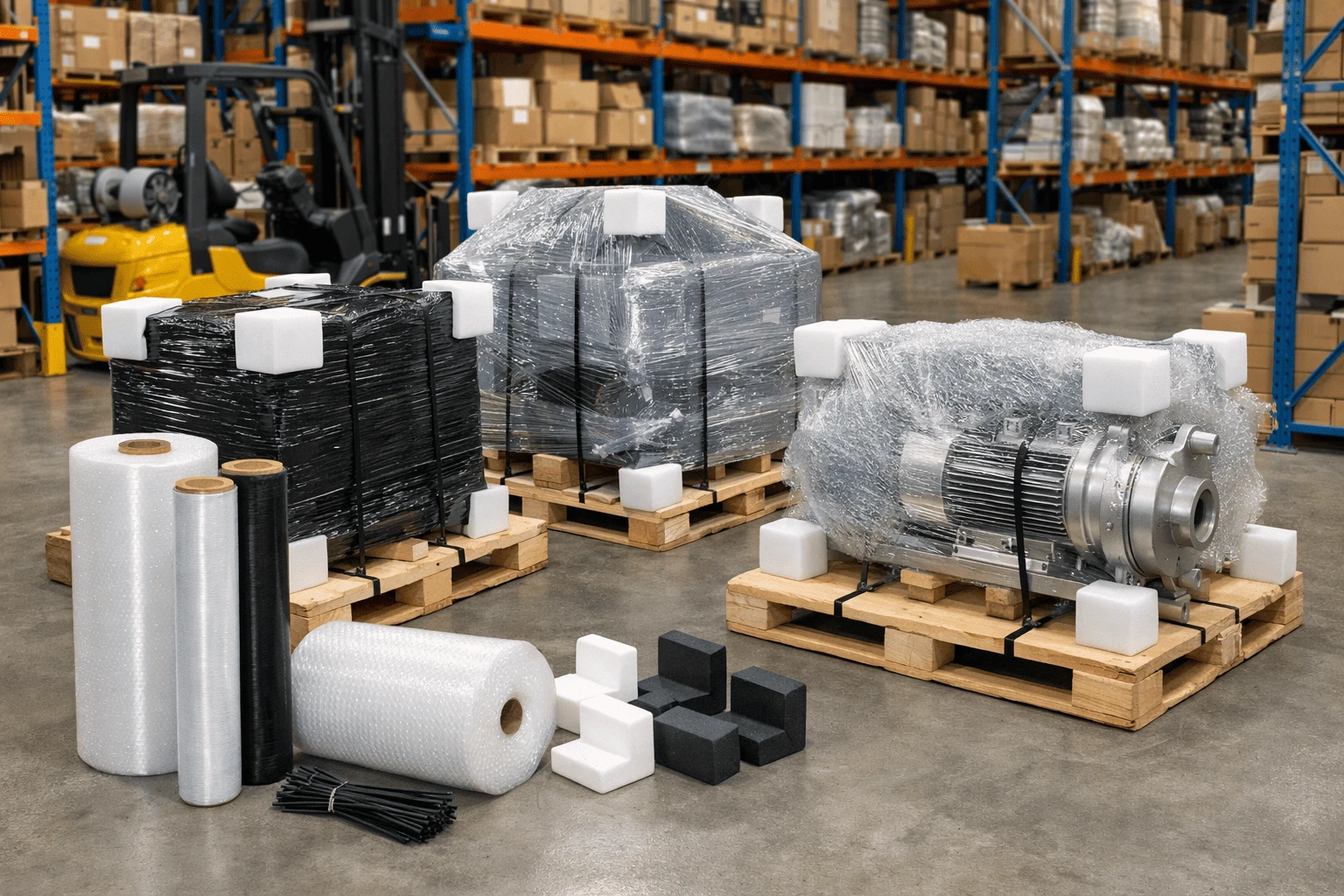
Using black pallet wrap is preferred when equipment needs to be tightly bound and visually concealed, while clear pallet wrap allows teams to quickly identify products and labels without unwrapping. Both approaches support consistent palletisation standards, reducing errors and speeding up warehouse operations. Stable loads also decrease strain on handling equipment, such as forklifts and pallet trucks. When pallets remain intact and balanced, they move more smoothly through warehouses and loading bays, improving overall throughput.
Repacking and rewrapping are common inefficiencies in industrial logistics. Loads that shift during transit often require extra labour to correct, increasing handling time and operational costs. Reinforcing palletised equipment before wrapping can reduce these issues significantly.
High-tensile cable ties are frequently used to secure awkward or heavy components directly to pallets before final wrapping. This added stability maintains load integrity throughout transport, lowering the likelihood of collapsed pallets or rejected deliveries. Fewer packaging failures mean fewer operational interruptions. Teams can focus on moving goods efficiently rather than resolving preventable packaging issues.
Transit damage is one of the most costly concerns in industrial supply chains. Even minor impacts can lead to functional or cosmetic damage, affecting usability, compliance, or customer confidence.
Not all cartons are designed to handle industrial weights. Single-wall boxes often lack the structural strength required for heavy or dense equipment, particularly when stacked or moved repeatedly. Double-wall cartons provide greater resistance to crushing and deformation, helping maintain box integrity under load. Strong cartons also improve handling safety. Boxes that retain their shape are easier to lift, stack, and secure, reducing the risk of sudden collapses that could injure workers or damage contents.
Corners and edges are among the most vulnerable areas during transport. Impacts at these points can cause dents, cracks, or structural weakening, even if the rest of the packaging remains intact. Rigid plastic corner protectors offer robust protection for heavier equipment, absorbing impact forces and distributing them away from critical points. Foam corner protectors provide cushioning for more delicate surfaces, reducing vibration and abrasion without adding unnecessary weight. A layered approach—combining strong cartons with targeted corner protection—addresses multiple risk factors simultaneously, reducing overall damage rates during transit.
Packaging decisions directly affect safety outcomes in industrial environments. Poorly secured loads and inadequate protection increase the likelihood of handling injuries, equipment damage, and operational disruptions.
Manual handling remains a significant risk in warehouses and distribution centres. Unstable packaging, sharp edges, and shifting contents contribute to accidents. Proper packaging creates predictable loads that are easier and safer to manage. Double-wall cartons prevent sudden box failures, while foam corner protectors reduce exposure to sharp edges. Together, these measures support safer lifting, stacking, and movement of industrial equipment.
Vibration and repeated movement can weaken poorly secured packaging. Reinforcement techniques, such as bundling components with heavy-duty cable ties, maintain load integrity over long distances or multi-drop routes. Stable loads improve safety during unloading as well. When equipment arrives intact and secure, warehouse staff and drivers face fewer risks when handling deliveries.
Industrial equipment is often stored for extended periods, where environmental factors like moisture and temperature fluctuations can cause gradual damage.
Damp conditions are common in UK storage facilities, particularly during colder months. Moisture can lead to corrosion, surface staining, and material degradation if left unaddressed. Lightweight moisture-resistant foam is frequently used to wrap equipment before boxing or palletising. It provides cushioning while helping reduce exposure to moisture, suitable for both short-term handling and longer-term storage.
Moisture damage often develops gradually and may not be visible until unpacking. Preventative packaging measures reduce the risk of hidden deterioration, ensuring equipment remains functional upon delivery. Combined with strong cartons and stable palletisation, moisture protection supports a comprehensive packaging strategy that preserves value throughout the supply chain.
In B2B environments, packaging quality influences perception as much as performance. How equipment arrives can shape a buyer’s assessment of a supplier’s reliability and attention to detail.
Clean, secure packaging signals professionalism. Pallet-wrapped loads that arrive intact and orderly reassure buyers that equipment has been handled responsibly. Strong cartons and intact corner protection reinforce this impression, reducing the need for extensive inspections on arrival.
Thoughtful packaging demonstrates control and consistency. Protective measures such as corner protection and stable palletisation indicate that potential damage has been addressed proactively. In many industrial environments, Packaging Supplies serve as essential materials that help maintain load stability, provide cushioning, and support safe handling practices. Using these solutions appropriately contributes to smoother receiving processes and reinforces confidence in operational reliability.
Effective packaging for industrial equipment is about more than containment. It improves efficiency by reducing rework, enhances safety by stabilising loads and protecting handlers, and strengthens presentation by ensuring equipment arrives in professional condition.
Focusing on load stability, impact protection, moisture resistance, and consistent presentation reduces damage rates and operational friction across supply chains. These incremental improvements create safer workplaces, more reliable deliveries, and better long-term outcomes.
For organisations reviewing or refining their approach to industrial packaging, understanding how packaging choices influence efficiency, safety, and perception is a valuable starting point. Additional information and resources are available at industrialmaterial.uk, providing insights into a wide range of practical industrial packaging solutions.

I am Oliver, a blog writer who enjoys creating clear, engaging, and meaningful content for readers. I like exploring different topics and turning ideas into simple, easy-to-understand articles that provide real value. My focus is on writing in a natural and creative way so readers can stay interested and connected. Through my blogs, I aim to inform, inspire, and share useful insights with my audience.
"Which trim do I actually need?" It's a fair question, and one that trips up a lot of first-time buy
7 September 2026
Finishing touches make or break a renovation. You can fit a beautiful new floor or repaint a room pe
4 September 2026
Flat bar trims are one of those quiet building products that rarely get noticed until they're missin
3 September 2026
Be the first to share your thoughts
No comments yet. Be the first to comment!
Share your thoughts and join the discussion below.