Saturday, October 24, 2026
* All product/brand names, logos, and trademarks are property of their respective owners.
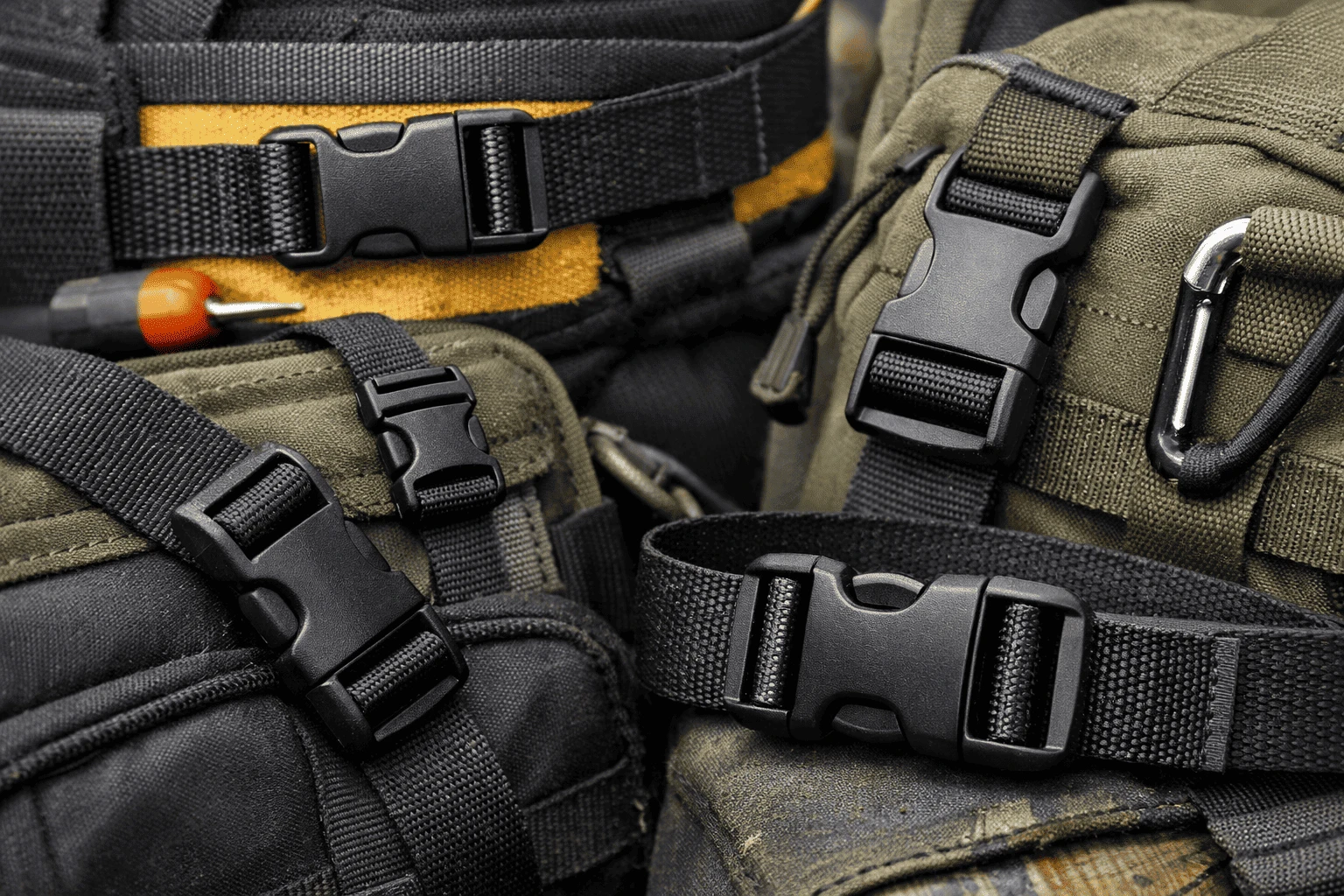
Side release buckles are one of those small components you hardly notice—until one fails at the worst possible moment. Maybe it’s a clip on a tool bag that won’t stay shut, a belt strap that keeps slipping, or a rucksack buckle that snaps mid-activity. When a fastening point gives up, everything feels messy: tools shift, straps dangle, and temporary fixes like tape or cable ties never feel truly secure.
This is exactly why side release buckles, also called side squeeze buckles, are widely used across bags, belts, and gear setups. They clip on and off quickly, are easy to adjust, and—when sized appropriately—handle daily wear without drama. For tradespeople, DIYers, and anyone who relies on organised gear, a properly chosen buckle can make straps feel secure and gear more manageable. In the UK, shoppers often select buckles by millimetre size. Searches like “10mm buckle” or “25mm replacement buckle” are far more common than inch-based measurements. Matching the buckle to the strap width ensures it threads correctly and stays stable under tension. A mismatch can lead to twisting, slipping, or accidental opening. Another frequent UK buying pattern is replacement intent. People usually repair an existing bag rather than build from scratch. Broken clips, cracked side pieces, or worn buckles are typical weak points. Choosing the right size and material can make all the difference between a reliable fastening point and one that feels flimsy. This guide focuses on practical insights: where side release buckles work best, how to pick the correct UK mm size, and which design details—curved shapes, dual-adjust options, weather resistance—matter in daily use.
Reliability is key for tools and accessories. Straps must hold, clips must stay secure, and fastening points should work without thought. Side release buckles provide this reliability through quick fastening, easy release, and consistent tension.
Tool bags endure heavy use, and strap buckles can wear out first. Medium-width Side Release Buckles are ideal for balancing strength and flexibility, keeping flaps flat and straps aligned. Dual-adjust designs allow changes from both ends, maintaining consistent tension and reducing the chance of shifting during use.
For belts and chest straps, comfort matters as much as strength. A rigid, flat buckle can press uncomfortably against the body, especially during bending or lifting. Curved designs often reduce pressure points, allowing a buckle to sit more naturally. Smaller belts or accessory straps benefit from flexible, curved designs that remain comfortable over long wear. Wider belts gain stability with proportionally broader buckles, giving a secure fastening point without feeling bulky or awkward.
Outdoor gear, camping packs, and field equipment benefit from buckles that can be released and fastened quickly, even with gloves. One-handed operation is a key advantage. Wider buckles for heavy webbing provide stability and distribute pressure evenly, reducing twisting or accidental opening during demanding tasks.
The size of a buckle determines its performance. In the UK, most straps and webbing are measured in millimetres, and buckles are sold accordingly. Matching strap width to buckle size ensures a secure fit.
10mm buckles are suitable for lightweight tasks such as small straps or pouches. They offer compact fastening points without adding bulk. These are ideal for tidy strap routing or light-load applications but are not recommended for tool bags or high-tension straps.
This size range supports medium-weight straps often found on organisers, wearable setups, or repair tasks. Curved or flexible designs improve comfort and usability, especially on straps that sit against the body or need frequent adjustment.
25mm is among the most common strap widths across tool bags, backpacks, and belts. It provides a reliable balance of security and ease of use. Dual-adjust options offer better control when frequently changing strap length or maintaining even tension.
As webbing width increases, stability and surface area become more important. Wider buckles distribute pressure and reduce twisting, particularly under heavy loads. This range is suited for larger outdoor packs, field gear, or any application where strap stability is crucial.
Beyond size, buckle performance depends on material, shape, and adjustability. These factors influence comfort, ease of use, and longevity.
Buckles are exposed to mixed UK weather: rain, damp, cold, and mud. Material choice affects durability and resistance to repeated moisture or temperature changes. Selecting a buckle that maintains a clean click and stable fit is essential for longevity.
Curved designs reduce pressure points on belts or straps that sit close to the body. This small ergonomic adjustment improves wearability, especially for prolonged use.
Standard buckles adjust on one side, while dual-adjust options allow control from both sides. This is helpful for keeping straps centred, evenly tensioned, and properly aligned, particularly on tool bags or heavier webbing systems.
Replacing a side release buckle is usually a straightforward process.
Measure the strap across the full width. Common UK sizes include 10mm, 15mm, 20mm, 25mm, 38mm, and 50mm. Matching the buckle to the strap ensures a secure hold.
Feed the strap through the slot from underneath.
Loop it back over the centre bar.
Pull tight so it doubles back on itself.
Ensure the strap lies flat and follows the natural curve if using a curved buckle.
Before relying on the buckle:
Tug test: Pull both sides firmly.
Click test: Listen for a clean, confident click.
Slip check: Apply pressure to confirm it does not slide.
These checks take seconds but help avoid failures during use.
A side release buckle may seem simple, but it strongly affects the dependability of your gear. Key takeaways:
Size first: Matching the strap width ensures a secure fit.
Comfort matters: Curved designs improve wearability for body-worn straps.
Adjustment control: Dual-adjust options help maintain tension and alignment.
Timely replacement: Swapping worn buckles prevents strap failures and keeps gear organised.
Proper sizing, correct threading, and understanding buckle features make gear upkeep safer and more efficient. You can explore relevant materials and sizes at straptapes.co.uk for reference.

Finn a writer who enjoys creating simple, expressive, and engaging content. I like turning everyday ideas into clear and meaningful writing that feels natural, fresh, and easy for readers to connect with.
Be the first to share your thoughts
No comments yet. Be the first to comment!
Share your thoughts and join the discussion below.
.webp&w=3840&q=75)