Saturday, October 24, 2026
* All product/brand names, logos, and trademarks are property of their respective owners.
UK manufacturing environments operate under constant pressure. Equipment runs for extended hours, materials are exposed to temperature fluctuations, oils, and mechanical stress, and production targets leave little room for downtime. In such demanding settings, material selection becomes a strategic decision rather than a routine purchase.
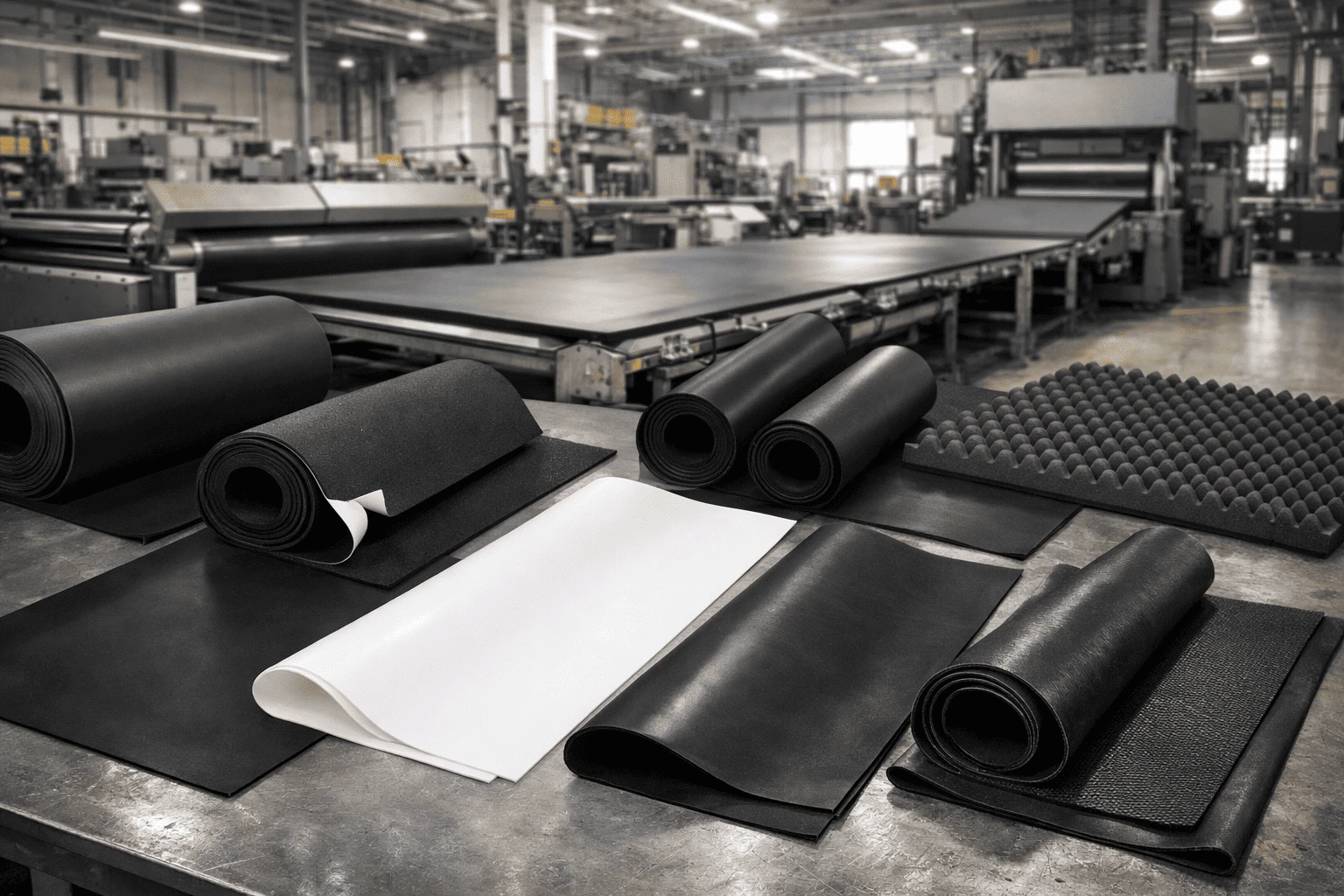
Industrial rubber sheets are widely adopted across manufacturing facilities because they combine flexibility with strength. Whether used as protective linings, machinery buffers, acoustic barriers, or sealing materials, rubber sheeting helps safeguard both infrastructure and workforce. True performance lies in how well a material maintains its properties under continuous strain.
This guide explores how industrial rubber sheets support modern manufacturing operations, what performance factors matter most, and how different material types address specific operational challenges — all while keeping practicality and long-term efficiency in focus.
Industrial rubber sheets serve multiple functional roles within manufacturing facilities. Their adaptability makes them suitable for both heavy-duty applications and specialist environments.
Unexpected downtime can significantly impact production output. Machinery vibration, repeated impact, and friction gradually weaken surfaces and fittings. Rubber sheeting acts as a protective interface, absorbing shock and reducing wear on structural components.
Durable neoprene or synthetic rubber sheets, for example, provide resistance to oils and general wear while maintaining flexibility. In areas where additional reinforcement is needed, layered or insertion-reinforced rubber sheets offer enhanced tear resistance. By minimizing material fatigue and mechanical strain, resilient rubber sheets contribute to smoother operations and fewer interruptions.
Health and safety compliance is a priority across UK manufacturing. Slips, exposure to moisture, and environmental fluctuations all require preventative measures. Rubber sheeting can provide additional grip, insulation, and environmental protection where needed. EPDM or ethylene-propylene rubber sheets, known for resistance to weathering and moisture, maintain structural integrity even in semi-exposed or washdown areas. Facilities integrating durable rubber solutions into flooring, workstations, or protective panels often find that proactive material selection supports both regulatory compliance and safer working conditions.
Industrial facilities frequently demand materials that can withstand constant load-bearing pressure. From conveyor systems to fabrication zones, surfaces endure ongoing mechanical stress.
Reinforced rubber sheets provide structural strength while retaining flexibility. This combination is vital where vibration control and impact absorption are necessary, but rigidity cannot compromise functionality. When correctly specified, rubber sheets become part of a facility’s performance strategy rather than a temporary protective measure.
Rubber materials are not all equal in terms of performance. Manufacturing sites vary in their exposure to heat, moisture, electrical hazards, and acoustic pressures. Considering these factors ensures the selection of the right material. In many industrial contexts, Rubber Sheets function as a reliable and flexible solution for ongoing operational demands.
Neoprene is widely recognized for its versatility. It performs reliably in environments exposed to oils, moderate chemicals, and fluctuating temperatures. Neoprene sheets are suitable for protective linings, sealing tasks, and cushioning between machinery components. Their durability makes them a dependable choice for general manufacturing use. Where additional cushioning or simplified installation is required, self-adhesive neoprene foam sheets provide shock absorption alongside adhesive convenience. In maintenance scenarios where efficiency matters, this reduces fitting time without complex mounting systems. Neoprene remains a practical, adaptable option for facilities seeking balanced performance.
Certain manufacturing sectors, including food production, pharmaceuticals, and electronics, demand specialist material properties. Temperature tolerance, hygiene compliance, and electrical functionality may all influence selection.
Silicone sheets are designed for environments where cleanliness and regulatory standards are paramount. Their ability to maintain stability at higher temperatures ensures consistent performance during processing operations. In facilities where contamination control is essential, detectable silicone sheets or electrically conductive variants support specific operational requirements such as static management or controlled conductivity. Silicone materials are often chosen when operational conditions extend beyond basic durability into more technical performance requirements.
Noise and vibration are common challenges in busy manufacturing plants. Prolonged exposure to excessive sound levels can affect workforce wellbeing and communication efficiency.
Acoustic foam sheets and sponge-backed rubber provide targeted vibration dampening and noise reduction. Strategic placement around machinery or enclosed systems helps moderate sound levels, improve workplace comfort, and support productivity in high-decibel zones. Rubber and sponge sheets are frequently selected where cushioning, vibration dampening, and noise reduction are key operational priorities.
Selecting the correct rubber sheet involves more than reviewing thickness or hardness ratings. Several broader performance factors influence long-term value.
Manufacturing environments often involve exposure to oils, cleaning agents, and fluctuating temperatures. Materials that degrade under such conditions may lead to premature replacement and operational disruption.
Silicone-based sheets maintain flexibility under heat stress, while EPDM-based rubber provides resilience in moisture-heavy or weather-exposed settings. Assessing real-world operating conditions before procurement helps avoid performance limitations later.
As manufacturing standards evolve, attention to employee well-being and workplace compliance continues to grow. Noise management is part of this broader focus.
Incorporating acoustic foam sheets in high-decibel zones can assist in moderating sound levels and reducing echo. Strategic placement around machinery or enclosed systems can make a measurable difference to workplace comfort.
Ease of installation affects operational efficiency. Self-adhesive rubber or foam sheets can simplify maintenance procedures and reduce downtime during upgrades.
However, lifecycle cost should remain central to decision-making. A material that withstands stress for extended periods often proves more economical than lower-cost alternatives that require frequent replacement. Evaluating performance characteristics in the context of long-term operational goals allows manufacturers to align material choice with productivity and cost efficiency.
Industrial rubber sheets remain a foundational component within UK manufacturing because they address real operational challenges — from machinery protection to environmental management. Durability ensures materials withstand continuous strain, but performance determines whether they maintain flexibility, resist environmental exposure, and contribute to safer, more efficient facilities. Neoprene offers adaptable resilience, silicone provides specialist functionality, and rubber or sponge sheets support impact absorption and acoustic balance.
The most effective material decisions come from understanding operational conditions in detail. By evaluating temperature exposure, mechanical stress, compliance requirements, and installation considerations, manufacturing teams can select rubber sheets that deliver long-term value rather than short-term fixes. For a broader view of industrial material options and specifications, manufacturers can explore available solutions directly at commercialstrips.co.uk. Careful selection, aligned with operational needs, ensures that durability truly meets performance in modern manufacturing environments.

Writer and content strategist with a love for guest posting and digital growth. I help businesses share their stories on top UK blogs and reach their ideal audience.
Precision rotating shafts are the quiet backbone of motors, gearboxes, robotic drives, automotive ac
21 October 2026
The American apparel market thrives on individuality, premium quality, and brand identity. From
26 September 2026
When engineering teams request CNC quotations, many are surprised by the gap between budget and fina
9 September 2026
Be the first to share your thoughts
No comments yet. Be the first to comment!
Share your thoughts and join the discussion below.


.webp&w=3840&q=75)