Saturday, September 19, 2026
* All product/brand names, logos, and trademarks are property of their respective owners.
Rubber matting has quietly become one of the most versatile flooring solutions across a huge range of environments. From busy home gyms to demanding industrial plants, rubber flooring offers a combination of durability, safety, and comfort that few other materials can match. Whether you're outfitting a commercial gym, protecting a workshop floor, or managing safety in a factory setting, understanding the right type of rubber matting for each application can save money, reduce injuries, and extend the life of your space.
From rolled rubber flooring and interlocking rubber floor tiles to heavy-duty rubber matting and anti-fatigue mats, there's a product suited to almost every setting. In this guide, we'll break down how rubber matting is used across gyms, workshops, and industrial areas, and what factors matter most when choosing the right rubber flooring solution for your needs.
Rubber is prized in flooring applications for a few core reasons: it's shock-absorbent, slip-resistant, easy to clean, and remarkably tough. Unlike carpet or vinyl, rubber can handle heavy point loads, resist punctures from dropped tools or equipment, and withstand constant foot traffic without breaking down. It also dampens sound and vibration, which matters enormously in gyms where weights are dropped and in workshops where machinery runs for hours at a time.
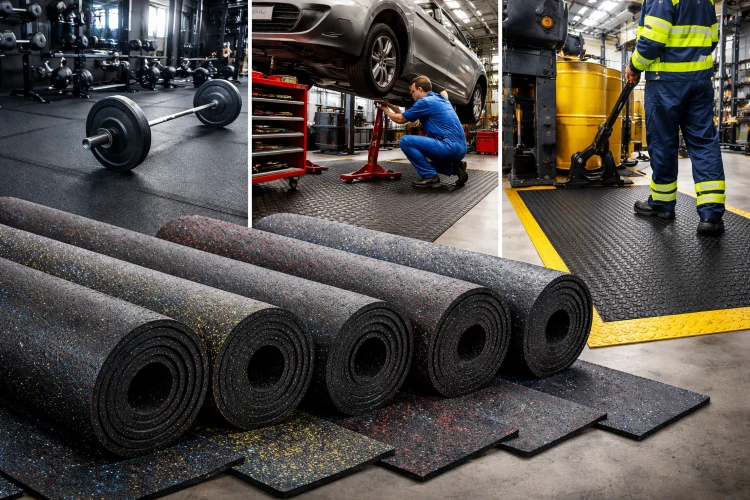
Rubber matting is typically sold as rubber flooring rolls, interlocking rubber tiles, or rubber floor mats of varying thickness, allowing it to be tailored to the specific demands of a space. A home gym might use thinner, budget-friendly gym flooring tiles, while an industrial forging area might require dense, high-thickness industrial rubber matting rated for extreme loads and temperatures.
Gyms are probably the most recognisable use case for rubber flooring, and for good reason. Whether it's a large commercial facility or a garage conversion, gym flooring mats need to handle a specific set of stresses that most other flooring types simply aren't built for.
Free weights, kettlebells, and barbells are dropped constantly in strength training areas. Without adequate protection, this repeated impact can crack tiles, dent wooden floors, or damage concrete over time. Rubber gym matting absorbs this impact, protecting the subfloor beneath and reducing the risk of costly repairs.
In multi-storey buildings or shared spaces, the sound of dropped weights can be a serious nuisance. Thicker gym rubber flooring, especially in the 15mm to 30mm range, significantly reduces noise transmission and vibration, making it far more considerate to neighbours or occupants of the floor below.
Sweat, spilled water, and general wear can make hard flooring dangerously slippery. The naturally high grip levels of non-slip rubber flooring help members maintain stable footing during dynamic movements, reducing slip-and-fall injuries. Its slight give also reduces joint strain compared to standing or exercising on concrete for long periods.
Workshops, whether for woodworking, automotive repair, or general fabrication, present a very different set of challenges than gyms. Here, the priority shifts toward fatigue reduction, chemical resistance, and protection against dropped tools, making workshop flooring and garage flooring mats a practical, cost-effective upgrade.
Workshop staff often stand for hours at a workbench or machine station. Standing on concrete for extended periods leads to fatigue in the legs, back, and feet, which can affect productivity and long-term health. Anti-fatigue mats are specifically designed with a slight cushioning effect that encourages micro-movements in the legs, improving circulation and reducing discomfort over a shift.
Workshops frequently involve exposure to oils, solvents, and other chemicals that can degrade standard flooring. Oil-resistant rubber matting designed for workshop use is typically formulated to resist these substances, preventing staining, swelling, or breakdown of the material. This also makes cleanup considerably easier, as spills can be wiped away without soaking into the floor.
Dropped tools, in addition to being a hazard for feet, can chip concrete or damage the tools themselves. Rubber matting cushions these impacts, reducing damage to both the floor and equipment while also dulling the noise of metal-on-concrete contact.
Industrial environments push flooring materials to their absolute limits. Heavy machinery, forklift traffic, extreme temperatures, and constant wear all demand heavy-duty rubber flooring that can perform reliably under pressure, day after day.
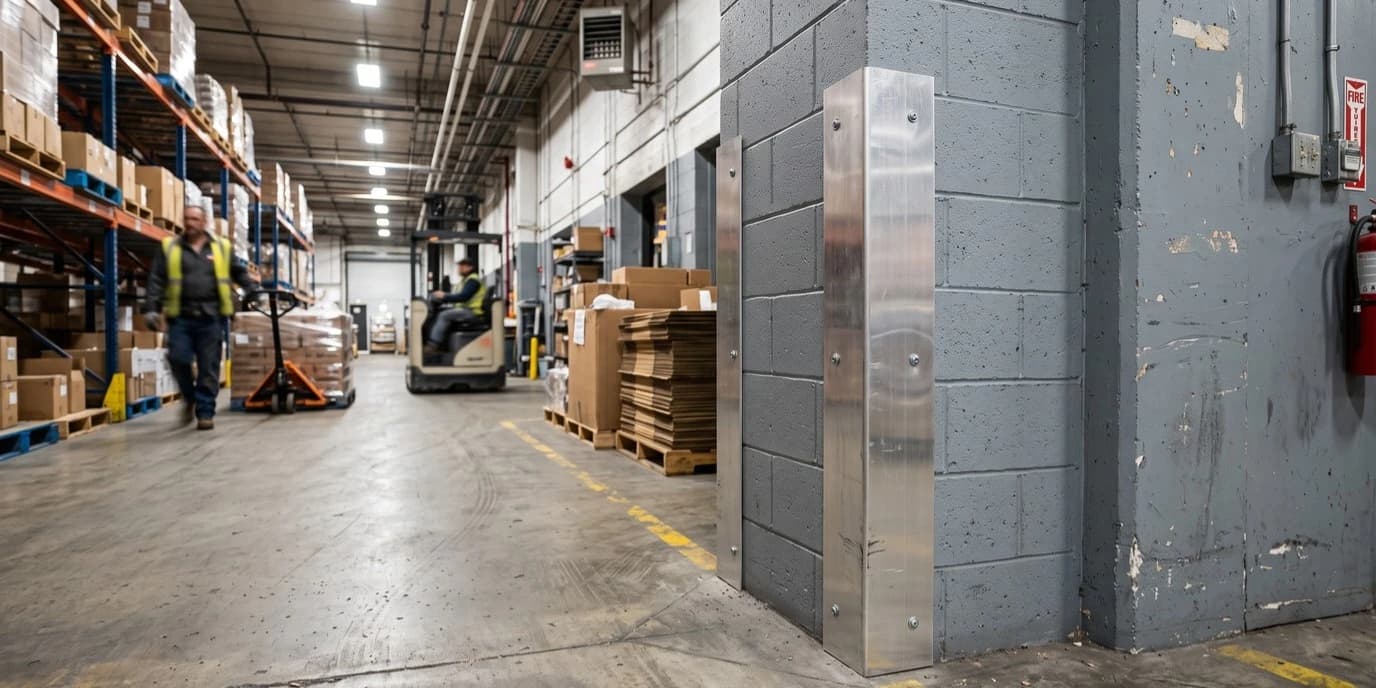
Heavy-duty industrial rubber matting is generally much thicker and denser than gym or workshop variants, often designed to withstand the weight of forklifts, pallet trucks, and heavy machinery without cracking or shifting. This durability translates into a longer service life, which is a significant factor in reducing long-term facility maintenance costs.
Many industrial settings are subject to strict health and safety regulations regarding slip resistance, electrical insulation, and fire ratings. Electrical insulation matting and anti-slip safety flooring manufactured for industrial use are often tested and certified to meet these standards, helping facility managers stay compliant while protecting staff from slips, falls, and electrical hazards in areas with exposed wiring or equipment.
Factories and production floors often deal with significant machinery noise and, in some cases, extreme heat from processes like welding or metalworking. Certain rubber matting types offer heat resistance and help dampen ambient noise levels, contributing to a safer and more comfortable working environment.
With so many variations available, selecting the right product comes down to a few key considerations:
Rubber matting isn't a one-size-fits-all product, but its adaptability is exactly what makes it so valuable across such different environments. In gyms, it protects flooring and reduces injury risk during high-impact training. In workshops, it eases fatigue and resists chemical exposure during long working hours. In industrial settings, it withstands heavy loads while helping facilities meet strict safety standards.
Investing in the right type of rubber matting for your specific application pays off through reduced maintenance costs, improved safety, and a more comfortable environment for anyone using the space regularly.
Mafson, a provider of rubber flooring and matting solutions for gyms, workshops, and industrial environments.
Yes, but the type matters. Standard rubber matting can stain or degrade when exposed to oils and solvents over time. For workshops and industrial areas, look specifically for matting rated as chemical- or oil-resistant, as these are formulated to withstand regular exposure without breaking down.
Rubber matting can help disguise minor imperfections and unevenness, but it isn't a substitute for proper subfloor preparation. Significant cracks, dips, or damage should be addressed first, as an uneven base can affect how well tiles interlock and how evenly the matting wears over time.
Most rubber matting only needs regular sweeping or vacuuming to remove debris, followed by an occasional wash with mild soap and water. Avoid harsh solvents or abrasive cleaners, as these can dull the surface or shorten the material's lifespan, particularly on matting that isn't chemical-resistant.

When engineering teams request CNC quotations, many are surprised by the gap between budget and fina
9 September 2026
10 August 2026
UK manufacturing environments operate under constant pressure. Equipment runs for extended hours, ma
14 February 2026
Be the first to share your thoughts
No comments yet. Be the first to comment!
Share your thoughts and join the discussion below.


.webp&w=3840&q=75)
.webp&w=3840&q=75)


.webp&w=3840&q=75)