Saturday, October 24, 2026
* All product/brand names, logos, and trademarks are property of their respective owners.
Finishing touches make or break a renovation. You can fit a beautiful new floor or repaint a room perfectly, but if the edges are left rough, uneven, or unprotected, the whole job looks unfinished. This is where bars and edging come in — a small but essential category of building products that homeowners, joiners, and builders rely on to tidy up transitions, protect vulnerable edges, and add a professional finish to floors, walls, and thresholds.
This guide covers the two main types of bars and edging you're likely to come across: flat bar trims and wooden timber edging. We'll look at what each one does, where it's typically used, and how to decide which is right for your project. For a closer look at the range of options available, specialists such as DoorThresholds.co.uk stock both metal and timber trims designed specifically for these kinds of finishing jobs.
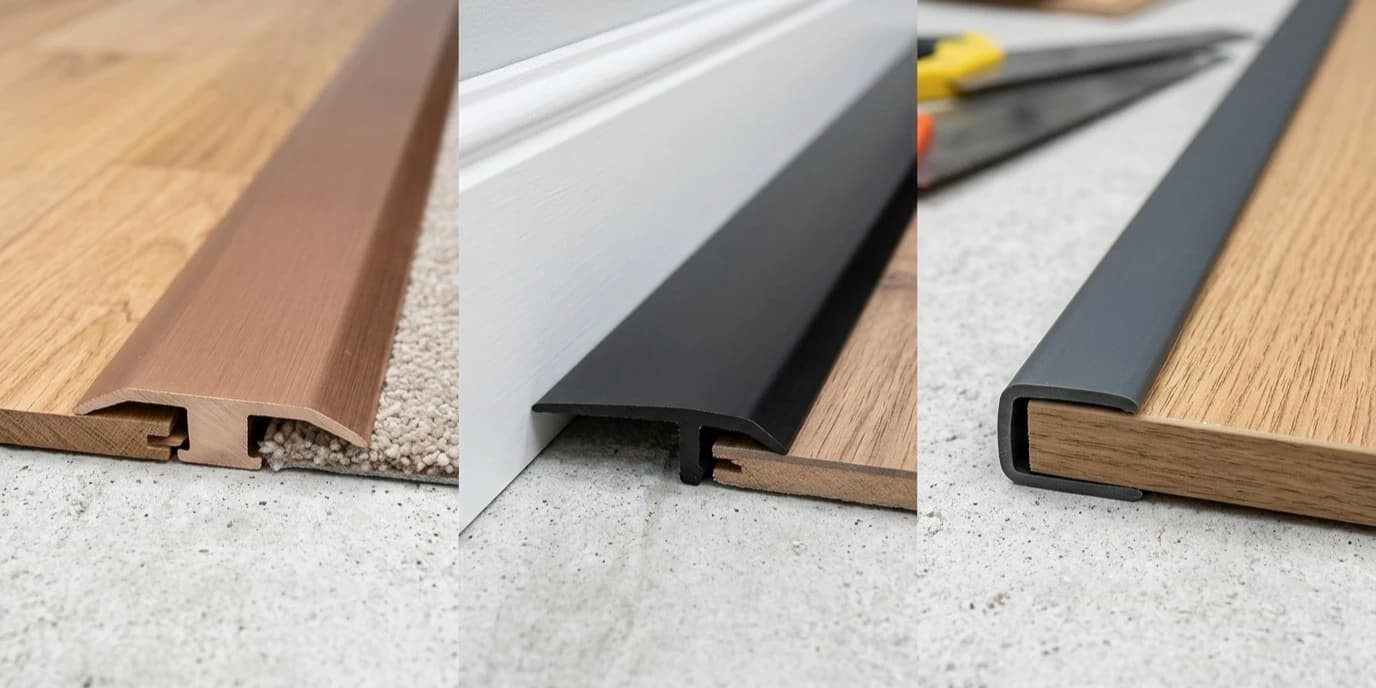
"Bars and edging" is a broad term covering strips of material — usually metal or wood — used to finish, protect, or transition between two surfaces. They're most commonly seen at doorways, where flooring changes from one room to another, but they also appear along stair nosings, worktops, wall corners, and exposed board edges.
Their job is largely practical: covering a raw edge, bridging a height difference between two floor coverings, or stopping wear and tear at a vulnerable point. But they also serve a visual purpose, giving a room a neat, deliberate, finished look rather than an exposed or patched-together appearance.
It's easy to underestimate finishing trims when planning a renovation, since the bulk of the budget and attention usually goes on flooring, kitchens, or wall finishes. But trims do a surprising amount of work:
Skipping this step, or choosing the wrong type of trim, often shows up later as loose boards, curling laminate edges, or a threshold that looks like an afterthought.
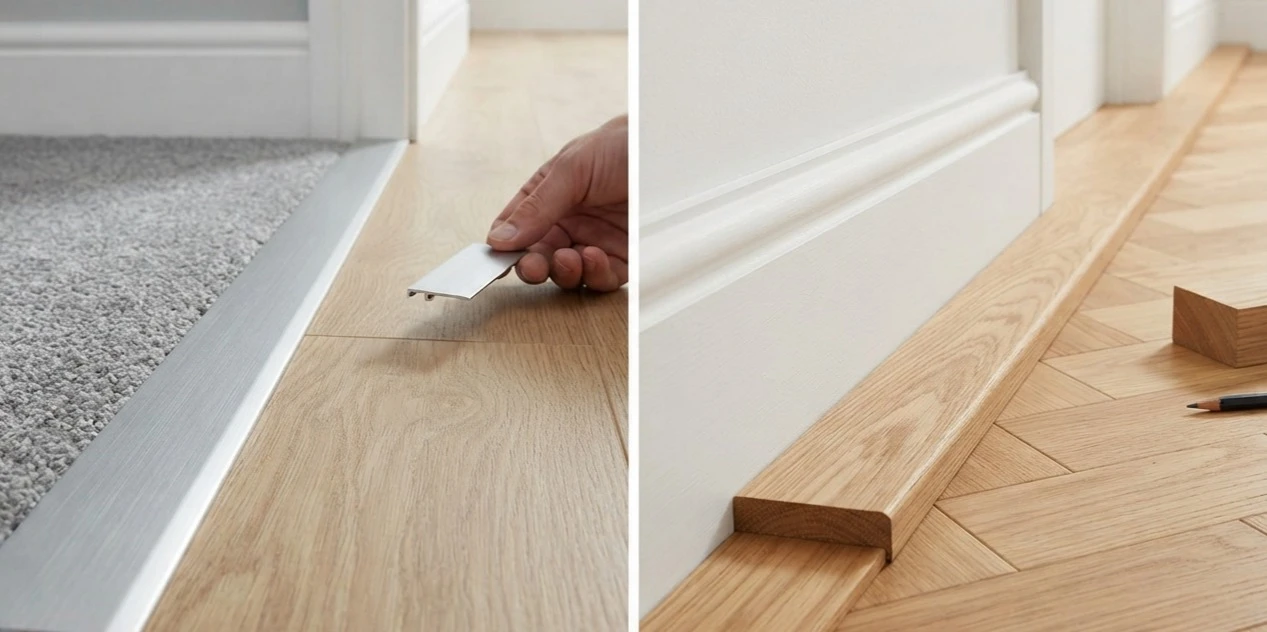
Flat bar trims are slim, low-profile strips — typically metal, such as aluminium, brass, or stainless steel — used to cover a joint or edge without adding much height. As the name suggests, they sit flat, making them ideal where a discreet, minimal finish is needed rather than a raised or moulded profile.
They're usually screwed or fixed down along a straight run, and many modern options come with a clip-in or self-adhesive fitting system for a cleaner look with no visible fixings.
Wooden timber edging, sometimes just called timber edging or wooden edging, does a similar job to flat bar trims but is made from solid wood or wood veneer instead of metal. It's often chosen when the surrounding flooring or joinery is also timber, since it allows for a closer match in colour, grain, and finish.
Timber edging tends to have a slightly more traditional, warmer appearance than a metal trim, and it can be stained, oiled, or varnished to match existing woodwork.
Both product types solve similar problems, but they suit different situations.
| Factor | Flat Bar Trims | Wooden Timber Edging |
|---|---|---|
| Material | Metal (aluminium, brass, stainless steel) | Solid wood or wood veneer |
| Appearance | Sleek, modern, minimal | Warm, traditional, natural |
| Best suited to | Hallways, mixed-material floors, high traffic | Wood flooring, period homes, bespoke joinery |
| Maintenance | Wipe clean, very low upkeep | Occasional sanding/refinishing |
| Customisation on site | Limited | Easy to cut and shape |
| Moisture resistance | Generally higher | Depends on finish and wood type |
Neither option is universally "better" — the right choice depends on the flooring, the room's use, and the overall look you're going for.
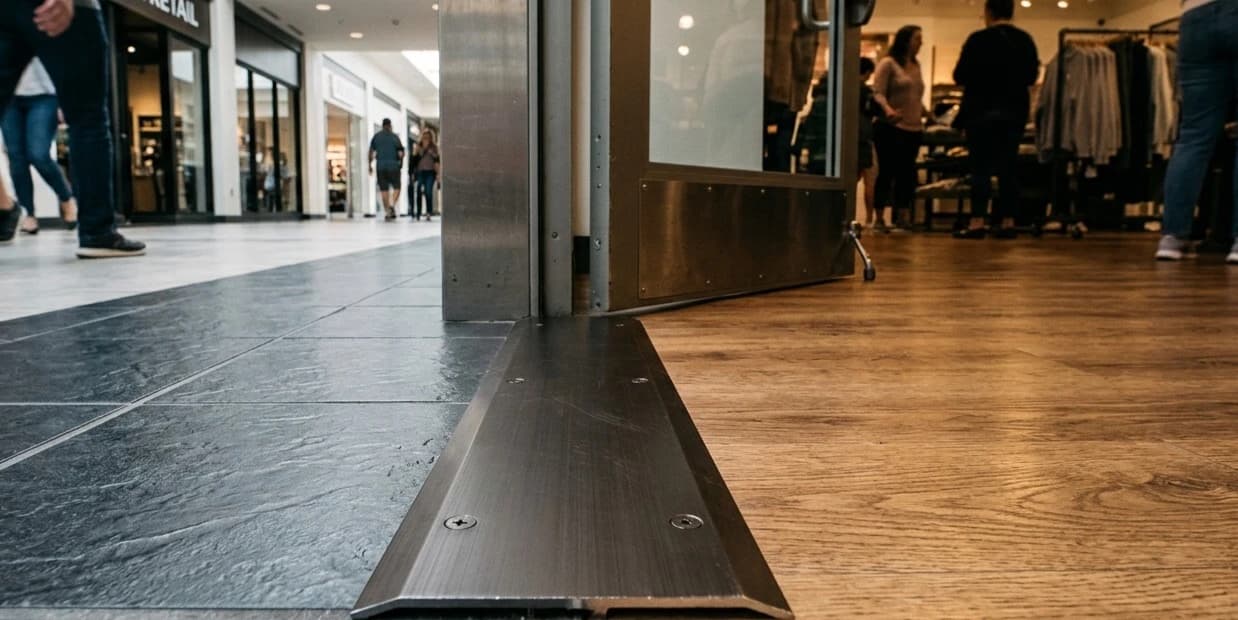
Where trims cross a doorway, consider the swing of the door and any thresholds already fitted, as this often determines that bars and edging will fit the space properly.
Bars and edging might be a small line item on a renovation budget, but they have an outsized effect on how finished a space feels. Flat bar trims offer a discreet, durable, low-maintenance option that suits modern interiors and mixed-material flooring. Wooden timber edging brings warmth and a closer match to timber flooring and traditional joinery, with the flexibility to be shaped and refinished over time.
If your project involves predominantly hard flooring, high footfall, or a mix of materials, flat bar trims are usually the more practical choice. If you're working with solid or engineered wood floors, period features, or bespoke joinery, timber edging will likely give a more cohesive result. Either way, taking the time to measure accurately, match finishes, and choose the right finishing trims will pay off in a neater, longer-lasting result.

"Which trim do I actually need?" It's a fair question, and one that trips up a lot of first-time buy
7 September 2026
Flat bar trims are one of those quiet building products that rarely get noticed until they're missin
3 September 2026
PVC cladding boards are commonly applied to the exterior walls for their durability, water repellenc
21 August 2026
Be the first to share your thoughts
No comments yet. Be the first to comment!
Share your thoughts and join the discussion below.
.webp&w=3840&q=75)