Thursday, October 15, 2026
* All product/brand names, logos, and trademarks are property of their respective owners.
Shipping damage can turn out to be really expensive for any business. A broken product may result in refunds, swap-outs, negative reviews, and, yeah, even extra freight charges, not to mention lost customer confidence. Transportation does have that whole part where companies can’t fully control what happens, but picking the right packaging materials can still make a big difference for keeping items safe.
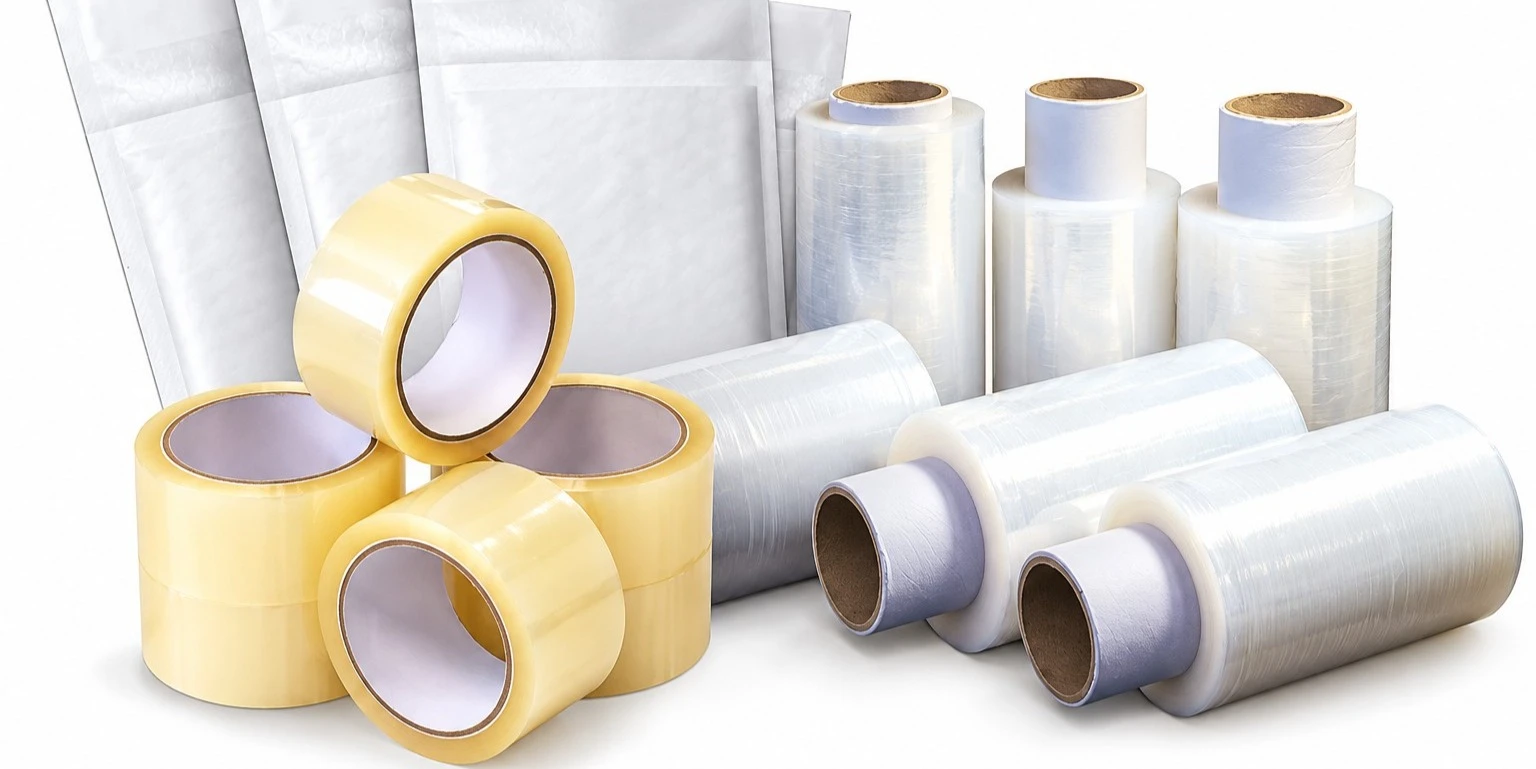
From loose fill to bubble envelopes and clear tape, plus pallet wrap, each one has its own purpose. If you use them correctly, these packing supplies can help stop unwanted movement, soften the impact, secure cartons, and generally guard the shipment during the whole delivery stretch.
A solid packaging setup makes a lot of layers, like a stack. The outer carton brings structural strength, while the padding and cushioning materials safeguard the item on the inner side. Sealing solutions keep everything closed up, and stretch wrap or film also helps stabilise the bigger shipments too.
If the packaging is poor, it can cause a few headaches, like:
Broken or scratched products
Crushed cartons
Open or unsecured packages
The product moving around inside the box
Moisture and dust exposure
More returns and replacement orders
The aim is, honestly, pretty simple: make sure the product stays secure, protected, and steady across the entire shipping trip.
Basically, loose fill covers the empty voids, so the product is not free to wobble around. When the carton has too much unused room, the item can slide and shift during the trip. That movement can make the product bump into other items or get pressed against the inner walls of the box, which is not great.
What helps is that loose-fill braces the situation by filling the gaps around the item. In other words, it reduces that random shifting. This method can be really handy for things with odd, uneven shapes too. And it’s also useful when a normal box still leaves small spaces, no matter how carefully someone packs.
Loose fill should be picked based on the product’s weight and how breakable it is. A lighter item might only need gentle cushioning, but heavier goods may need firmer padding or even added structural protection, because loose fill alone might not hold up in every case.
And the quantity matters just as much. If there is too little, the product stays loose and unsecured. If there is too much, then you end up with unnecessary material, longer packing time, and more cost, without real added safety.
The combination of an outer mailing envelope with an inner bubble cushioning layer makes bubble envelopes, which means you get protection built in, not just plain paper.
They’re mostly handy when you’re shipping smaller products, and the regular paper envelope can’t quite cut it because you need a bit more buffer.
They can work well for accessories, small components, paperwork that has delicate contents, and other light items that could get scratched or even scuffed while being handled, moved, or generally jostled around.
If a business ships small goods often, bubble envelopes can make things easier because the protective padding is already part of the mailer, so you don’t have to add it separately most of the time.
Honestly, a box is basically only as secure as how it closes, and clear tape is really common for sealing cartons; it helps keep the packaging securely closed during moving around, shipping, and transportation, even when stuff gets a bit bumpy.
The packing tape, if it is good quality, should grip the carton surface well and stay in place through usual shipping conditions. Also, the tape width and the way it gets applied make a difference too.
For heavier cartons, some businesses go for stronger sealing methods or even more than one strip of tape. The main thing is to seal the primary openings, and also make sure the tape has enough contact with the packaging surface, not just lightly touching here or there.
For businesses that want practical sealing without adding loud branding onto their packages, clear tape offers a tidy look, so it works.
When several boxes ride together on one pallet, keeping the whole load stable is important. Stretch film, or pallet wrap, is made to hold products and cartons as one unit.
Pallet wrap can help with a few things, like:
Stabilise cartons on a pallet
Keep multiple packages together
Reduce movement during transportation
Add extra coverage against dust and light moisture
Make palletised shipments easier to handle
The wrapping process through pallet wrap creates enough tension without putting strain on the products or the carton corners. Companies should also make sure the pallet load is stacked evenly before applying stretch film; otherwise, the wrap won’t really do its job.
There isn't a one-size-fits-all packaging fix. The best way is to look at the product first and then decide on the materials that fit it best, honestly.
If the item is light and sort of moderately fragile, bubble envelopes can make sense, but if it comes as a boxed unit and there is space inside, loose fill is often the better call. For cartons, clear tape helps keep everything shut, and for big multi-package deliveries, pallet wrap can stabilise the whole load.
Consider the following factors:
Product size, weight
Fragility and breakability
How much space there is
Shipping distance
How it will be handled during transit
Storage needs
Packaging and transportation costs
When businesses match the packaging to the product, they avoid under-protecting the shipment, and they also avoid wasting materials that aren't really needed.
At first glance, adding protective packaging might look like it bumps the budget. But in practice, smart packaging can lower what you spend on broken items, repeat shipments, replacements, and those annoying customer complaints that lead to extra work.
Companies can also gain a bit more speed by using standardised packaging supplies that show up most often. When you keep different sizes of mailers, cartons, cushioning materials, and sealing products on hand, packing teams can pick the right setup quickly.
Also, choosing the right-sized packaging matters more than people think. If a package leaves a lot of empty, unused room, then you may need extra cushioning. And sometimes the bigger box itself can raise shipping volume, which ends up costing more.
Shipping damage can throw off profitability and customer confidence too, but if you pay attention, the avoidable risks can be lowered. With the right loose fill, the right clear tape, pallet wrap, and bubble envelopes together with cartons that fit well, plus extra protective materials, you can build a shipping flow that’s a bit more dependable.
The best packaging approach is basically the one that keeps products safely secured, protected, cost-efficient, and ready to land at the customer’s doorstep in solid condition.

In a crowded digital environment, getting people to notice a company, organization, product, or impo
8 October 2026
Choosing a Salesforce consulting partner is an important decision for any business planning to impro
19 August 2026
Custom Round Boxes have turned out to be a popular choice in packaging in cases where a brand prefer
13 August 2026
Be the first to share your thoughts
No comments yet. Be the first to comment!
Share your thoughts and join the discussion below.