Thursday, October 15, 2026
* All product/brand names, logos, and trademarks are property of their respective owners.
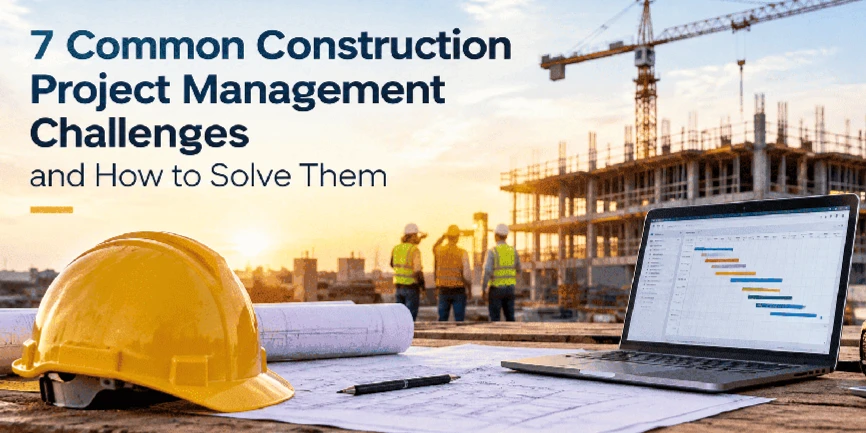
Construction projects rarely follow the original plan from start to finish. Material shortages, unexpected site conditions, labor issues, and changing client requirements can quickly disrupt schedules and budgets. Without clear coordination, even a well-planned project can experience costly delays.
Understanding common construction project management challenges helps contractors, project managers, and construction firms identify risks early and respond before minor issues become major setbacks.
The solution is not simply to work harder or add more people to a project. It requires better planning, clear communication, reliable cost tracking, and consistent oversight. Here are seven common challenges and practical ways to address them.
Many construction challenges are connected. A delayed material delivery can disrupt scheduling, increase labor costs, and create coordination problems. Addressing these issues separately is difficult when project information is scattered across spreadsheets, emails, paper records, and messaging platforms.
Digital tools can help teams maintain a shared view of project progress, budgets, schedules, documents, and outstanding tasks. Digital tools can help teams maintain a shared view of project progress, budgets, schedules, documents, and outstanding tasks. Some businesses are also exploring artificial intelligence software to analyze project data, automate routine administrative work, and identify potential scheduling or resource issues earlier. These tools can support decision-making, although project managers still need to verify recommendations and account for on-site conditions.
The right system depends on the size and complexity of the project. A small contractor may need straightforward scheduling and cost tracking, while a larger firm may require document control, resource planning, reporting, and coordination across multiple sites.
Before choosing a tool, identify the problems that consume the most time or cause the most rework. Compare available features, ease of use, integrations, and total cost rather than selecting software based on the number of features alone.
Businesses exploring their options can review construction project management software to compare tools and identify solutions suited to their workflows.
A construction project depends on multiple activities happening in the right sequence. Site preparation must be completed before certain structural work begins, while electrical, plumbing, and finishing tasks often depend on earlier stages being finished.
When schedules are unrealistic or responsibilities are unclear, small delays can affect the entire project.
How to solve it:
Start with a detailed project plan that defines the scope, milestones, dependencies, resources, and deadlines. Break the work into manageable tasks and identify activities that could delay the overall completion date.
Build reasonable buffers into the schedule for weather disruptions, inspections, and material delivery. Review progress regularly rather than waiting until a milestone is missed.
A schedule should also be updated when conditions change. Treating the original timeline as fixed, even when circumstances have shifted, makes it harder to allocate resources effectively.
Construction costs can increase because of inaccurate estimates, material price changes, design revisions, unexpected repairs, or inefficient labor allocation.
The problem often becomes more difficult when expenses are recorded late. By the time a project manager notices the overspending, there may be limited room to correct it.
How to solve it:
Prepare a realistic budget before work begins, covering labor, materials, equipment, subcontractors, permits, and other project expenses. Include a contingency allowance based on the project's risks and complexity.
Track actual spending against the budget throughout the project. Review committed costs as well as invoices already paid, since approved purchases can affect the remaining budget before the money leaves the account.
Every proposed change should have a documented cost and schedule impact. Obtain the necessary approval before proceeding with non-emergency changes.
For projects involving several teams and suppliers, construction project management software can help centralize budgets, track expenses, and keep project information accessible to authorized stakeholders.
Construction projects involve owners, architects, engineers, contractors, subcontractors, suppliers, and site workers. Each group needs accurate information to complete its responsibilities.
Communication problems arise when teams rely on different document versions, receive instructions late, or assume another person has approved a change. These gaps can lead to rework, missed deadlines, and disputes over responsibility.
How to solve it:
Establish clear communication channels and define who is responsible for decisions, approvals, and updates. Hold regular coordination meetings with a focused agenda covering progress, outstanding issues, upcoming activities, and decisions required.
Keep drawings, schedules, site instructions, and change records in a shared, controlled location. Make sure teams know which document version is current.
Meeting notes should identify the action required, the person responsible, and the deadline. This simple practice makes follow-up easier and reduces the likelihood of important decisions being forgotten.
Construction schedules depend on materials arriving when they are needed. Delayed deliveries, unavailable products, supplier issues, and incorrect orders can leave workers waiting or force managers to rearrange planned activities.
Ordering too early can create storage and handling problems, while ordering too late can interrupt work.
How to solve it:
Create a procurement schedule that links material orders to construction milestones. Identify long-lead items early, confirm delivery dates with suppliers, and follow up before materials are needed on site.
For critical supplies, consider alternative approved suppliers or suitable substitute materials. Any substitution must meet the project's specifications and receive the necessary technical and client approvals.
Maintain visibility into material availability, delivery status, and inventory. If a delivery is delayed, assess whether other independent tasks can proceed without creating additional costs or safety risks.
Construction projects require the right mix of skilled workers, equipment, and supervision at each stage. When too few workers are available, productivity suffers. When too many people or machines are assigned to an area, congestion and unnecessary costs can follow.
Poor resource planning also creates conflicts when several projects compete for the same teams or equipment.
How to solve it:
Estimate labor and equipment requirements during the planning stage. Match resource allocation to the work schedule, and confirm subcontractor availability before committing to key milestones.
Review workforce productivity and upcoming resource needs during regular progress meetings. If a shortage emerges, assess whether tasks can be resequenced or additional qualified workers can be brought in.
Avoid solving every delay by extending working hours. Fatigue can increase mistakes and safety risks. Training, clear task assignments, and realistic workloads help teams maintain consistent performance.
Clients may request design changes after work has started. New site information may also reveal that the original plans need adjustment.
Some changes are necessary, but undocumented revisions can create confusion. Teams may build from outdated drawings, order unsuitable materials, or complete work that later needs to be removed.
Rework consumes labor and materials while taking time away from planned activities.
How to solve it:
Define the project scope clearly before construction begins. Document the agreed deliverables, specifications, exclusions, and approval process.
When a change is proposed, assess its impact on cost, schedule, materials, safety, and other work before authorizing it. Update the relevant drawings and project records, then communicate the approved revision to everyone affected.
Use version control so workers and subcontractors can identify the latest approved documents. Regular site inspections can also catch discrepancies between the design and completed work before they become more expensive to correct.
Construction sites contain hazards such as working at height, moving machinery, electrical systems, falling objects, and unstable structures. An incident can cause serious injury, interrupt work, and create legal and financial consequences.
Compliance can also become challenging when requirements differ by project type, location, or activity.
How to solve it:
Develop a site-specific health and safety plan before work begins. Identify hazards, assess risks, provide appropriate protective equipment, and ensure workers receive task-specific training.
Conduct site inspections and toolbox talks regularly. Workers should have a clear process for reporting hazards and near misses without waiting for a formal inspection.
Maintain required permits, inspection records, training documentation, and incident reports. In the UK, construction businesses should consult relevant Health and Safety Executive (HSE) guidance and understand their responsibilities under applicable regulations, including the Construction (Design and Management) Regulations 2015.
Safety should be built into daily planning rather than treated as a separate task to complete after scheduling and budgeting.

No bio available yet.
A home elevator can make everyday movement between floors more convenient, especially in multi-store
25 September 2026
Walk down the corridor of any busy office, school or rented flat and you will spot the same thing: s
15 September 2026
Walk through almost any home, office, school or care setting, and you'll spot the same telltale sign
14 September 2026
Be the first to share your thoughts
No comments yet. Be the first to comment!
Share your thoughts and join the discussion below.