Sunday, October 25, 2026
.webp)
* All product/brand names, logos, and trademarks are property of their respective owners.
When homeowners plan a flooring project, most attention goes to the materials themselves—the laminate, the LVT, the engineered wood. Yet small details often determine whether a finished floor looks professional or amateurish. Door thresholds are a perfect example.
Door thresholds sit where one flooring surface meets another, typically in doorways or between rooms. Far from being a minor finishing touch, they play a genuinely functional role: they protect vulnerable floor edges from lifting or chipping, cover expansion gaps left for natural movement, reduce trip hazards caused by uneven surfaces, and tie together two different flooring types with a neat, deliberate line rather than an untidy gap.
Whether you're a DIY enthusiast fitting your first laminate floor, an interior designer specifying finishing touches, or a flooring installer working on a full house renovation, understanding the range of door thresholds available — and how to choose between them — will save you time, money, and future headaches.
A door threshold, sometimes called a transition strip or floor trim, is a narrow profile fitted across a doorway or flooring junction to bridge the gap between two different surfaces. It can sit flush, taper gently, or step down slightly depending on the height difference between the two floors it connects.
Thresholds are commonly used wherever flooring changes:
Beyond aesthetics, these door threshold strips serve a structural purpose. Wood, laminate, and engineered flooring all expand and contract with temperature and humidity, and building regulations typically require an expansion gap around the perimeter of the room. A threshold neatly conceals this gap while still allowing the floor to move freely underneath.
Aluminium has become the go-to material for modern door thresholds, and it's easy to see why. Unlike timber or plastic alternatives, aluminium door threshold strips offer exceptional durability without adding unnecessary bulk or weight to the doorway.
Key benefits include:
Aluminium thresholds are available in a wide range of finishes, from brushed silver and matt black to polished chrome and satin gold, as well as various profile shapes — flat, ramped, or reducer profiles — to suit different height transitions between flooring types.
For homeowners who love the durability of aluminium but want a warmer, more natural look underfoot, wood-effect door thresholds offer the best of both worlds. These profiles use a high-quality foil or laminate finish over an aluminium core, replicating the appearance of natural timber while retaining the strength and longevity aluminium is known for.
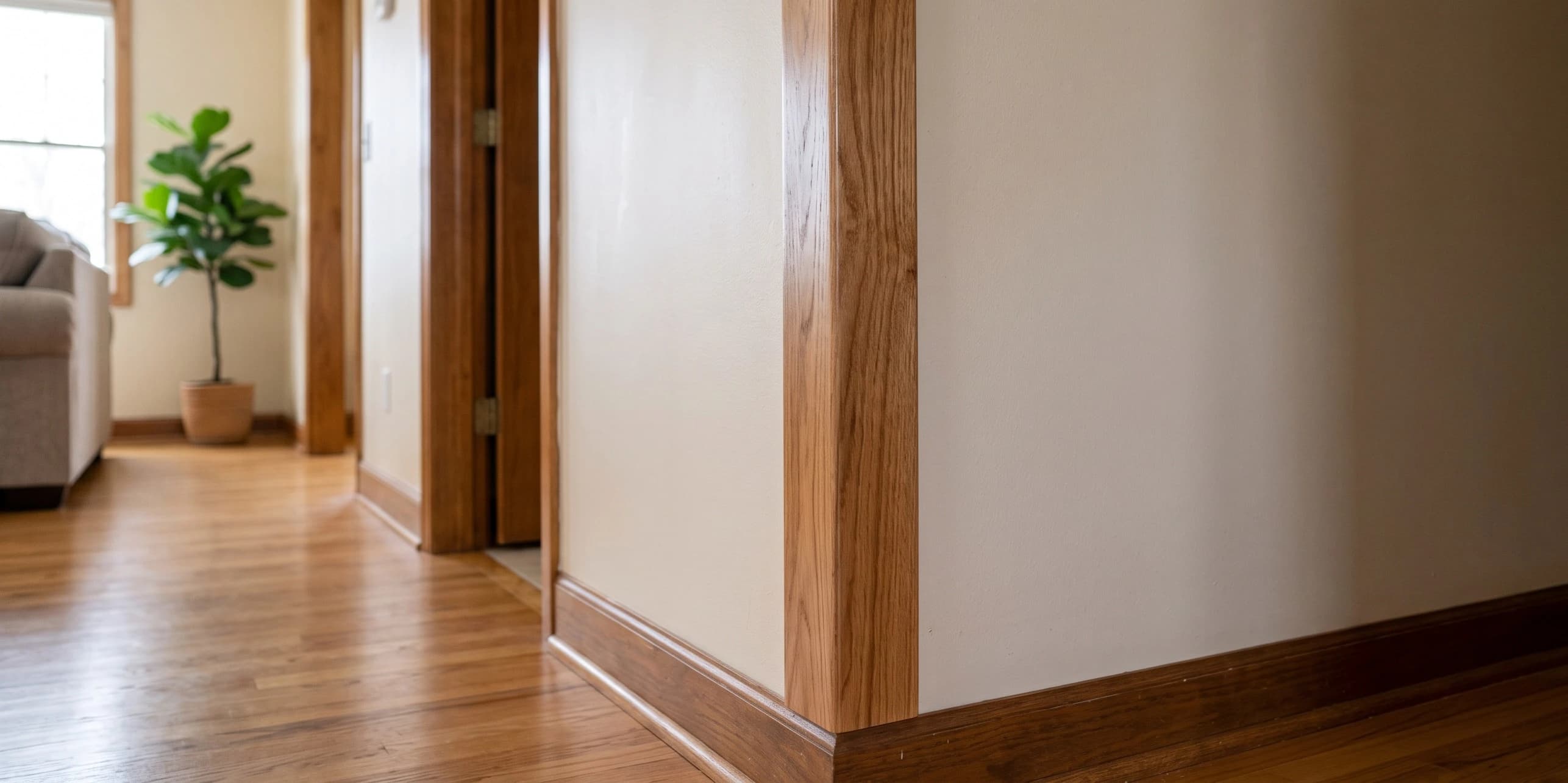
Wood-effect thresholds work particularly well where they need to visually match or complement laminate flooring, engineered wood, or wood-look LVT, creating a seamless transition rather than a jarring contrast. Popular finishes include classic oak, rich walnut, warm grey oak, and driftwood tones — allowing installers and designers to closely match existing skirting boards, door frames, or flooring shades for a cohesive, considered finish throughout the home.
One of the most practical decisions when buying a threshold strip is choosing the fixing method. Both self-adhesive door thresholds and screw-fix door thresholds have their place, and the right choice depends on the room, the traffic level, and how permanent you want the installation to be.
Self-adhesive thresholds use a strong backing tape and are pressed directly onto a clean, flat subfloor. They're a favourite for quick DIY projects because they require no drilling, no screws, and minimal tools — ideal for bedrooms, low-traffic areas, or rented properties where you want a tidy finish without altering the floor structure.
Screw-fix thresholds use a two-part system: a base channel is screwed securely into the subfloor, and the decorative cap then clips or snaps into place over the top. This method is generally recommended for hallways, kitchens, and other high-traffic areas, as the mechanical fixing offers far greater long-term durability and resistance to lifting or shifting underfoot.
Practical installation advice:
Where carpet meets another flooring type, a carpet joining profile is essential for a tidy, long-lasting result. These profiles are specifically designed to grip and secure the raw edge of carpet — typically using integrated gripper pins or a clamping bar — while providing a smooth, finished edge on the adjoining floor.
Without a proper joining strip, carpet edges are prone to fraying, curling, and unravelling over time, especially in doorways where foot traffic is concentrated. A carpet joining profile prevents this by holding the carpet firmly in place, eliminating uneven edges and reducing the risk of trips or snags. It's a small addition that makes a significant difference to both the safety and the longevity of a carpeted room.
With so many options on the market, choosing the right door threshold comes down to a handful of practical considerations:
Taking a few minutes to consider these factors before buying will help you avoid an awkward-fitting or visually mismatched threshold later on.
Choosing the right supplier matters just as much as choosing the right product. Stairs Nosing offers a wide range of quality flooring accessories, including door thresholds and finishing profiles designed to provide durable and attractive flooring transitions.
From aluminium and wood-effect thresholds to carpet joining profiles and stair nosings, their range is built with both DIY homeowners and professional installers in mind, offering the finishes, sizes, and fixing methods needed to complete any flooring project to a high standard. For anyone looking to source reliable, well-made finishing strips for their next renovation, www.stairsnosing.co.uk is a trusted starting point.
Door thresholds may be one of the smallest elements of a flooring project, but their impact is far from minor. From protecting exposed edges and covering expansion gaps to preventing trips and giving a room a polished, professional finish, the right threshold makes a genuine difference to both the appearance and longevity of your flooring.
By considering the flooring types involved, the height difference between surfaces, expected foot traffic, and your preferred installation method, you can choose a door threshold strips — whether aluminium, wood-effect, or a carpet joining profile — that looks great and performs well for years to come.
A general door threshold bridges the gap between two hard flooring surfaces, such as laminate and tile, while a carpet joining profile is specifically designed with gripper pins or a clamping mechanism to secure the raw edge of carpet against an adjoining floor.
Screw-fix door thresholds are recommended for high-traffic areas such as hallways and entranceways, where the added mechanical fixing provides greater long-term durability compared to adhesive alone.
Modern wood-effect door thresholds use high-quality foil finishes over an aluminium core, closely replicating the grain and tone of natural timber while offering far greater durability and moisture resistance than solid wood strips.

Construction projects rarely follow the original plan from start to finish. Material shortages, unex
1 October 2026
A home elevator can make everyday movement between floors more convenient, especially in multi-store
25 September 2026
Walk down the corridor of any busy office, school or rented flat and you will spot the same thing: s
15 September 2026
Be the first to share your thoughts
No comments yet. Be the first to comment!
Share your thoughts and join the discussion below.


.webp&w=3840&q=75)