Monday, September 21, 2026
* All product/brand names, logos, and trademarks are property of their respective owners.
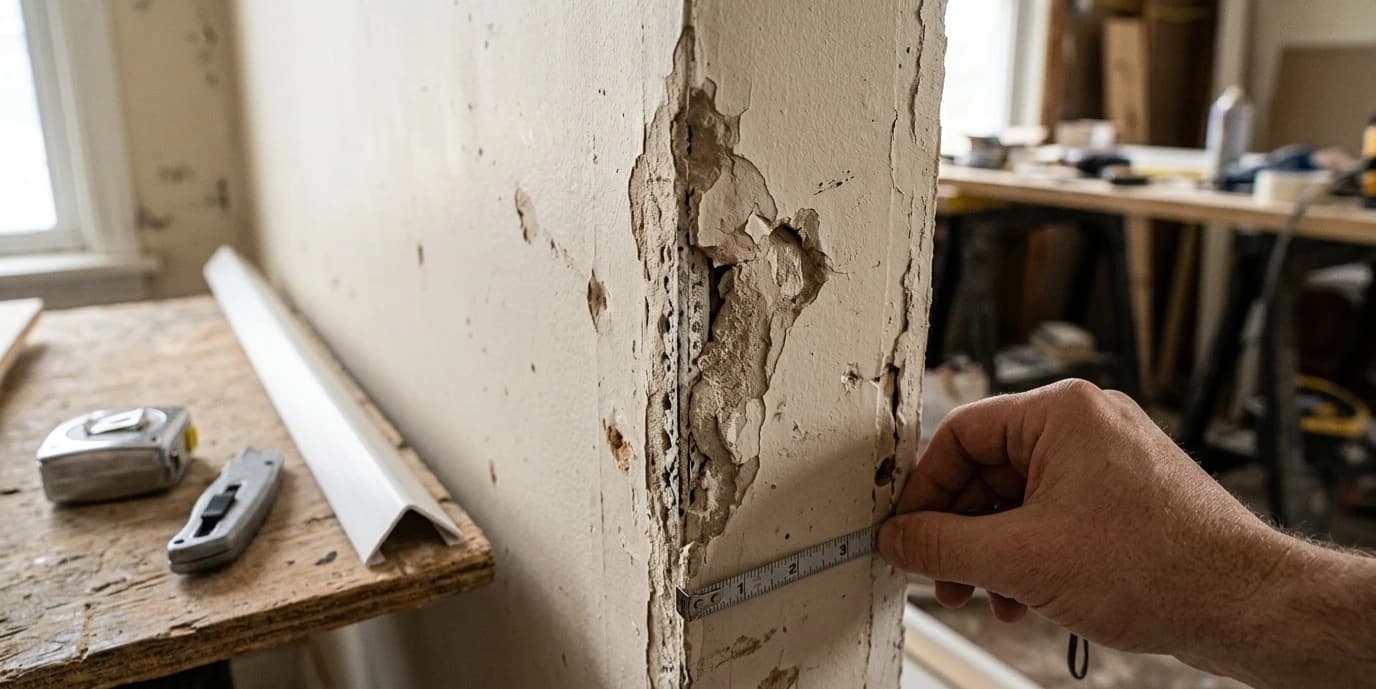
Walk down the corridor of any busy office, school or rented flat and you will spot the same thing: scuffed, chipped and dented wall corners. It is one of the most predictable forms of wear in any building, and one of the most avoidable. Trolleys clip them, suitcases catch them, vacuum cleaners bump them, and over a few years a crisp plastered edge turns into a crumbling one.
An unequal wall corner protector is a straightforward answer to this problem, and a more flexible one than many people realise. Unlike a standard symmetrical trim, it lets you cover two different widths on either side of a 90-degree corner — which is exactly what many real-world corners actually require.
This guide explains what these profiles are, where they are used, how to choose the right size and material, and why the finish matters as much as the protection.
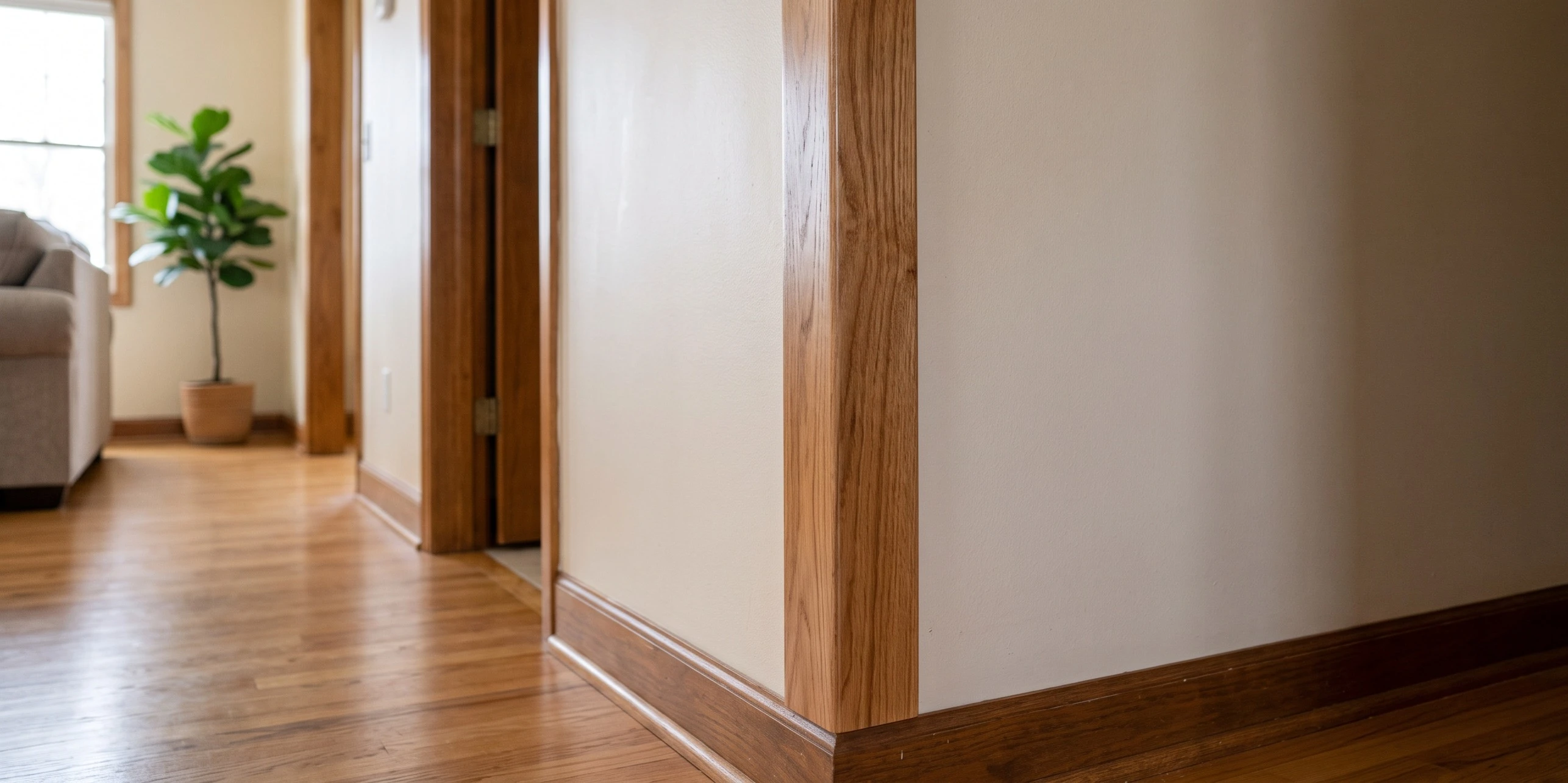
An unequal corner protector is an L-shaped angle profile in which the two legs are different widths. A typical example might have one leg of 40mm and another of 20mm, meeting at a 90-degree angle.
It is fitted over an exposed corner so that the profile takes the impact rather than the plaster, board, panel or timber underneath.
A conventional equal angle has two legs of identical width — 25mm x 25mm, for example. It suits situations where both faces of the corner are open, uniform and unobstructed.
An unequal angle trim is designed for situations that do not follow that neat pattern. You might need a wider leg on the main wall face for meaningful impact coverage, but only a narrow return on the adjoining face because of a door frame, skirting, panel edge, cabinet or reveal sitting close by.
Trying to force an equal-sided profile into that space usually means one of two compromises: either the trim overhangs something it should not, or you size the whole profile down and lose the protective width where you actually needed it. An unequal corner trim avoids that trade-off.
External corners — the ones that project outwards into a room or corridor — are the leading edge of the wall. They are the first thing anything moving through the space makes contact with.
Several factors make them a weak point:
In furniture board, MDF panelling and timber cladding, the problem is slightly different but no less real: edges bruise, veneers lift, and machined arrises round off unevenly.
A PVC corner protector is the default choice in most internal settings, for good reasons.
Aluminium unequal corner profiles are also available and are worth considering where a different appearance or material behaviour is preferred. Anodised or mill-finish aluminium suits contemporary commercial interiors, retail fit-outs and settings where a metallic line is part of the design intent rather than something to be concealed.
The choice between the two is usually driven by aesthetics, the surrounding materials and the specifier's preference rather than by any single factor.
This is where a bit of care up front saves rework later.
Measure the available flat width on each face of the corner independently. Note anything that limits the run: door linings, skirting, sockets, switch plates, panel joints, radiator brackets.
Your wider leg should go on the face taking the most contact; the narrower leg goes where space is tight.
Match the leg widths to what you measured, with a small allowance rather than a tight fit. A profile that slightly under-runs a tight return is easier to live with than one that will not sit flat.
Remember that a wider leg gives a larger impact area and a broader adhesive footprint — useful in high-traffic settings.
Profiles are commonly supplied in standard lengths. Work out your total run, then plan how to break it into lengths with the fewest joints, ideally positioning any join away from eye level or a focal point. Order a sensible margin for cutting and mitres.
Confirm whether the profile is intended for an external corner (one projecting into the room, the usual case for protection) or an internal corner (a recessed junction, more often a finishing detail). They are not interchangeable, and this is the single most common ordering error.
Wall corner guards are available in a range of colours. White remains the most specified for painted plaster, but matching or deliberately contrasting colours can work well — a contrasting profile in a school or healthcare corridor reads as an intentional design feature rather than a repair.
For those comparing options, Wall Corner Protectors stocks a range of unequal wall corner protectors in varying dimensions, lengths and colours, which is a useful starting point when working out what suits a particular project.
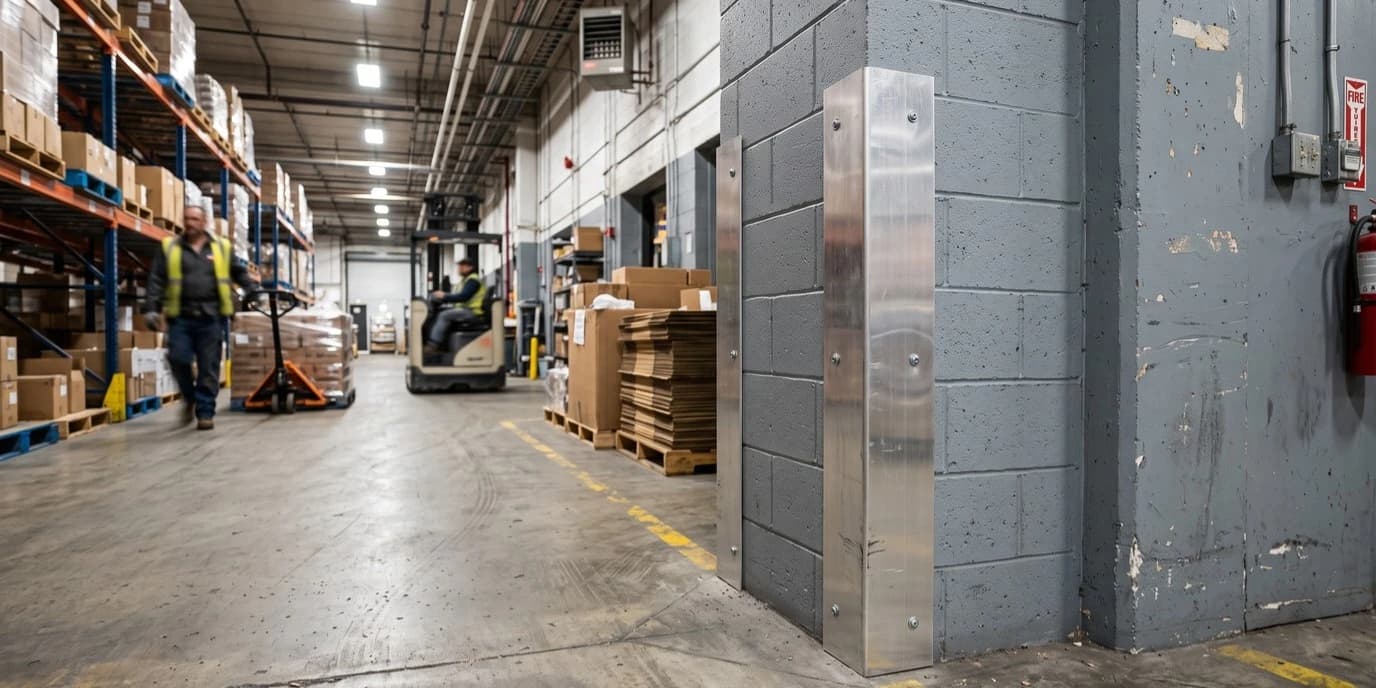
These profiles are used across a broad spread of buildings:
Anywhere people, equipment or goods move past a projecting corner is a candidate for corner protection.
For property managers and facilities teams, the argument is largely economic.
Making good a damaged corner is a multi-stage job: cut back the loose material, re-bead or fill, sand, prime and repaint — often across a whole wall to avoid patchy colour. Then it happens again in the same spot.
Fitting a wall edge protector interrupts that cycle. The profile takes the wear instead, and if a section is eventually damaged badly enough, it can be replaced individually rather than triggering redecoration.
Exposed corners will always attract wear. Unequal corner protectors offer a practical, low-maintenance way to manage that wear while keeping interiors looking tidy, and their asymmetric design solves a problem that standard equal-sided trims simply cannot.
The key steps are straightforward: measure both faces of the corner, select the leg widths that match, confirm internal or external application, choose a sensible length and pick a colour that suits the setting.
If you have a corridor, stairwell, panelled wall or furniture-board edge that keeps needing attention, it is worth exploring the range of unequal wall corner protectors available and identifying a profile that fits your project properly.

Walk through almost any home, office, school or care setting, and you'll spot the same telltale sign
14 September 2026
Cork has been used in homes and workshops for generations, yet it's often overlooked in favour of mo
12 September 2026
When homeowners plan a flooring project, most attention goes to the materials themselves—the l
10 September 2026
Be the first to share your thoughts
No comments yet. Be the first to comment!
Share your thoughts and join the discussion below.

.webp&w=3840&q=75)
.webp&w=3840&q=75)


.webp&w=3840&q=75)