Sunday, October 25, 2026
* All product/brand names, logos, and trademarks are property of their respective owners.
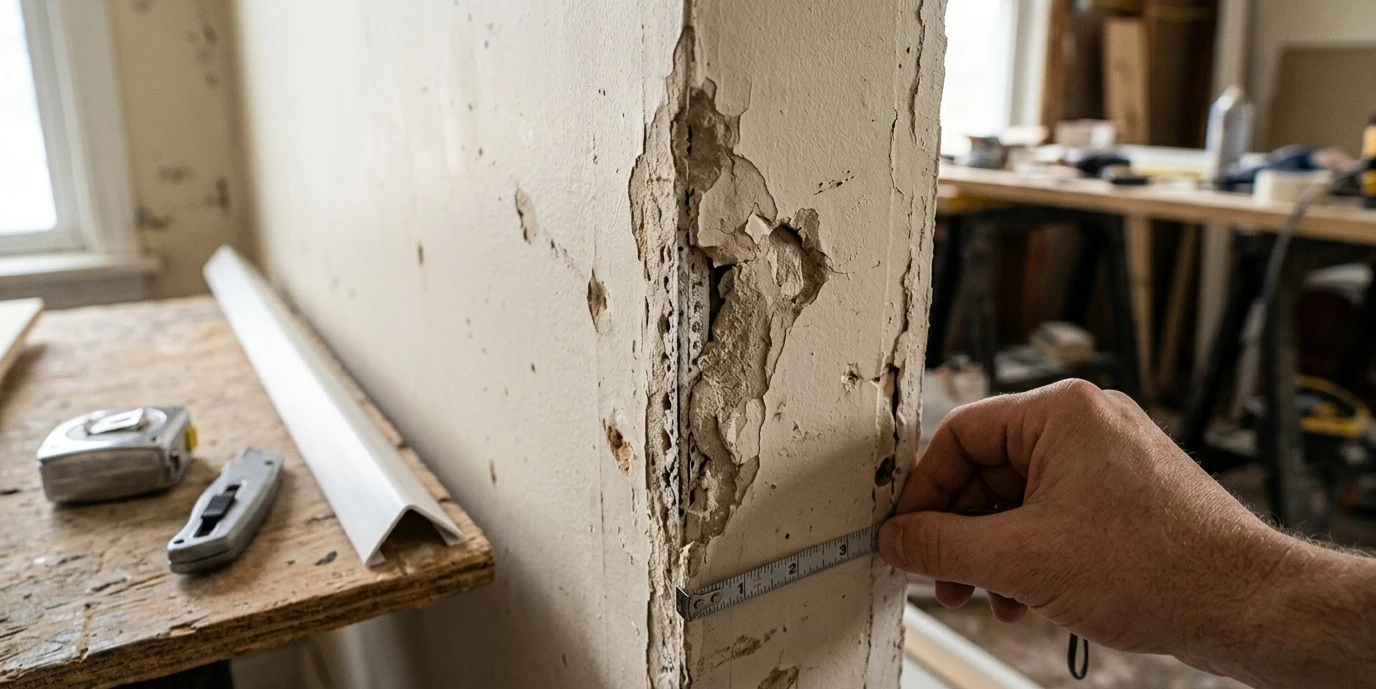
Every building has a handful of corners that take a beating — the one by the front door where prams squeeze past, the corridor bend where hospital trolleys turn, the warehouse pillar clipped by every passing forklift. These are the spots where paintwork chips first and plaster wears through fastest, and they're often the last thing anyone thinks about until the damage is already done.
Wall corner protectors exist specifically to take that punishment instead of the wall. This guide works through where corner damage tends to happen, which type of protector suits which situation, and what to check before you buy — with a closer look at four products commonly used across UK homes and commercial buildings: self-adhesive protectors, wood-effect trims, unequal angle trim, and PVC edge protectors. For anyone comparing options for a live project, it's also worth Stairs Nosing before finalising a spec.
Corner wear isn't random — it follows how a building is actually used. Recognising the pattern in your own space is usually the fastest way to work out what you need.
Once you know which of these patterns matches your building, choosing a protector becomes much more straightforward.
At its simplest, a wall corner protector is a rigid or semi-rigid strip — usually PVC or a similar plastic — fixed over an external wall corner so that impact lands on a tough, replaceable surface rather than plaster or paintwork. Fixing methods vary: adhesive backing for a fast, tool-free fit, or screws for a more permanent hold in demanding environments. Many are shaped or finished to sit unobtrusively against existing decor rather than standing out as an obvious add-on.
Before going into detail on each product, here's a quick comparison to narrow things down:
| Situation | Best-suited protector |
|---|---|
| Light domestic use, quick fit needed | Self-adhesive wall corner protector |
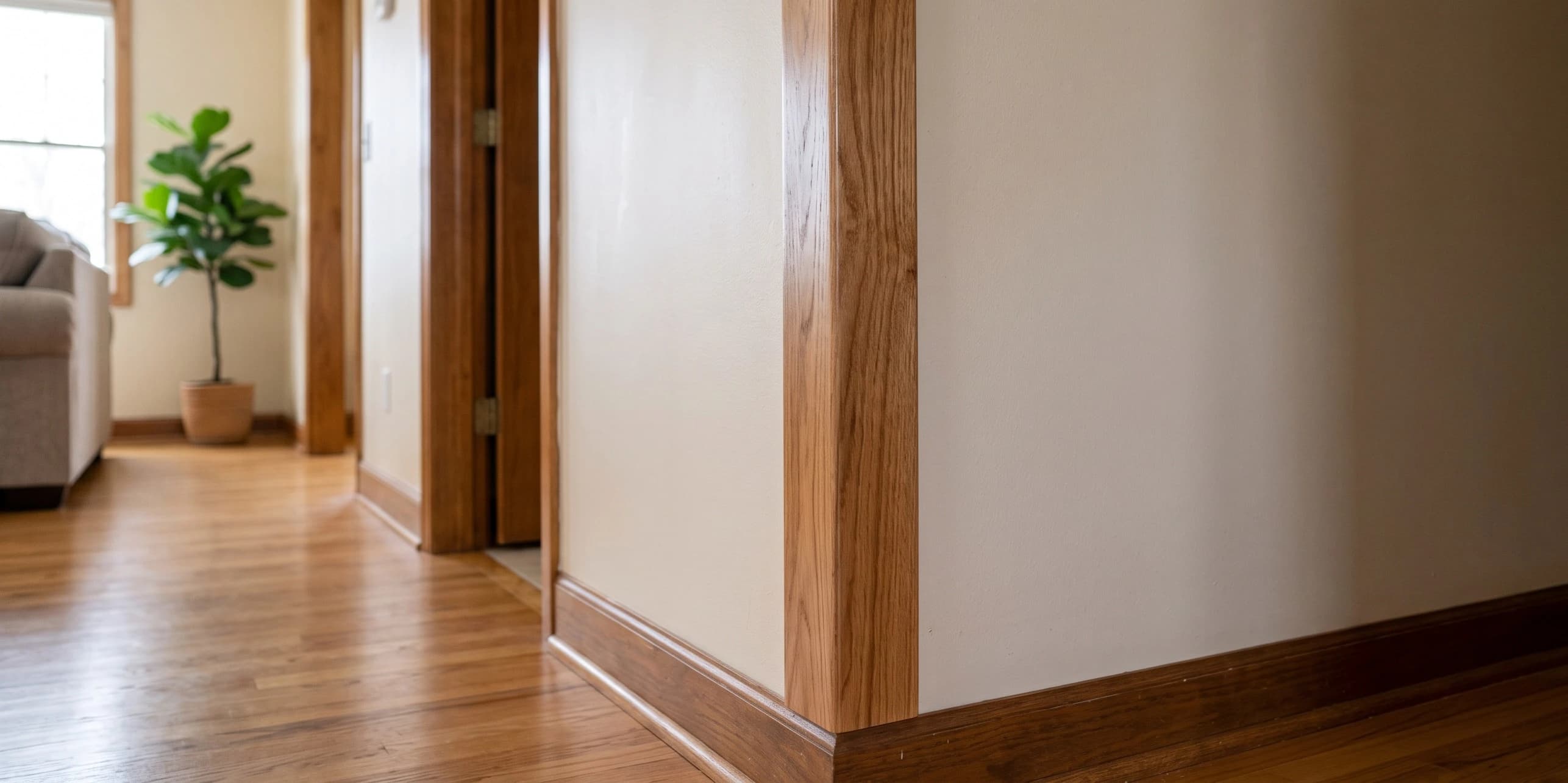
| Hotel, period property, guest-facing area | Wood-effect wall corner protector |
| Irregular corner, mismatched wall thickness | Unequal plastic corner angle trim |
| Hospital, school, warehouse, heavy daily traffic | PVC plastic wall edge protector |
| Sports halls, gyms, loading areas needing shock absorption | Rubber wall corner protector |
This decision matters almost as much as the product type itself. Self-adhesive fixing is fast and leaves no visible screws, but its long-term hold depends on the wall surface and the level of impact it faces — vibration and repeated heavy knocks can gradually work an adhesive bond loose. Mechanical fixing takes a little longer to install but holds up far more reliably under sustained pressure, which is why it's the default choice in warehouses, hospitals and other high-traffic commercial settings.
As a rough guide: adhesive suits light domestic and low-traffic commercial use; screws or combination fixings suit anywhere with regular heavy contact.
Most UK wall corner guards are made from rigid or semi-rigid PVC, occasionally reinforced for extra strength. Standard lengths usually run from around 1 to 2.4 metres, with longer options available for stairwells and corridors. Profiles range from flush-fitting strips to full wraparound guards and rounded bullnose edges.
Colours typically span white, grey and other neutral commercial tones, alongside wood-effect finishes and custom colours for residential or hospitality use. Thickness and material grade both affect durability, so it's worth checking the specification against your expected traffic level rather than choosing on appearance alone.
The case for corner protection is fundamentally about avoided cost. Replastering a damaged corner or repainting a scuffed section takes far longer, and costs considerably more, than fitting a protective strip before the damage occurs — and in commercial or public buildings, that repair work often has to happen without disrupting day-to-day operations, adding further cost and inconvenience.
Stairs Nosing stock a practical range of building finishing and protection products, including corner protectors suited to different traffic levels and environments, which makes it easier to match a product to a project rather than over- or under-specifying.
The right wall corner protector depends less on personal preference and more on how a corner is actually used day to day. A self-adhesive strip suits a quiet family hallway; a wood-effect trim suits a hotel corridor guests will actually see; unequal angle trim solves the awkward junctions standard guards can't handle; and PVC edge protectors are built for the relentless traffic of hospitals, schools and warehouses. Matching the product to the environment — and choosing the right fixing method to go with it — is what determines whether it's still doing its job in five years' time.
Yes. Self-adhesive products generally hold well on sound, undamaged plasterboard, while mechanically fixed options should use plasterboard-specific wall plugs for a secure fit.
With correct installation and normal use, PVC corner protectors can last many years, even in commercial settings, though lifespan depends on impact frequency and product quality.
Some plastic protectors accept paint, but it's worth checking manufacturer guidance first, since certain PVC finishes aren't designed to hold paint long-term. Pre-coloured products are usually the more reliable option.

Construction projects rarely follow the original plan from start to finish. Material shortages, unex
1 October 2026
A home elevator can make everyday movement between floors more convenient, especially in multi-store
25 September 2026
Walk down the corridor of any busy office, school or rented flat and you will spot the same thing: s
15 September 2026
Be the first to share your thoughts
No comments yet. Be the first to comment!
Share your thoughts and join the discussion below.


.webp&w=3840&q=75)