Monday, September 21, 2026
* All product/brand names, logos, and trademarks are property of their respective owners.
One of the first questions prospective owners ask is, "How big will a Teacup Pug be when fully grown?" While these tiny companions resemble standard Pugs in appearance, their smaller size is what sets them apart. It's important to understand, however, that the term "Teacup Pug" is a marketing description rather than an officially recognized breed classification. Because of this, adult size can vary depending on genetics, breeding practices, and overall health.
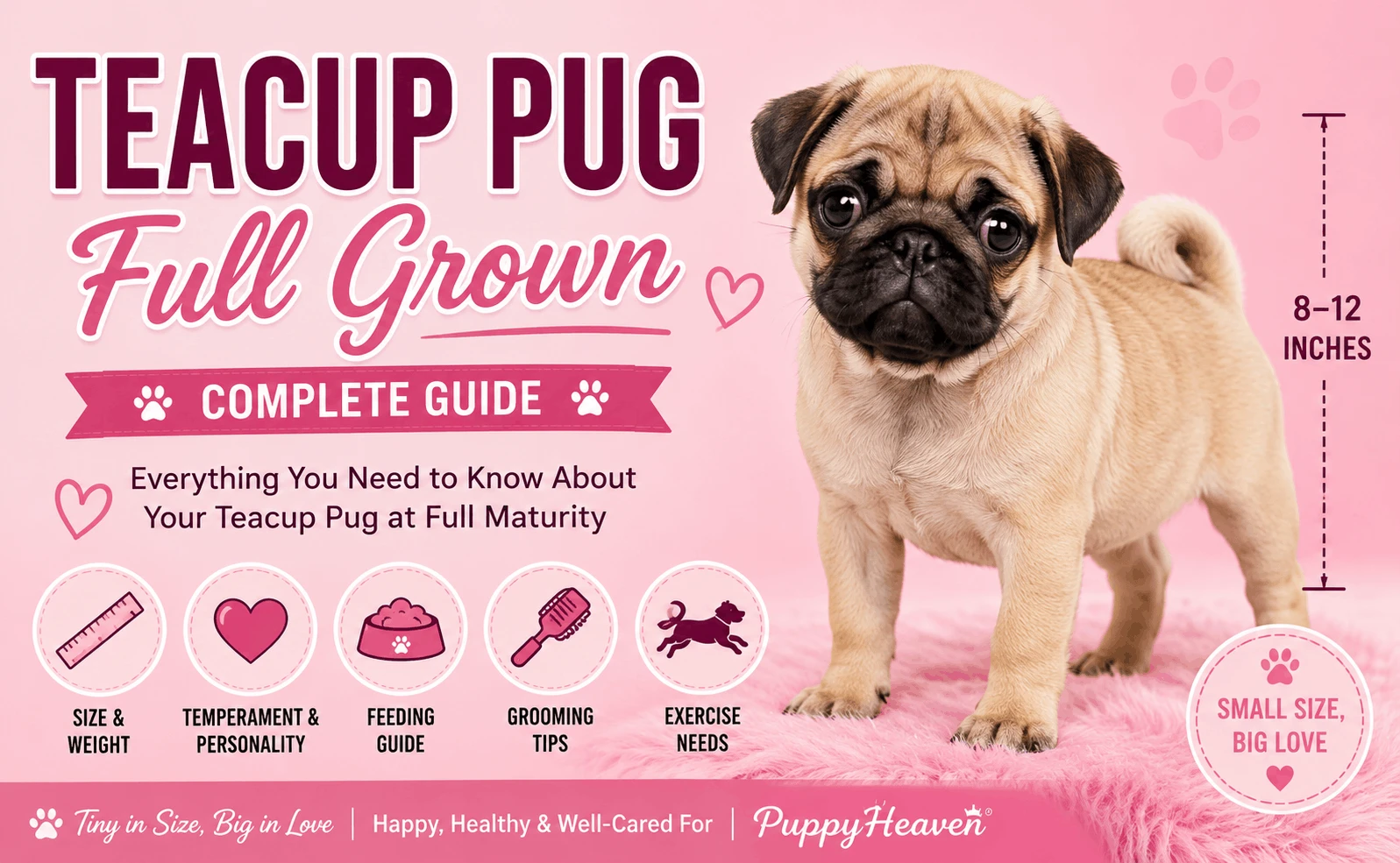
In general, a full-grown Teacup Pug reaches between 8 and 12 inches in height and typically weighs 6 to 14 pounds. Some breeders advertise even smaller "micro" or "pocket" Pugs, but extremely tiny sizes can be associated with increased health risks. Responsible breeders focus on producing healthy puppies rather than chasing the smallest possible size.
| Age | Average Weight | Development Stage |
|---|---|---|
| 8 Weeks | 2–4 lbs | Ready to join a new family |
| 3 Months | 3–6 lbs | Rapid growth and socialization |
| 6 Months | 5–9 lbs | Most adult features begin to appear |
| 9 Months | 6–12 lbs | Growth starts slowing |
| 12–15 Months | 6–14 lbs | Full-grown adult size |
Male Teacup Pugs are often slightly heavier and more muscular than females, though the difference is usually minimal. Females may mature a little earlier and maintain a slightly leaner build.
Even after reaching their adult height, many Teacup Pugs continue to fill out gradually until they are around 15 to 18 months old. Proper nutrition, regular veterinary care, and maintaining a healthy weight all play a role in supporting steady development.
Rather than focusing solely on size, prospective owners should prioritize finding a healthy puppy from a breeder who performs health screenings, provides veterinary records, and breeds for temperament and long-term well-being.
Despite their tiny size, Teacup Pugs have enormous personalities. They inherit the affectionate, playful, and people-oriented temperament that has made Pugs one of the world's most beloved companion breeds. These little dogs thrive on human interaction and are happiest when included in everyday family life.
Teacup Pugs are known for forming strong emotional bonds with their owners. They often follow family members from room to room, enjoy cuddling on the couch, and love being involved in daily activities. If you're looking for a loyal companion that enjoys spending time with people, this breed is an excellent choice.
One of the breed's biggest strengths is its friendly nature. Most Teacup Pugs greet visitors with curiosity rather than suspicion and generally get along well with neighbors, friends, and extended family members. Early socialization helps reinforce these positive behaviors and builds confidence in new environments.
Teacup Pugs usually do well with respectful children who understand how to handle small dogs gently. Because of their compact size, rough play or accidental drops can result in injury, so adult supervision is always recommended when young children are interacting with the puppy.
These dogs generally coexist peacefully with other dogs and even cats when introduced gradually. Their easygoing personality makes them adaptable in multi-pet households, particularly when socialized from an early age.
One of the reasons Teacup Pugs are so popular is their ability to adapt to apartment living. They don't require a large backyard to stay happy, provided they receive regular walks and interactive play sessions.
While Pugs are intelligent, they also have an independent and occasionally stubborn streak. Positive reinforcement using treats, praise, and consistency produces the best results. Harsh corrections can make them less willing to participate in training.
Because they thrive on companionship, Teacup Pugs may experience separation anxiety if left alone for long periods. Providing puzzle toys, establishing routines, and gradually increasing alone time can help reduce stress.
Unlike some toy breeds, Teacup Pugs are generally not excessive barkers. They may alert you when someone approaches the door but typically remain calm once they realize there is no threat.
Overall, Teacup Pugs are affectionate, adaptable companions that fit well into families, apartments, and homes with other pets when given proper care and attention.
Although they are small dogs, Teacup Pugs still require regular exercise to stay healthy. Daily activity supports muscle tone, mental stimulation, healthy weight management, and emotional well-being.
Because Pugs have short noses (a brachycephalic facial structure), they are more prone to overheating than many other breeds. Exercise should be moderate rather than intense.
Aim for 20 to 30 minutes of activity per day, divided into two shorter sessions if needed.
Good exercise options include:
Short neighborhood walks
Indoor games
Gentle fetch
Interactive puzzle toys
Hide-and-seek
Basic obedience sessions
Mental stimulation is just as important as physical activity. Food puzzles, scent games, and learning new tricks keep these intelligent little dogs engaged and prevent boredom.
Avoid exercising during the hottest part of the day. Warm temperatures can make breathing difficult for brachycephalic breeds. Walk your Teacup Pug during the early morning or evening, ensure access to fresh water, and watch for signs of overheating such as excessive panting, drooling, or lethargy.
Maintaining a healthy weight is especially important. Even a few extra pounds place additional stress on joints and the respiratory system.
Nutrition plays a major role in helping Teacup Pugs grow properly and maintain long-term health. Because of their small size, they require nutrient-dense food served in appropriately sized portions.
Choose a high-quality dog food formulated for small breeds that lists real meat as the primary ingredient and provides balanced protein, healthy fats, vitamins, and minerals.
| Age | Meals Per Day |
|---|---|
| 8–12 Weeks | 4 meals |
| 3–6 Months | 3 meals |
| 6–12 Months | 2–3 meals |
| Adult | 2 meals |
Fresh drinking water should always be available.
Lean chicken
Turkey
Salmon
Lamb
Brown rice
Sweet potatoes
Pumpkin
Blueberries
Green beans
Carrots
Never feed:
Chocolate
Grapes
Raisins
Onions
Garlic
Xylitol
Alcohol
Cooked bones
Macadamia nuts
Excess fatty foods
Treats should make up no more than 10% of daily calorie intake to help prevent obesity.
Although Teacup Pugs have a short coat, they still benefit from consistent grooming. Regular maintenance helps reduce shedding, supports healthy skin, and keeps facial wrinkles clean.
| Grooming Task | Frequency |
|---|---|
| Brushing | 2–3 times per week |
| Bathing | Every 4–6 weeks |
| Wrinkle Cleaning | 2–3 times per week |
| Ear Cleaning | Weekly |
| Nail Trimming | Every 3–4 weeks |
| Teeth Brushing | Daily |
| Professional Check-Up | As needed |
Brushing removes loose hair and distributes natural oils through the coat. Wrinkle cleaning is especially important because moisture trapped between skin folds can lead to irritation or infection.
Dental care should never be overlooked. Small breeds are more prone to dental disease, making daily brushing and regular veterinary dental exams an important part of their routine.
Routine grooming also provides an opportunity to check for skin changes, ear irritation, lumps, or signs of discomfort. Establishing these habits while your Teacup Pug is still a puppy makes grooming a positive and stress-free experience throughout adulthood.

I am someone who enjoys staying curious, taking on new challenges, and appreciating the little things in life. I value genuine relationships, continuous growth, and making each day meaningful.
Be the first to share your thoughts
No comments yet. Be the first to comment!
Share your thoughts and join the discussion below.


.webp&w=3840&q=75)
.webp&w=3840&q=75)


.webp&w=3840&q=75)