Wednesday, September 16, 2026
* All product/brand names, logos, and trademarks are property of their respective owners.
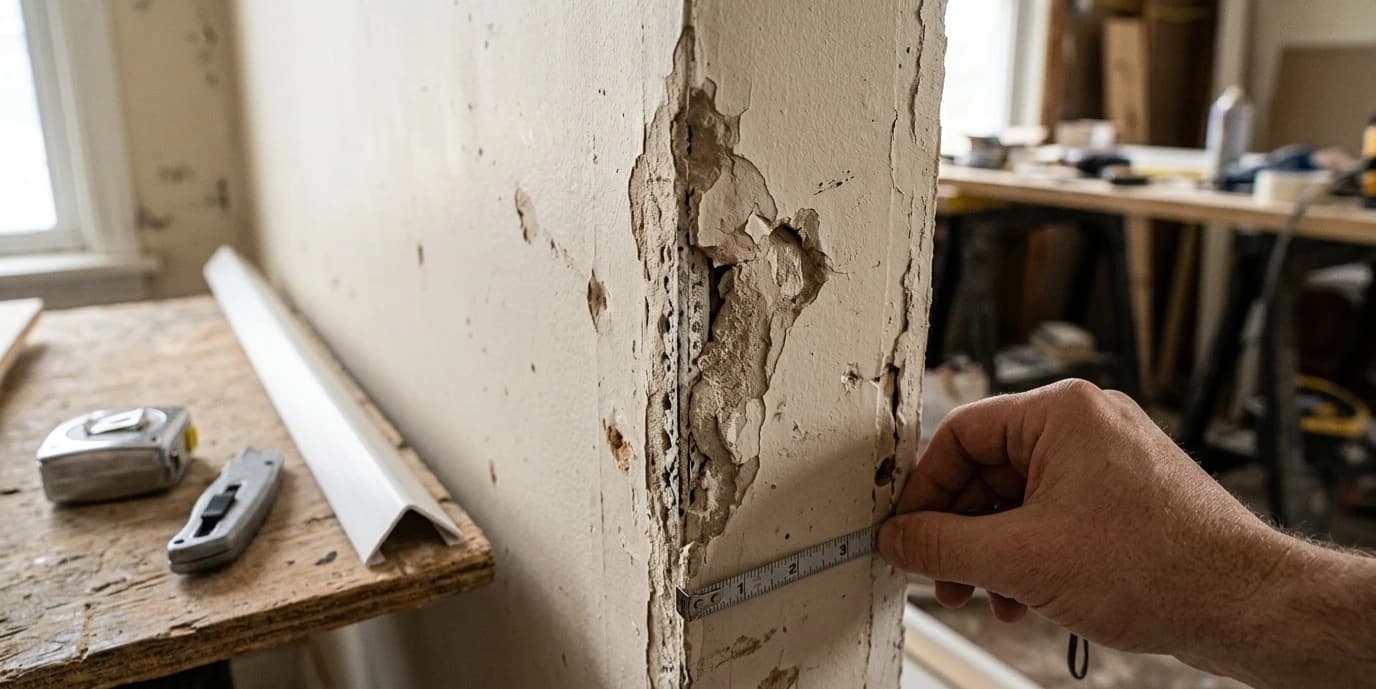
Walk through almost any home, office, school or care setting, and you'll spot the same telltale signs of wear: scuffed paint, chipped plaster and dented corners along hallways, stairwells and doorways. Wall corners take more punishment than almost any other part of a building, yet they're often the last thing anyone thinks about until the damage is already done.
This article looks at why corners are so vulnerable, what types of wall corner protection are available, and how to decide whether protection makes more sense than repeated repairs.
Corners project outward, which means they're the first point of contact for almost everything moving through a space. A few factors make them especially prone to damage.
A flat wall surface rarely gets struck directly, but a corner sits proud of the room, catching furniture legs, door edges, trolleys, pushchairs, luggage and equipment as they pass. Even a light knock, repeated daily, gradually wears away paint and plaster.
Standard plaster corners, even when finished with a metal or paper bead during construction, are designed for appearance rather than durability. The plaster itself is relatively brittle, and paint offers no real cushioning. Once the surface is chipped, moisture and further knocks tend to make the damage spread.
Corridors, stairwells, communal kitchens, warehouses, school hallways and hospital wards all see far more foot and trolley traffic than a typical living room. In these settings, the same corner might be knocked dozens of times a day, so damage that would take years to appear in a quiet home can happen within months.
A dining chair pushed back, a hostess trolley wheeled through a doorway, or an office chair rolling into a wall all apply a concentrated force to a small area. Corners bear the brunt because there's no surrounding wall to absorb or spread the impact.
Wall corner protectors work by covering the vulnerable edge with a material that's tougher, and often slightly more flexible, than the plaster or plasterboard underneath. Instead of the impact being absorbed directly by the wall, it's absorbed — at least partially — by the protector.
Over time, this can help reduce:
It's worth being realistic here: a corner wall protector reduces the rate of damage and limits its severity, rather than making a wall immune to impacts. Heavy or unusual impacts can still cause damage, but for everyday wear and tear, protection can noticeably extend the time between redecorating jobs.
There isn't a single "correct" type of corner protector — the right choice depends on the setting, the expected level of impact, and how visible you want the protection to be.
Rigid PVC profiles are among the most common choices for offices, schools, corridors, and retail premises. They're moulded to a fixed 90-degree angle, which makes them straightforward to fit on square corners.
Advantages:
Disadvantages:
Flexible PVC works in a similar way to rigid PVC but is softer and can bend slightly to accommodate corners that are slightly out of true — something surprisingly common in older properties or buildings that have settled over time.
Advantages:
Disadvantages:
Clear PVC or polycarbonate corner protectors are designed to be as unobtrusive as possible. Rather than adding a visible strip of colour, they sit over the corner while allowing the wall colour and finish to show through.
Advantages:
Disadvantages:
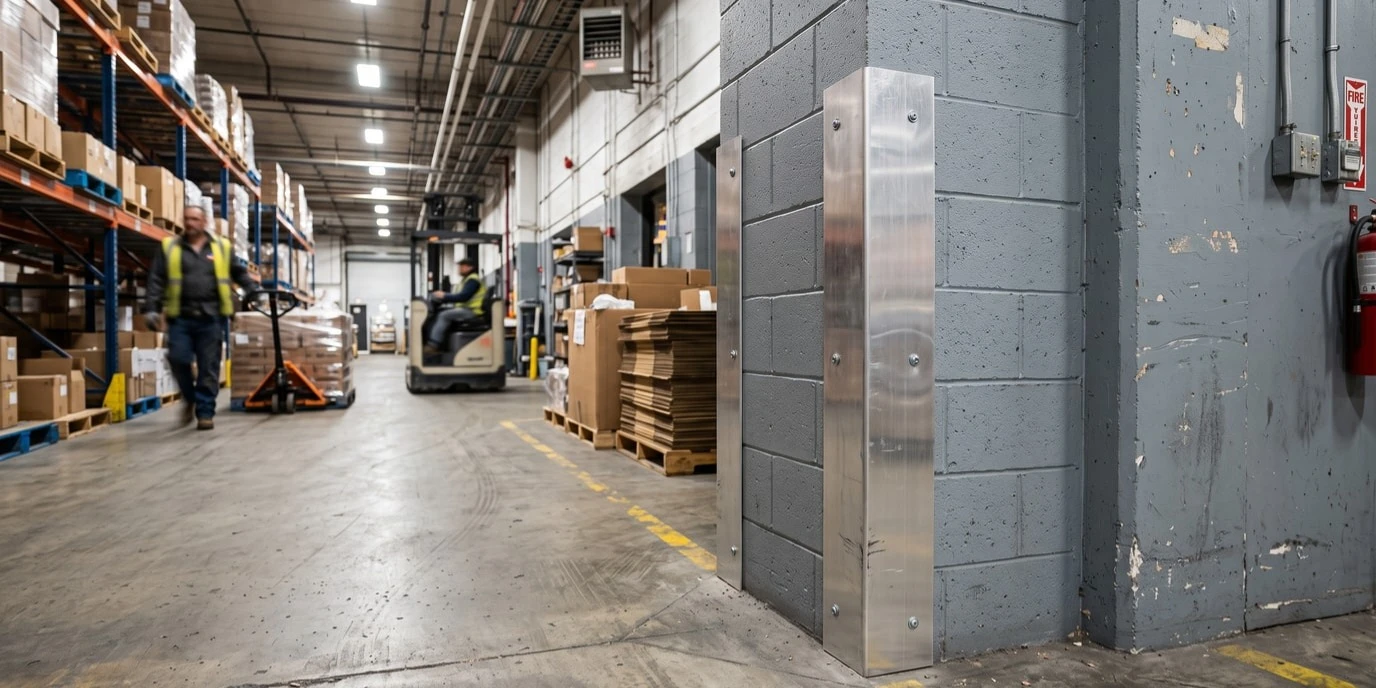
Aluminium corner protectors are a step up in durability, commonly used in commercial and industrial settings where knocks are frequent and forceful — warehouses, loading areas, kitchens and busy public buildings.
Advantages:
Disadvantages:
For genuinely heavy-impact environments — loading bays, workshops, car parking, storage facilities — rubber corner protectors offer a cushioning effect that rigid materials can't match.
Advantages:
Disadvantages:
Every repair, however small, carries a cost — materials, labour or your own time, and the disruption of having a room out of action while plaster dries and paint cures. Repeated repairs to the same corner, over months or years, can add up to considerably more than the cost of fitting protection in the first place.
A few situations are worth flagging as good candidates for corner protection:
If a corner has already needed repainting or replastering more than once, that's usually a sign the underlying cause of the damage hasn't gone away — and it's likely to happen again unless something changes.
There's no universal answer here — a period home with decorative corners will have different needs to a busy school corridor or a warehouse loading bay. https://www.wallcornerprotectors.co.uk/, which stocks a range spanning PVC, flexible, clear/decorative, aluminium and heavy-duty rubber options, can be a useful starting point for comparing what's available before deciding what suits a particular corner and level of traffic.
Whatever option you land on, the underlying principle is the same: a modest amount of protection fitted in advance is usually far less disruptive — and less costly over time — than repeatedly patching the same damaged corner.

When homeowners plan a flooring project, most attention goes to the materials themselves—the l
10 September 2026
You've just finished laying a new floor. The room looks great, until you reach the doorway. There's
9 September 2026
Every building has a handful of corners that take a beating — the one by the front door where
7 September 2026
Be the first to share your thoughts
No comments yet. Be the first to comment!
Share your thoughts and join the discussion below.
.webp&w=3840&q=75)
.webp&w=3840&q=75)


.webp&w=3840&q=75)