Thursday, September 17, 2026
* All product/brand names, logos, and trademarks are property of their respective owners.
Most home improvement projects are judged by big-ticket elements: new flooring, a retiled bathroom, a landscaped garden. Yet the difference between a project that performs well for years and one that shows problems within months often comes down to smaller, less glamorous materials working behind the scenes.
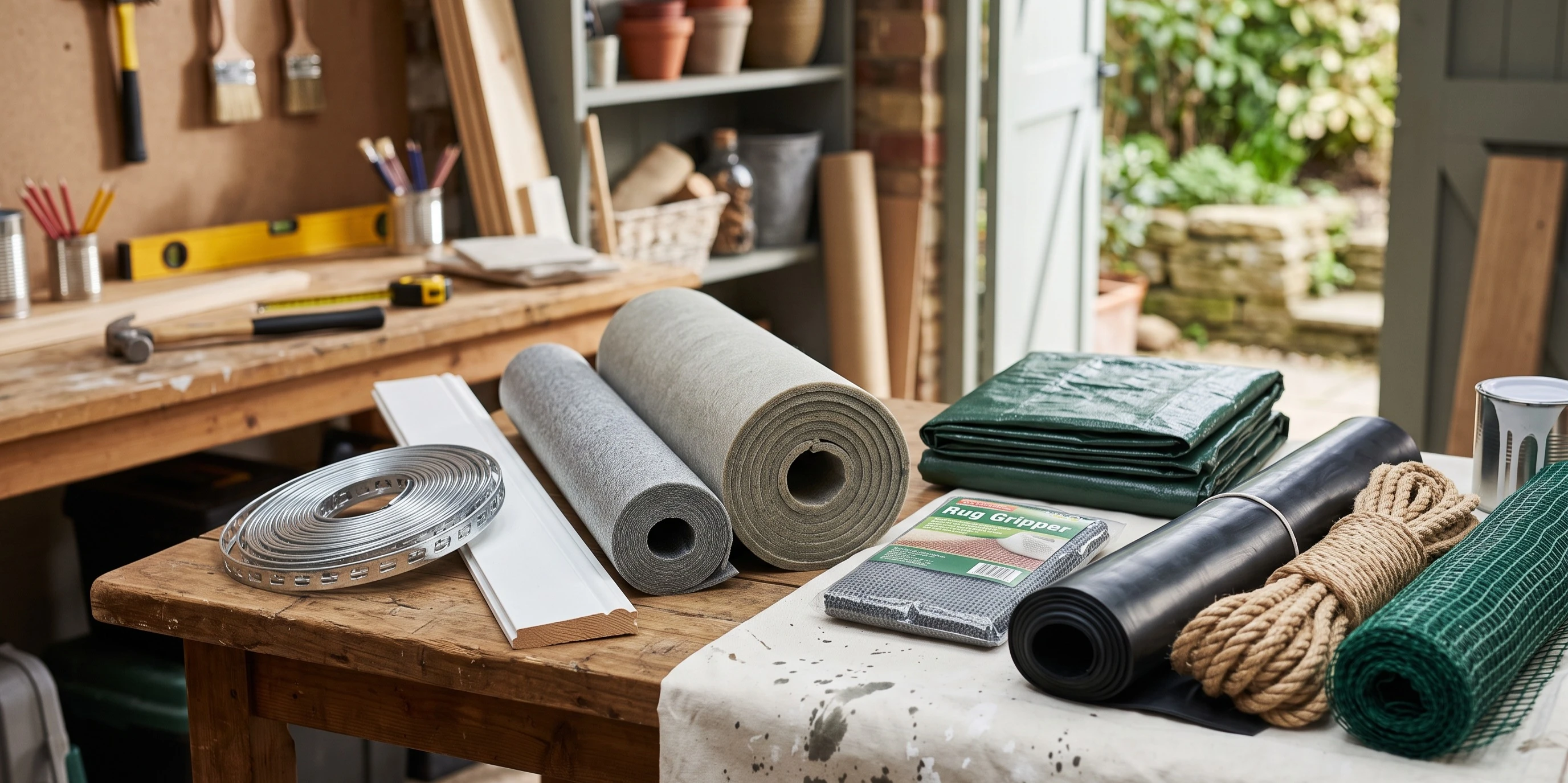
Trims, underlays, protective sheeting, ropes and garden linings rarely make it onto a shopping list until the last minute, but they play a genuine role in how durable, safe and comfortable a finished space turns out to be.
This guide walks through ten home and garden products, why they matter, and what to consider before buying them.
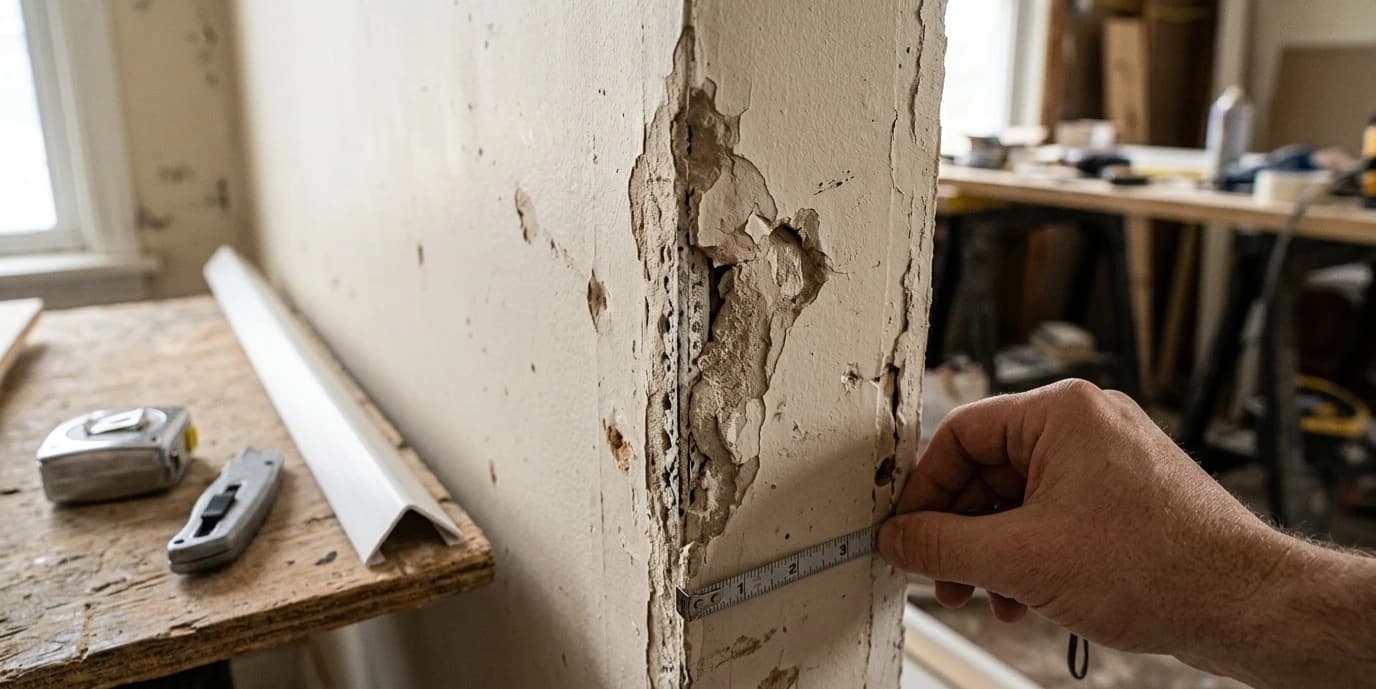
A tiled or freshly decorated room can look impressive from a distance, but it's the edges and joins that reveal whether the work was done with care.
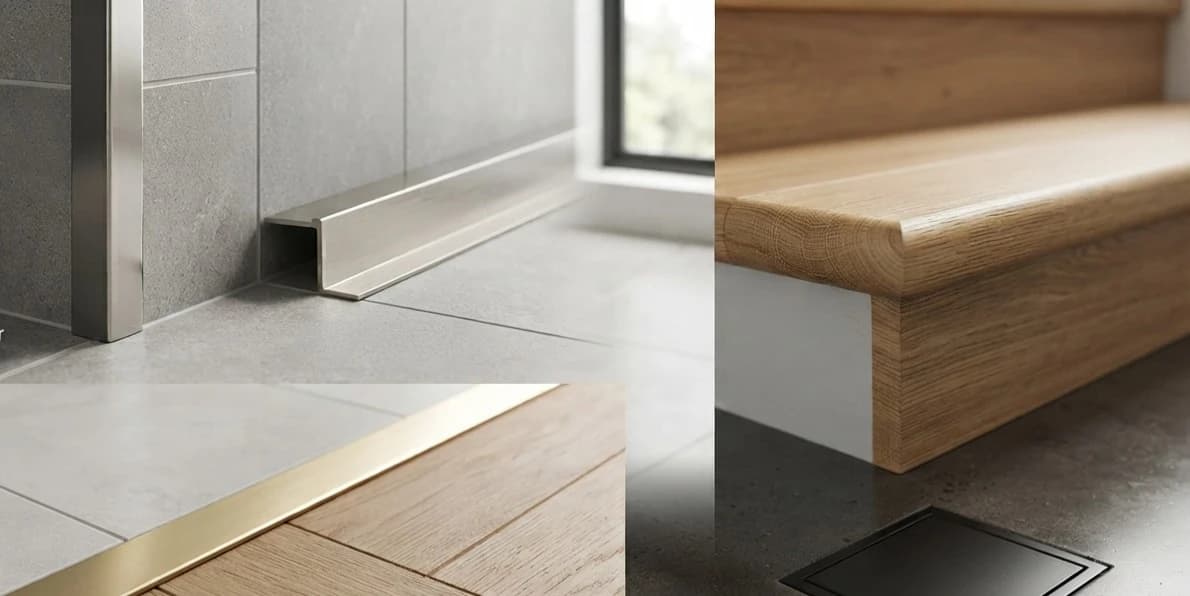
Cut tile edges are sharp and rarely attractive on their own. Tile trim is fitted along exposed edges — around windowsills, external corners, or where tiling meets another surface — to create a neater, safer transition, and protects the tile from knocks that might otherwise cause cracking.
Trim comes in various profiles and finishes, so it's worth matching the type to the tile thickness and the look of the room.
Skirting boards do more work than their modest appearance suggests. They protect the lower section of a wall from scuffs and knocks, and conceal the join between wall and floor, which is rarely perfectly straight.
Decoratively, they frame a space and tie flooring and wall colours together, and choosing a profile and height that suits the room's proportions is worth more thought than most people expect.
New flooring tends to draw all the attention, but what goes underneath it has a considerable bearing on how it performs.
Flooring shouldn't be thought of as a single product; it's a system, and underlay is a core part of it. A suitable underlay adds comfort underfoot, supports the flooring above, provides thermal insulation, and can reduce everyday noise such as footsteps.
The right underlay depends on what's going on top of it. Carpet, laminate, engineered wood and vinyl all have different underlay requirements in thickness, density and material, and fitting the wrong type can affect comfort and long-term performance. Checking the flooring manufacturer's guidance before buying is worthwhile, as some warranties require a compatible product.
Acoustic underlay is a more specialised version of standard underlay, engineered specifically to reduce sound transmission — typically impact noise such as footsteps travelling through a floor into the room below.
It tends to be particularly relevant in flats, upstairs rooms above living areas, home offices, bedrooms, and busy households. It's worth being realistic about what it can achieve, though: it's one part of a wider system involving the subfloor and building construction, not a guaranteed fix on its own.
Once the flooring itself is sorted, attention often turns to how rugs sit on top of it.
A rug that slides underfoot is more than an annoyance; it's a trip hazard, particularly on hard flooring such as laminate, wood, or tile. Rug gripper — often a thin underlay or tape-style product — helps hold a rug in place and sit flatter and more securely.
Not every gripper suits every surface. Some are designed for hard floors, others for carpet-on-carpet use, and the wrong type can fail to grip or mark delicate flooring, so checking suitability before fitting is worthwhile.
Once work is underway, protecting everything that isn't being worked on becomes just as important as the work itself.
Painting, sanding, drilling and general renovation work inevitably generate mess, and dust sheets are the simplest way to protect floors, furniture and fittings from paint splashes, plaster dust and debris.
Different jobs call for different sheets: cotton for general decorating, waterproof or poly-backed for wetter jobs, and lightweight disposable sheets for quick, low-mess tasks. Having a couple of types on hand covers most situations.
Where dust sheets are usually an indoor tool, tarpaulins take on a broader role indoors and outdoors, commonly covering garden furniture, stacked building materials, tools or an outdoor work area to shield them from rain, dirt or dust.
Not all tarpaulins are equal. Weight, material, waterproofing and UV resistance vary between products, and a tarp fine for a short covering job may not hold up to weeks of outdoor exposure. Measuring the area to be covered before buying saves a wasted trip.
Outdoors, a different set of materials tends to come into play, particularly for anyone working on a pond, boundary or planting project.
Anyone building or renovating a garden pond needs a liner that can hold water reliably over time. Pond liners are typically flexible, shaped around the contours of a dug pond, and come in various sizes and materials to suit different depths and shapes.
Durability and flexibility are the main considerations, along with buying enough material to allow for overlap at the edges. If the pond will house fish, it's worth confirming the specific liner is suitable, since not all general-purpose liners are intended for use where wildlife is present.
Rope quietly earns its place in most sheds, used for securing loads, tying back plants, rigging temporary supports, and general-purpose tasks around the home and garden.
Different rope materials suit different jobs. Natural fibre ropes tend to suit lighter, decorative or temporary uses, while synthetic ropes generally suit sustained weather exposure or higher loads. Matching the rope to the load and conditions matters more than picking whatever's cheapest.
Garden netting covers a wide range of uses, from protecting fruit and vegetable crops against birds and pests, to marking boundaries, supporting climbing plants, or serving general protective and safety purposes.
The right netting depends on what it's protecting against: a fine mesh for small pests, or a stronger, wider-gauge netting for boundary or support use. Considering mesh size, material, and strength for the job, rather than buying generic netting, produces better results.
With so many smaller products involved in any renovation, a simple checklist helps before buying:
Working through these points before purchasing helps avoid buying the wrong specification and having to start again.
For homeowners tackling several of these tasks at once, it can be more convenient to source flooring accessories, protective sheeting and garden materials. https://www.mafson.co.uk/ stocks a broad range of home and garden essentials, from tile trim and underlay through to tarpaulins, pond liners and netting, simplifying planning for a multi-stage project.
A successful project tends to move through the same broad stages: preparation, foundational work, then visible finishing touches. Dust sheets and tarpaulins belong to the preparation stage, underlay and acoustic underlay to the foundation stage, and tile trim and skirting boards to the finishing stage. Outdoors, pond liners, ropes and netting support projects that don't always fit neatly into that sequence but matter just as much.
None of these products are the centrepiece of a renovation, but each influences how the finished result looks, feels and holds up over time. Taking a little extra care over trims, underlays, protective coverings and outdoor materials — checking sizes, compatibility and suitability before buying — pays off well beyond the day the work is finished.

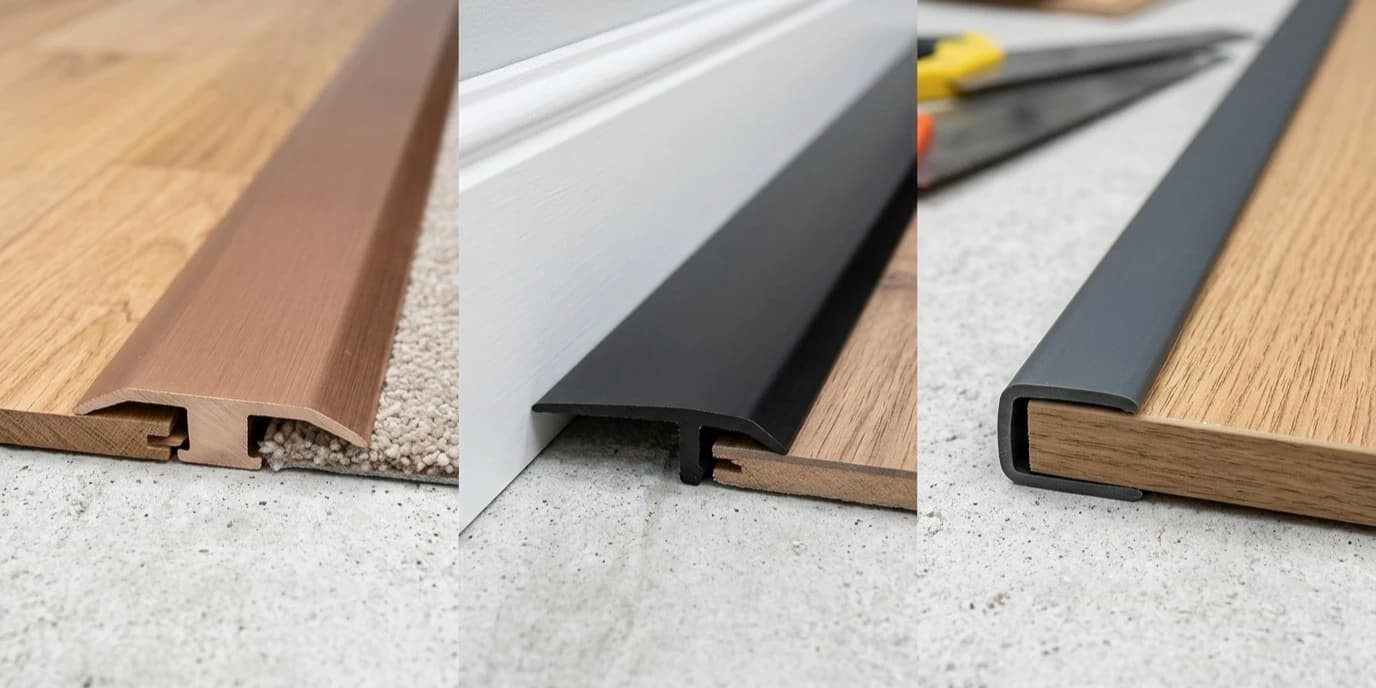
Anyone who has ever finished laying a new floor knows that the job isn't quite done until the doorwa
8 September 2026
It rarely starts big. A tap that won't stop dripping. A kitchen you've put up with for too long. And
25 June 2026
When it comes to finishing a room or upgrading your entranceway, few details matter more than your d
28 January 2026
Be the first to share your thoughts
No comments yet. Be the first to comment!
Share your thoughts and join the discussion below.
.webp&w=3840&q=75)

.webp&w=3840&q=75)
.webp&w=3840&q=75)
.webp&w=3840&q=75)