Thursday, October 15, 2026
* All product/brand names, logos, and trademarks are property of their respective owners.
Technology automation is changing the way businesses operate and how employees handle daily tasks. From AI-powered assistants to automated workflows, companies are using technology to save time, improve productivity, and reduce repetitive work. What once required hours of manual effort can now be completed in minutes with the help of smart systems and software.
Today, technology automation is no longer limited to large corporations. Small businesses, remote teams, healthcare providers, banks, retailers, and even freelancers are adopting automation tools to streamline operations and improve efficiency. Tasks like scheduling meetings, responding to customer inquiries, processing invoices, and analyzing data are increasingly handled through automated systems.
As automation technology continues to evolve, understanding its impact on the modern workplace has become more important for both businesses and employees.
Technology automation means using software, machines, or digital tools to complete tasks with little manual effort. In the workplace, this often means replacing repetitive steps with systems that can run faster, more consistently, and with fewer mistakes.
Workplace automation helps teams handle routine tasks automatically. For example, instead of manually sending the same follow-up email to every customer, a business can use an email automation tool. Instead of entering invoice details by hand, accounting software can capture and process the information.
Automation is commonly used for:
Businesses use different types of automation depending on their needs, such as:
The main goal is not just to work faster. It is to remove unnecessary manual steps so people can focus on work that needs judgment, creativity, and human decision-making.
Technology automation is reshaping everyday work routines across almost every industry. Tasks that once required constant manual effort can now be completed faster and with greater accuracy using smart systems and digital tools.
One of the biggest changes automation brings is the reduction of repetitive work. Employees no longer need to spend hours handling routine administrative tasks that software can complete automatically.
Common examples include:
This allows employees to spend more time on tasks that require creativity, communication, and decision-making.
Modern workplaces rely heavily on collaboration tools, and automation helps teams stay connected more efficiently.
Many businesses now use:
For example, when a project task is completed, the next team member can automatically receive a notification without managers manually updating everyone.
This improves workflow speed and reduces communication delays.
Automation also helps businesses make faster and smarter decisions through real-time data analysis.
Instead of manually creating reports, companies can now use dashboards and automated analytics tools to track:
AI-powered systems can even identify patterns and trends that help managers make better business decisions. For example, retailers can predict which products may run low in stock, while customer support teams can automatically identify common service issues.
As a result, businesses become more responsive, organized, and efficient in daily operations.
| Traditional Work | Automated Work |
|---|---|
| Manual data entry into spreadsheets | Automatic data syncing between systems |
| Paper-based approvals and signatures | Digital approval workflows |
| Repetitive customer support responses | AI-powered chat support and ticket routing |
| Manual report creation | Real-time analytics dashboards |
| Scheduling meetings through emails | Smart calendar and scheduling tools |
| Tracking inventory by hand | Automated inventory monitoring systems |
| Manually sending follow-up emails | Email automation campaigns |
| Human-only quality checks | Automated error detection systems |
Automation does not remove every human task, but it changes how work gets done. Employees spend less time handling repetitive processes and more time focusing on planning, customer relationships, creativity, and problem-solving.
Businesses adopt automation because it helps improve efficiency, reduce delays, and simplify everyday operations. Employees also benefit by spending less time on repetitive work and more time on meaningful tasks.
Automation speeds up routine processes that normally take hours to complete manually. Tasks like report generation, customer responses, task tracking, scheduling, and reminders can all run automatically. This allows teams to complete more work in less time without constantly handling repetitive administrative tasks.
Manual processes often lead to mistakes, especially when employees handle large amounts of data or repetitive actions. Automation improves accuracy in areas such as payroll calculations, inventory management, billing, invoicing, and order processing. As a result, businesses can reduce costly errors and maintain more reliable operations.
When repetitive work is automated, employees can concentrate on responsibilities that require human thinking and interaction. This includes problem-solving, strategic planning, creativity, customer relationships, and collaboration. Many organizations find that employees become more productive and engaged when they spend less time on routine tasks.
Automation helps businesses save both time and operational costs by reducing the amount of manual work needed for daily processes. Tasks can be completed faster, workflows become more organized, and delays are minimized. Even smaller businesses can now access affordable automation tools that improve efficiency without requiring large investments.
Automation also improves customer service by making responses faster and more consistent. Businesses can provide instant order updates, appointment confirmations, personalized emails, and 24/7 chatbot support. Customers benefit from quicker communication, while companies can manage larger workloads more effectively.
Overall, workplace automation helps organizations become more efficient, scalable, and responsive in a competitive business environment.
Automation is influencing nearly every industry by improving efficiency, reducing manual work, and speeding up operations. While the tools may differ from one sector to another, the overall goal remains the same: completing tasks faster and more accurately.
Hospitals and clinics use automation for appointment scheduling, patient records, billing, and diagnostic support. AI-powered systems can also help doctors analyze medical data more efficiently.
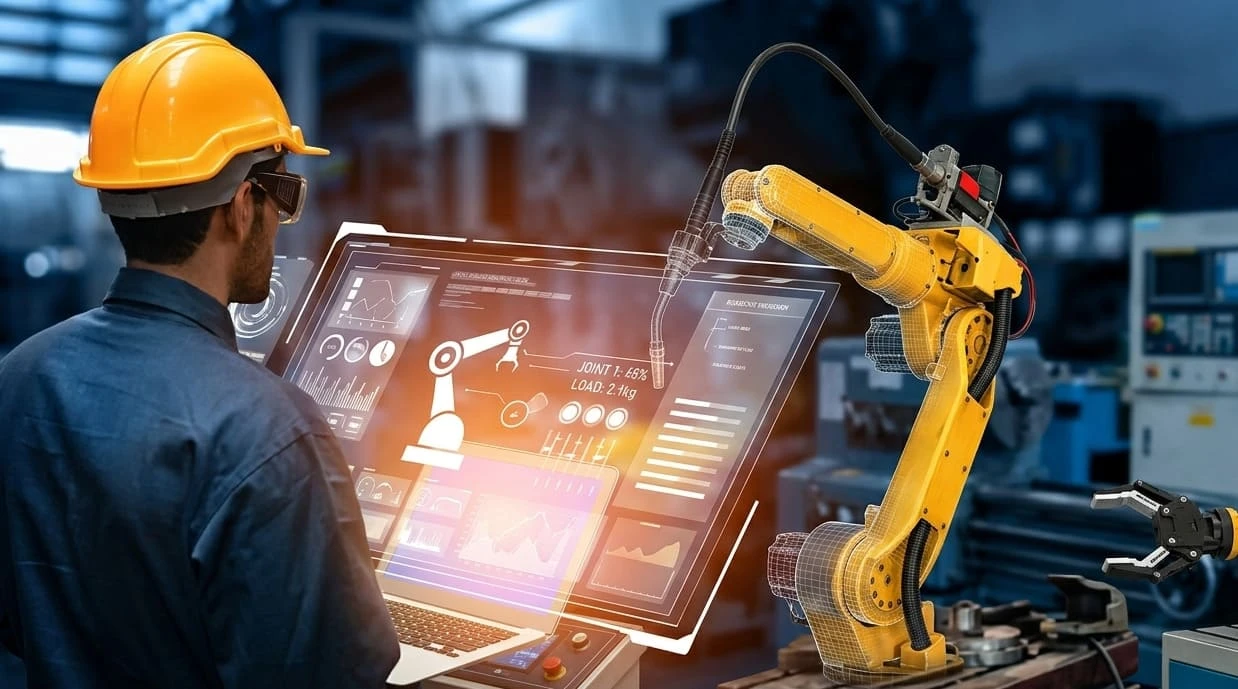
Manufacturing has used automation for years through robotic assembly lines, quality checks, and inventory tracking. Modern factories now rely on smart machines that can operate with minimal human intervention.
Banks automate processes such as fraud detection, transaction monitoring, customer verification, and account management. Automation helps financial institutions improve security while processing large amounts of data quickly.
Marketing teams use automation tools for email campaigns, social media scheduling, customer segmentation, and performance tracking. This allows businesses to reach customers more efficiently and personalize communication.
Many companies now use chatbots and automated ticketing systems to handle common customer questions. This reduces response times and allows support teams to focus on more complex issues.
As automation technology continues to grow, more industries are finding ways to improve operations while helping employees work more efficiently.
Technology automation is expected to play an even bigger role in the future workplace. Businesses are increasingly combining AI, automation tools, and digital systems to improve productivity and simplify operations. Instead of replacing human workers completely, many companies are moving toward a model where people and technology work together.
AI-powered assistants are already helping employees manage schedules, organize information, generate reports, and handle routine communication. As these tools become more advanced, workplaces may become faster, more flexible, and more data-driven.
Remote and hybrid work environments are also pushing companies to adopt more automation. Businesses now rely on automated collaboration tools, cloud platforms, and workflow systems to keep teams connected and organized from different locations.
The future of work will likely focus less on repetitive manual tasks and more on creativity, strategy, problem-solving, and human collaboration. Automation may change how work is done, but human skills will continue to remain essential in many industries.
Technology automation is changing the modern workplace by improving efficiency, reducing repetitive tasks, and helping businesses operate more effectively. From automated workflows and AI assistants to real-time analytics and digital collaboration tools, companies across many industries are transforming the way work gets done.
At the same time, automation is not only about replacing manual processes. It is also creating opportunities for employees to focus on creativity, communication, strategy, and problem-solving. As workplaces continue to evolve, adapting to new technologies and developing valuable human skills will become increasingly important.
Businesses that use technology automation responsibly while supporting employee growth are likely to stay more competitive in the future. The workplace may continue to change, but human thinking, adaptability, and collaboration will remain essential parts of long-term success.

Feroza Arshad is a professional guest post contributor and content writer with experience writing on topics such as digital marketing, business, technology, lifestyle, health, and online growth. She focuses on creating high-quality, informative, and SEO-friendly content that provides value to readers and supports brand visibility.
Finding the right free Employee Shift Management Software can help businesses create shift
8 September 2026
Delivering a successful event requires more than careful planning and an excellent venue. The qualit
30 July 2026
The artificial intelligence industry is growing faster than ever. Every day, new AI startups, softwa
10 June 2026
Be the first to share your thoughts
No comments yet. Be the first to comment!
Share your thoughts and join the discussion below.